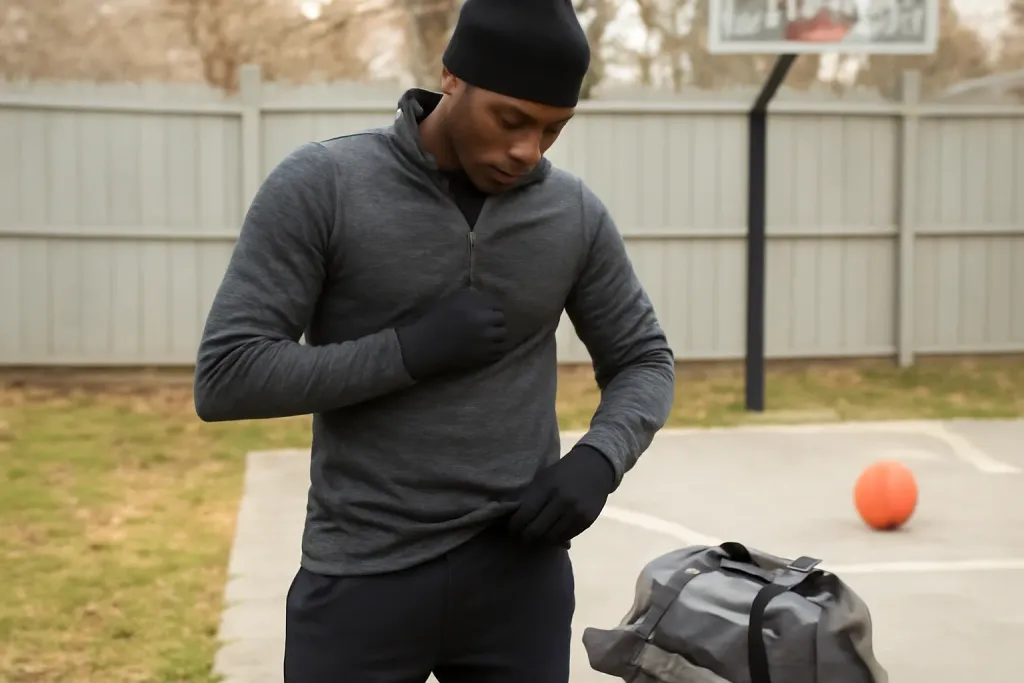
Why Layering Matters for Cold-Weather Practice
Layering for cold weather sports practice is one of the simplest ways to help athletes stay comfortable when temperatures drop and the weather changes during a session. A good layering plan gives players and coaches flexibility: start warm enough for the first few minutes, then remove or add pieces as the body warms up, the wind picks up, or the activity level changes.
For families, volunteer coaches, and PE teachers, the goal is not to create a complicated system. It is to make it easier for kids and adults to stay focused on practice instead of on being too cold, too sweaty, or distracted by clothing that does not fit the day. Cold-weather practice often includes standing around between drills, walking from station to station, and short bursts of movement. Those stop-and-go moments are exactly where layering can help.
The basic idea is simple: wear a moisture-managing layer next to the skin, add insulation for warmth, and finish with an outer layer that helps block wind or light weather. The exact mix depends on the temperature, how hard the group will move, and how long they will be outside. When people understand the roles of each layer, it becomes easier to choose clothes that work together instead of piling on random items.
Layering also makes equipment bags more useful. Instead of bringing one heavy jacket and hoping it works for every situation, families can send a few lighter pieces that can be adjusted as needed. That can be especially helpful for beginners and younger players who may not know how their body feels in cold air yet.
The Three-Layer System, Explained Simply
Most cold-weather practice outfits can be built from three basic layers: base, mid, and outer. Not every practice needs all three, but knowing what each one does makes shopping and dressing much easier.
- Base layer: Worn next to the skin, this layer should feel comfortable and help move moisture away from the body. Common choices include synthetic fabrics or merino wool blends. Cotton can feel soft, but it tends to hold moisture, which can be less comfortable when the weather is cold.
- Mid layer: This is the warmth layer. It helps trap body heat without making the outfit too bulky. Fleece tops, lightweight pullovers, and insulated vests are common options.
- Outer layer: This is the shell or protective layer. It helps block wind and can offer light protection from snow, drizzle, or damp air. Many outer layers are designed to be easy to remove when the activity gets more intense.
Think of the system as adjustable rather than fixed. A child doing brisk drills may only need a base layer and a light shell. A coach standing on the sideline might want all three layers, plus accessories like gloves and a hat. A PE class may need a simple, easy-to-manage version that students can put on and take off without help.
The best layering for cold weather sports practice is usually the one that feels practical, not fancy. If the clothing is hard to move in, difficult to clean, or too complicated for a child to manage, it may not get used consistently. Simple pieces with clear jobs often work best.
Choosing Base Layers That Feel Comfortable
The base layer is the first place to focus because it sits closest to the skin. For many families, comfort is the biggest priority. If a shirt or tight-fit top feels scratchy, too loose, or too warm, kids are less likely to wear it willingly. A good base layer should be soft enough for repeated use and fitted enough to stay in place during movement.
Fabric choice matters here. Synthetic materials are common because they dry quickly and are often lightweight. Merino wool blends are another option for those who want a softer natural-fiber feel. Both can be useful in cold-weather practice wardrobes. The main point is to avoid a base layer that stays damp after activity or becomes uncomfortable when layered under other pieces.
Fit matters too. A base layer should usually be close to the body without feeling restrictive. If it is too baggy, it may bunch under a mid layer. If it is too tight, it may be uncomfortable during stretching, running, or throwing drills. For children, it can help to try on base layers with the next layer over them so the full outfit can be checked together.
For parents and coaches, another practical tip is to look for items that are easy to label and easy to wash. Cold-weather practice often means repeat wear, and a simple, durable base layer can become a useful part of the regular sports bag.
Mid Layers for Warmth Without Bulk
The mid layer does most of the work when it comes to adding warmth. It sits between the base layer and the outer layer, and its job is to hold in heat while still allowing movement. This is important for practices where players are active but not constantly in motion, such as drills with waiting time between turns.
Fleece is a popular choice because it is familiar, soft, and easy to wear. Lightweight pullovers and zip tops are also common because they can be opened or removed when the athlete gets warmer. Some people like a thin insulated vest for the core, especially when they want warmth without full sleeve coverage.
Bulk is worth watching. A mid layer that is too puffy can make it harder to swing, bend, or reach. For younger players, oversized layers can also create a sloppy fit that slides around during practice. The goal is warmth that still allows the body to move naturally.
In many family and school settings, it helps to keep the mid layer simple and consistent. A few easy-to-match options can cover a lot of weather conditions. That way, athletes do not need a different outfit for every temperature change; they just add or remove the middle piece as needed.
Browse our recommended gear
Our featured picks refresh periodically. While we update them, our editorial guides can help you find the right gear.
See our guidesOuter Layers for Wind, Snow, and Damp Conditions
The outer layer is the piece that faces the weather. In cold, windy, or damp conditions, this layer can make a big difference in comfort before, during, and after practice. It is often the most visible part of the outfit, but its main role is simple: help shield the layers underneath from wind and light moisture.
For cold-weather sports practice, outer layers are often lightweight jackets, shells, or windbreakers that can be put on during warmups and between activities. Some are designed to pack down easily, which can be useful when the sun comes out or the athlete starts moving more quickly. Others may be a bit warmer and better for longer periods of standing around.
Not every outer layer needs to be heavy. In fact, a bulky coat can sometimes be less helpful during active practice because it may trap too much heat or limit arm movement. A more practical option is often a layer that blocks the wind while still being easy to unzip or remove. For families shopping for a practice wardrobe, versatility is usually more useful than one oversized coat that only works in the coldest weather.
It is also smart to think about the transition before and after practice. A child may be comfortable once moving, but the walk from the car to the field can feel cold. An outer layer that is easy to throw on quickly can make those transitions much easier.
Accessories That Help Finish the Outfit
Small accessories can make layering for cold weather sports practice much more effective. Hands, ears, and feet often feel the cold sooner than the rest of the body, so simple add-ons can improve comfort without changing the whole outfit.
- Hats and beanies: Useful for keeping the head covered during warmups, sideline time, or cooler days.
- Gloves or mittens: Helpful for players and coaches who spend time standing still or handling equipment outdoors.
- Neck gaiters or neck warmers: A simple layer for the neck area when air feels sharp or windy.
- Warm socks: A good sock choice can matter a lot when practices are long or the ground feels cold.
Accessories are also easy to adjust as the day changes. A player may start practice with gloves and a hat, then tuck them into a bag once the body warms up. That flexibility is one reason layering works so well for beginners and youth programs: it allows small changes without requiring a full outfit change.
For parents, coaches, and teachers, it can help to keep a small extra bin or team bag with spare hats, gloves, and socks. That is not about buying the most gear; it is about having a few practical backups when the weather is colder than expected.
How to Check Fit, Comfort, and Mobility
Even the right pieces can feel wrong if the fit is off. For cold-weather practice clothing, the best test is simple: can the athlete move comfortably, and do the layers work together without bunching, twisting, or riding up? This is especially important for kids, who may need clothes that are easy to manage on their own.
A useful approach is to dress in the order the layers will be worn and then have the athlete make a few normal movements: raise the arms, bend, squat, walk, and turn. If the outfit feels tight in the shoulders, too long in the sleeves, or awkward around the waist, it may be worth trying a different size or style. Clothes should support movement, not distract from it.
Layering also works best when the pieces are easy to remove and put back on. Zippers, half-zips, and simple neck openings can make a big difference for younger athletes and busy coaches. If a layer takes too much effort to adjust, people are less likely to use it the way it was intended.
Families who are building a cold-weather practice kit may find it helpful to focus on a few repeatable combinations instead of many one-off items. A familiar combination is easier for children to remember and easier for adults to pack.
Simple Outfit Planning Tips for Families and Coaches
Good layering for cold weather sports practice usually starts with a basic plan. That plan does not need to be complicated. It just needs to match the forecast, the amount of movement expected, and the amount of time spent standing still.
- Check the weather before leaving home and note wind, dampness, and temperature changes during practice time.
- Choose a base layer first, then add a mid layer only if extra warmth makes sense for the day.
- Bring an outer layer that can be removed easily once the body warms up.
- Pack small accessories like gloves and a hat so they are available when needed.
- Keep a spare dry layer in the bag if there is any chance of getting wet or chilled during the session.
It can also help to create a family or team routine. For example, a child might always dress in layers for outdoor practice once the weather reaches a certain range, or a coach might remind players to bring gloves on windy days. Clear routines reduce the chance that someone shows up with clothing that is too light or too bulky for the practice plan.
For schools and community programs, consistency matters. If volunteers and teachers use the same simple language about base, mid, and outer layers, families can follow along more easily. That makes it easier for beginners to build a workable cold-weather wardrobe over time.