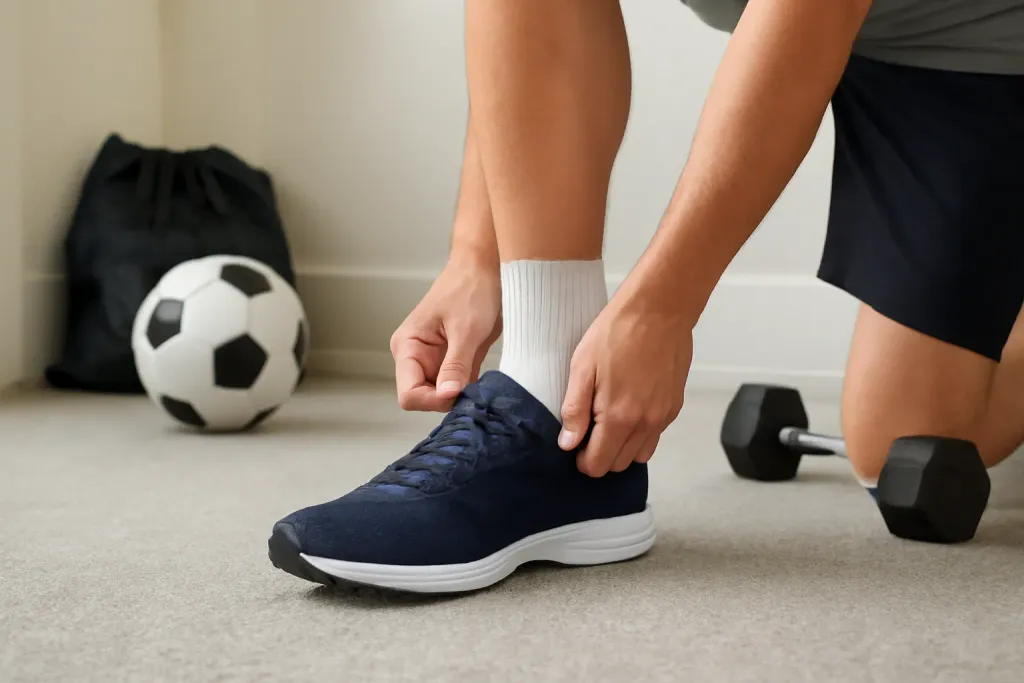
Why Fit Matters for Growing Feet
For parents, coaches, and teachers, sizing athletic shoes growing foot is less about chasing a number and more about finding a comfortable, workable fit. Children’s feet can change quickly, and athletic shoes need to support everyday movement such as running, jumping, walking, and standing in class. A shoe that is too small can feel cramped, while one that is too large may slip and make basic activity awkward.
It helps to think of shoe sizing as a balance between today’s fit and a little room for near-future growth. That balance is especially important for recreational sports, PE, and after-school play, where shoes may be worn for different activities in the same week. The goal is not a “perfect” shoe on paper, but a shoe that feels secure, comfortable, and appropriate for the child’s current foot size.
Because children may not describe fit clearly, adults often need to observe how the shoe looks and feels during wear. Paying attention to toe room, heel hold, and overall comfort can make the shopping process simpler. A careful fit check also reduces the odds of buying the same mistake repeatedly as a child grows.
How to Measure at Home
Home measuring is a practical starting point when sizing athletic shoes growing foot. Use a sheet of paper, a pencil, and a ruler or tape measure. Have the child stand with weight on both feet, since feet can spread a little when bearing weight. Trace each foot or mark the longest toe and the back of the heel, then measure the length.
Measure both feet, because one foot is often slightly larger than the other. Use the larger measurement when comparing size charts. It is also smart to measure later in the day, when feet may be a bit more expanded than first thing in the morning. For families buying online, this simple routine can reduce guesswork before opening a size chart.
Length matters most, but width should not be ignored. If a child consistently complains that shoes feel tight across the top or sides, the issue may be width or shape rather than length alone. A shoe that matches the foot’s general outline tends to be easier for children to wear comfortably during sports and school activities.
- Measure both feet and use the larger one.
- Check length while the child is standing.
- Note whether the foot seems narrow, average, or wide.
- Compare your measurements with the brand’s size guide rather than guessing from memory.
How Much Growth Room to Leave
When sizing athletic shoes growing foot, many families look for a little extra space at the front of the shoe. The idea is to avoid an exact toe-to-front fit that may feel cramped after a few weeks. At the same time, too much extra room can make the shoe feel loose and harder for a child to manage.
A sensible approach is to look for a small amount of space beyond the longest toe, rather than a large gap. The shoe should still feel stable when the child walks normally. If the foot slides forward noticeably, or if the child curls the toes to keep the shoe on, the shoe is probably too big.
Growth room should not be treated as a substitute for proper fit. A shoe that is dramatically oversized may seem like it saves money, but it can become uncomfortable and impractical for everyday use. For children who wear athletic shoes often, especially for PE or recreation, comfort during current wear matters more than stretching one pair far beyond its intended fit.
Parents sometimes ask whether to size up a full size. That may be too much for many children, especially in flexible athletic shoes. Instead, let the actual fit guide the decision: toe room, heel security, and whether the shoe feels natural when the child walks around indoors. If the fit seems uncertain, a smaller change in size is often easier to manage than a large jump.
Fit Checks Inside the Shoe
Once the child tries on the shoes, several simple checks can help confirm whether the fit is workable. The first is toe room. Press gently at the front of the shoe and ask the child to wiggle their toes. There should be enough space for movement without the toes feeling jammed.
Next, check the heel. The heel should sit securely without lifting too much as the child walks. A little movement is normal in many shoes, but obvious slipping can suggest the shoe is too long or not shaped well for the foot. Lacing or closure adjustments can help, but they should not have to do all the work.
Also pay attention to the top of the foot and the sides. If the child says the shoe feels tight, pinchy, or hard to put on, the issue may be volume rather than length. This is especially helpful for families comparing different brands or different models in the same size. Two shoes labeled the same size can still feel quite different.
Have the child walk a short distance on a flat indoor surface. Look for smooth steps rather than obvious shuffling or grabbing at the heel. If the shoe feels awkward during a simple walk, it is unlikely to feel better once worn for a longer activity.
- Toes should not feel pressed against the front.
- Heels should not slip dramatically.
- Sides should not pinch the foot.
- The child should be able to walk naturally without adjusting the shoe every few steps.
Browse our recommended gear
Our featured picks refresh periodically. While we update them, our editorial guides can help you find the right gear.
See our guidesChoosing the Right Type of Athletic Shoe
Not every athletic shoe fits every activity the same way. A shoe intended for running-style movement may feel different from one designed for court sports, general gym class, or everyday wear. For families sizing athletic shoes growing foot, the activity matters because different shoe shapes can affect how the shoe fits around the foot.
For young children who need one pair for school and general play, a versatile athletic shoe is often the simplest option. These shoes usually aim for a balance of cushioning, flexibility, and straightforward closure. For older kids participating in more organized recreation, the shape of the shoe may need to match the activity more closely.
It is also useful to think about how often the shoes will be worn. A shoe for daily school use may need a different level of durability and comfort than a pair worn only twice a week. Because growing feet can change before a shoe wears out, some families prefer shoes that are easy to put on, easy to adjust, and not overly rigid.
When comparing styles, focus first on fit and basic comfort. Features are secondary if the shoe does not feel right on the child’s foot. A simple, well-fitting shoe is often a better choice than a more complicated shoe that leaves too little room or feels unstable.
Wide, Narrow, and Different Foot Shapes
Children’s feet do not all have the same shape, and size alone does not tell the full story. Some children need more width, some need a slimmer fit, and some have a higher or lower foot volume. This is one reason sizing athletic shoes growing foot can take more than one try.
If a child’s shoe fits in length but feels squeezed across the front, look for a wider shape or a roomier toe area. If the shoe feels sloppy even when tied securely, a narrower fit or a different closure style may help. The right shape can make a shoe feel much more usable, even when the length size stays the same.
Parents and teachers should also remember that growing feet can look different over time. A shoe that worked last season may not work now, even if the child has only changed by a small amount in measured length. Small changes in shape and volume can be just as important as changes in length.
If a child seems sensitive to seams, stiff uppers, or pressure at one side of the foot, try comparing two styles rather than repeating the same one in a different size. Sometimes the best solution is not a bigger shoe, but a better-shaped shoe.
When to Upsize and When Not To
Upsizing can make sense when a child is clearly between sizes or when the current shoe is nearing the edge of comfort. But the decision should be based on fit, not on the idea that bigger is automatically better. In athletic shoes, too much size can affect how secure the shoe feels during ordinary movement.
Consider upsizing if the toes are very close to the front, the child outgrows shoes quickly, or the current pair is already tight at the start of wear. Avoid upsizing too far if the heel starts slipping, the child trips more than usual indoors, or the foot seems to move around inside the shoe.
For growing children, there is often a narrow window between too small and too big. That is why trying shoes on, walking in them, and checking the fit after the first few minutes matters. A shoe that seems fine while standing still may feel different once the child starts moving.
It also helps to plan around the school or sports calendar. If a child is due for a new pair before a busy season of PE or recreation, the fit should be comfortable enough for regular wear right away. Waiting for a shoe to “break in” is not a reliable strategy if the fit is already borderline.
Simple Shopping Checklist for Families
Families shopping online or in stores can keep the process simple by using a repeatable checklist. Start with the child’s current measurement, then compare it with the brand’s size chart. After that, focus on comfort, toe room, heel hold, and the shoe’s shape relative to the child’s foot. This keeps the decision grounded in fit rather than guesswork.
For children who are old enough to describe what they feel, ask direct questions: Is there room for toes? Does anything feel tight? Does the back of the shoe slip? Clear questions often get better answers than asking whether the shoe is “okay.” Younger children may not explain fit well, so watching how they walk can be more useful.
Keep in mind that athletic shoes are often replaced because of growth before they are fully worn out. That does not mean every pair needs to be oversized. It means families benefit from buying with current comfort in mind and checking fit regularly, especially during periods when a child seems to be growing quickly.
- Measure both feet and use the larger one.
- Compare against the brand’s chart.
- Check toe room and heel security.
- Walk indoors before deciding.
- Recheck fit as the season goes on.
For readers comparing options, the best overall choice is usually the shoe that feels secure, leaves a modest amount of room, and matches the child’s foot shape. That approach keeps sizing athletic shoes growing foot practical, especially for families who want one reliable pair for everyday activity.