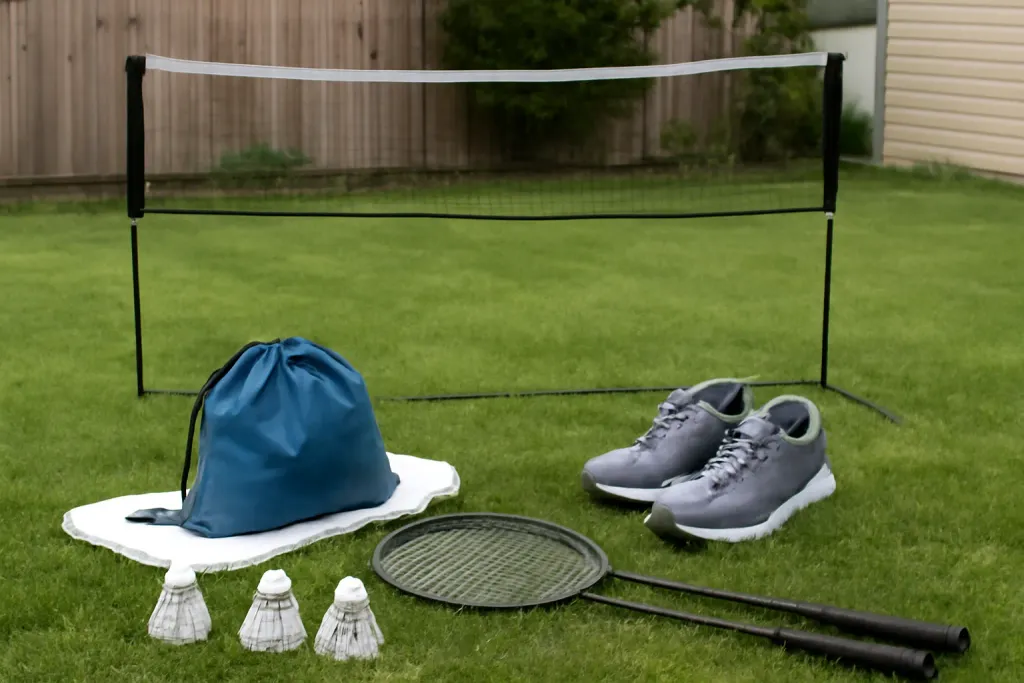
What badminton net height means
The term badminton net height usually refers to the official height of the net at the posts and the center point across the court. For recreational play, knowing this measurement helps families and casual players set up a game that feels familiar and fair, even if they are using a driveway, gym, backyard, or multi-use court.
Badminton is easy to start, but the net still matters. If it sits too low, rallies can become too easy and the game may lose its shape. If it sits too high, players may have trouble sending the shuttle over cleanly. A reasonable setup gives beginners a better chance to enjoy the back-and-forth of the game without guessing at the net line.
For parents, volunteer coaches, and PE teachers, the main goal is usually consistency. You do not need a complicated setup to make casual badminton work. You just need a net that is close to the standard height and a simple way to check it from time to time.
Standard badminton net height
The commonly used badminton net height is:
- 5 feet 1 inch at the posts
- 5 feet at the center of the net
This slight dip in the middle is normal and expected. In practical terms, it means the net should be tighter at the sides and a touch lower where it crosses the middle of the court. Many recreational setups follow this standard because it is the most familiar reference point for players.
If you are setting up a family game, you do not have to treat the number as a strict test. Small variations are common, especially with portable systems or temporary court lines. The key is to keep the net close enough that both sides play under similar conditions.
It also helps to remember that badminton is different from volleyball or tennis. A net that looks reasonable in another sport may be far from the right height for badminton. If you are converting a shared space, checking the measurement matters more than judging by eye.
How to measure the net in a simple way
Measuring the net does not require special tools. A tape measure is usually enough. Start by checking the height at each post, then measure the center point where the net crosses the middle of the court. If the net is portable, it can help to have one person hold the tape while another steadies the post or frame.
A simple process looks like this:
- Place the net between the posts or supports.
- Measure from the floor or ground to the top edge of the net at each post.
- Measure the center of the net in the same way.
- Adjust the tension or post height if needed.
When the net is used outdoors, the ground surface may not be perfectly even. That can make the reading slightly different from one side to the other. In those cases, aim for a setup that is as even as practical across the playing area.
If children are helping with setup, keep the measuring task simple. They can help hold the tape or check that the net looks level, while an adult handles the main adjustments. That keeps the process easy to repeat before a game or class session.
Recreational play adjustments that still work
Many families and casual players use portable nets, adjustable systems, or temporary court markers. In those settings, the exact badminton net height may vary a little from one setup to another. That is normal, as long as the net is close to standard and consistent across the width of the court.
If you are using a backyard or driveway, consider the players and the space available. Younger children may be playing shorter rallies or using a smaller court area, while teens and adults may want a more standard setup. The net should still be a real badminton net height reference, even when the rest of the court is informal.
Some recreational setups also share space with other backyard games. If that is the case, it can be helpful to mark the net location and note the preferred height on the equipment bag or storage tag. That makes repeat setup faster for the next weekend game or school activity.
For PE teachers and volunteer coaches, a portable net that is easy to adjust can save time. The goal is not perfection; it is a reliable height that supports a fair, recognizable game. A simple check before play is often enough.
Browse our recommended gear
Our featured picks refresh periodically. While we update them, our editorial guides can help you find the right gear.
See our guidesCommon setup mistakes to avoid
One common mistake is setting the net by eye instead of measuring it. Even a net that looks close can end up several inches off, especially if the posts are uneven or the frame is not fully tightened. For badminton, a small difference can change how the shuttle travels over the court.
Another mistake is ignoring the center of the net. A net may be set correctly at the posts but sag too much in the middle. That creates a setup that is not really close to the usual badminton net height. Checking both the sides and the center helps avoid that problem.
It is also easy to confuse badminton with other net sports. Volleyball nets and tennis nets follow different measurements, so a net borrowed from another activity may not suit badminton without adjustment. If a shared gym or yard uses one net for several games, label the intended height clearly.
Finally, do not forget that tension matters. A loose net can droop and make the center point lower than expected. Tightening the net properly is often just as important as setting the post height. If the frame or cord allows it, give the net a final check before the game begins.
Why consistency matters for casual games
Consistency helps everyone understand the game. When the badminton net height stays close to standard, players can focus on serving, rallying, and simple shot placement rather than wondering whether the setup is the problem. That is especially helpful for beginners who are still learning how badminton works.
For families, consistent height also makes it easier to reuse the same equipment from one play session to the next. If you set the net one way on Saturday and another way on Sunday, players may feel like they are starting from scratch each time. A repeatable setup creates a better experience, even in a casual setting.
In school and community settings, consistency supports smoother transitions between groups. If a PE class or rec program uses the same net for multiple stations, a clear height target helps adults reset the court quickly. It also reduces confusion when several students or volunteers are helping with equipment.
That does not mean every game must look identical. Outdoor surfaces, temporary posts, and quick family setups all introduce small differences. The point is to keep the height close enough that the game still feels like badminton.
Choosing equipment for home or school use
If you are shopping for a net system, look for one that is easy to adjust and simple to store. For home use, a portable badminton set can be helpful when the same space is also used for other activities. For school or group use, a sturdier frame and clear measurement markers can make setup easier for multiple adults.
Before buying, think about who will use the system most often. Families with younger children may prefer a net that goes up quickly and can be reset without much effort. PE teachers may want equipment that is straightforward to assemble before class and pack away afterward. Volunteer coaches may care most about repeatable height and convenient transport.
It can also help to choose a net with straightforward instructions. A setup guide that explains where the posts should sit and how high the center should be can save time. If the equipment includes height marks, those can be useful for quick checks before play.
Remember that the best choice is not always the most complicated one. For recreational badminton, simple and dependable often works better than elaborate. A net that is easy to set near the standard badminton net height is usually a strong fit for beginners and casual players.
Quick reference for players and adults
Here is a simple reminder for setting up a casual badminton court:
- Posts or side edges: about 5 feet 1 inch
- Center of the net: about 5 feet
- Check both sides before starting play
- Make sure the net is tight enough to avoid extra sag
- Use a tape measure if the setup is not already marked
These numbers are a practical starting point for families, beginners, and school settings. They are especially useful when equipment is moved often or shared among different groups. A quick measurement at the start of play can prevent a lot of confusion later.
If you are teaching or organizing a game, it may help to post the numbers on a supply cart or equipment bag. That way, anyone helping with setup can confirm the target without searching online.
For most recreational players, the main job is simply to keep the net close to the standard and the court ready for play. With a little consistency, the game becomes easier to organize and more enjoyable to start.