Overview
The best backyard sports equipment for families with mixed ages is equipment with simple, adjustable rules — games like cornhole, horseshoes, bocce, or a badminton set played casually — where a young child and an adult can compete in the same game without one side being at an obvious disadvantage. Games with rigid rules or that demand a lot of physical skill tend to leave younger or less experienced players on the sidelines. This guide covers how to pick equipment that scales across a mixed-age group, how to lay out a yard safely when several games are going at once, and how to build a starting collection without overspending.
Choosing Games That Scale Across Ages
Games that work well for mixed-age families tend to share a few traits: low physical demands, simple scoring, and rules that can be adjusted informally without breaking the game. Lawn toss games like cornhole and horseshoes are good examples — the throwing distance can be shortened for younger players, and turns are naturally paced so no one is rushed. Bocce works similarly, with soft underhand rolling that doesn't require much strength or coordination to participate meaningfully. By contrast, fast-paced games with a lot of running or quick reflexes can be frustrating for young kids playing against adults, and may need modified rules or separate skill divisions to stay fun for everyone. When shopping, look for equipment explicitly designed with adjustable distances or multiple skill tiers built in, since that flexibility is what actually makes a game work across a wide age range.
Safety Spacing and Supervision
When several games run in the same yard, spacing matters more than it might seem. Give throwing and swinging games — horseshoes, cornhole, badminton — enough buffer from walking paths, seating areas, and younger kids at play so a stray throw or swing doesn't reach anyone unexpectedly. As a general guideline, keep a few extra feet of clearance beyond the stated play area on all sides, and position younger children's activities (like a small target toss or a simple ball game) away from the direct line of adult-paced throwing games. Adult supervision is especially useful during setup and teardown, when stakes, wickets, or poles are exposed and unattended equipment is more likely to become a trip hazard for kids moving between games. None of this requires elaborate planning — a quick walk-through of the layout before play starts is usually enough to catch the obvious issues.
Browse our recommended gear
Our featured picks refresh periodically. While we update them, our editorial guides can help you find the right gear.
See our guidesCombo Sets vs Buying Individually
Combo sets that bundle several games — for example, cornhole, ladder toss, and bocce in one case — are a practical way to get variety without researching and buying each game separately. They tend to work well for families who want options on hand for different-sized groups or ages without a large upfront investment in any single game. The tradeoff is that individual pieces in a combo set are sometimes lighter-duty than dedicated single-game sets, since manufacturers balance cost and portability across several games in one box. If your family already knows a particular game gets the most use — say, cornhole is always the first thing out — a dedicated, sturdier single-game set may be worth the extra cost. For families still figuring out what sticks, a combo set is usually the more efficient starting point.
Rotating Equipment to Keep Interest
Interest in any single backyard game tends to fade after repeated use, especially for kids. Rather than buying more equipment all at once, many families find it works better to keep two or three games in regular rotation and store the rest, swapping periodically to keep things feeling fresh. This also reduces yard clutter and makes setup faster, since you're not trying to fit every game into the same afternoon. A simple storage bin or shelf near the door makes it easy to grab a different set on short notice without a whole reorganization.
A Budget-Conscious Starting Point
For a family just getting started, a single well-made combo set covering two or three games is usually a more sensible first purchase than several individual sets bought at once. It keeps upfront cost lower, gives you a sense of which games actually get used, and avoids ending up with equipment that sits unused in the garage. From there, you can add a dedicated set for whichever game turns out to be the household favorite, informed by actual use rather than a guess made before anyone has played.
Storing Equipment Between Uses
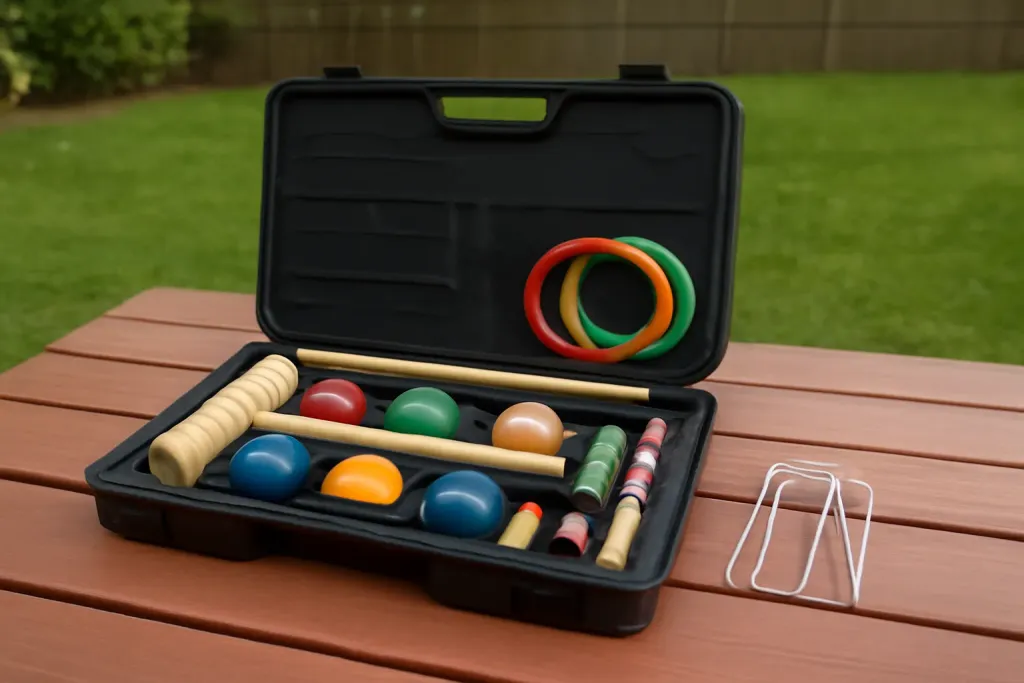
A backyard game collection tends to grow faster than the storage plan for it. Loose bocce balls, cornhole bags, and croquet mallets left out on the lawn overnight are more likely to get rained on, chewed by pets, or simply lost in tall grass. A single bin or a wall-mounted rack near the back door keeps the whole rotation in one findable place, which matters more for a mixed-age household than a highly organized one, since younger kids are less likely to put things away consistently on their own.
Grouping equipment by game rather than by type also helps -- keeping a set's balls, stakes, and rules card together means a parent or older sibling can hand a full game to a younger child without hunting for missing pieces first. See our storage solutions hub for rack, bin, and cart options sized for this kind of mixed household use.
If storage space is limited, prioritize keeping the two or three most-used games easily accessible and box up the rest between seasons. Families rotating equipment already benefit from this kind of sorting, so combining storage planning with the rotation habit described above tends to save the most time in practice.
Browse our recommended gear
Our featured picks refresh periodically. While we update them, our editorial guides can help you find the right gear.
See our guidesWeather and Seasonal Considerations
Not every backyard game equipment holds up the same way to sun, rain, and temperature swings. Resin and hard plastic pieces (bocce balls, cornhole boards) generally tolerate being left outside longer than fabric bags or wooden mallets, which can warp, mildew, or fade with repeated exposure. If a game is going to live outside for the season rather than being put away after each use, it's worth checking what the manufacturer says about weather tolerance before committing to that routine.
Games with metal stakes or poles -- horseshoes, tetherball, croquet wickets -- can also become a minor safety consideration once the ground freezes or turns to mud, since anchoring that felt secure in dry soil may loosen. A quick seasonal check before the first game of a new season, rather than assuming last year's setup is still solid, is a reasonable habit for any family running a semi-permanent backyard setup.
For families in regions with real winters, treat late fall as the natural point to bring softer or weather-sensitive pieces indoors, and plan on a similar spring check before reinstalling anything that was staked or anchored into the ground over the winter.
Involving Kids in Equipment Choices
Letting kids have some say in which games make it into the rotation -- even a simple vote between two options -- tends to increase how much a piece of equipment actually gets used once it's purchased. This matters more for larger, less flexible purchases like a badminton net or a soccer goal than for small, inexpensive items that are easy to swap out if they don't get used.
For families with a wide age range, alternating whose preference drives the next purchase is a simple way to keep the equipment mix balanced rather than consistently favoring the oldest or most vocal kid's interests. It also gives younger children a sense of ownership over gear that's otherwise sized and paced for older siblings.
None of this needs to be formal -- a quick conversation before a purchase is usually enough to avoid buying equipment that ends up unused because it didn't actually match what the family wanted to play.
Final Thoughts
Backyard sports equipment for families with mixed ages works best when it's simple to adjust, safely spaced from other activities, and chosen with an eye toward what will actually get used season after season. Start with a combo set, rotate what's out, and expand deliberately once you know what your family enjoys. For more ideas on specific games, see our guide on croquet sets with carrying cases, or browse the full Fitness and Outdoor Recreation hub.