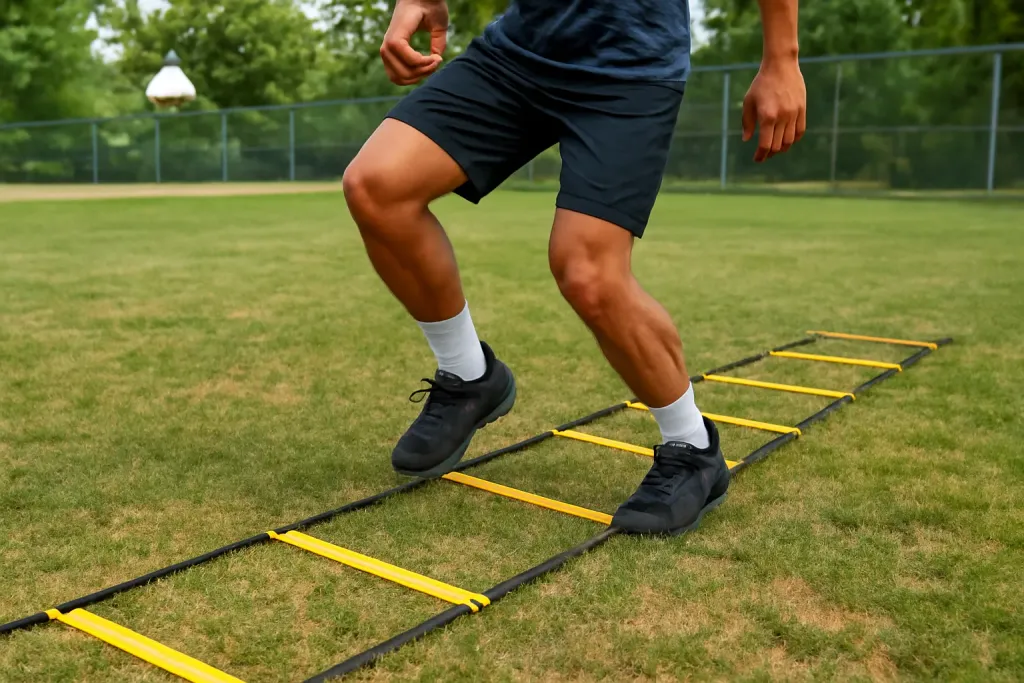
What an Agility Ladder Is
An agility ladder is a flat training tool with evenly spaced sections that help users practice foot placement, rhythm, and quick direction changes. For families, beginners, and group settings like PE classes or recreational teams, it offers a simple way to turn footwork into a structured drill. The ladder itself does not do the training; it just creates a clear pattern to follow.
Agility ladder drills for beginners are appealing because they are easy to understand. Instead of asking someone to guess where to step next, the ladder gives a visual guide. That can make practice feel more organized for children, teens, and adults who are just getting started with movement drills.
These drills are often used as part of warm-up routines, general coordination practice, or fun movement stations. They work well in driveways, gyms, patios, blacktop areas, and other open spaces where there is enough room to move safely and comfortably.
Why Beginners Use Them
Beginners often benefit from simple drill tools because the setup is straightforward and the movement patterns are easy to repeat. An agility ladder can help people practice stepping in a sequence without needing complicated equipment or a long list of instructions. That makes it useful for parents looking for at-home activity ideas, volunteer coaches planning practice stations, and teachers building a movement circuit.
Another reason these drills remain popular is flexibility. A ladder can be used for solo practice or as part of a group rotation. One child can work through the rungs while another waits a turn, or a class can split into small groups to keep everyone moving. This makes the ladder practical for beginners who may need short, manageable bursts of activity instead of long, complex routines.
Agility ladder drills for beginners also allow for gradual progress. A person can start with one basic pattern and later try another without changing equipment. That makes it easier to build confidence. The goal is not perfect speed right away; the goal is learning to move with control and becoming comfortable with the layout.
How to Set Up the Ladder
Before starting, lay the ladder flat on a stable surface so the sections are easy to see. Make sure the area is clear of toys, loose balls, furniture, or anything else that could interrupt the pattern. A straight line works best, especially for beginners who are still learning where to place their feet.
It helps to leave a little open space at the front and back of the ladder so participants have room to begin and finish each drill. If the drill will be used outdoors, choose a surface that is dry and level enough for comfortable walking or stepping. Indoors, gym floors or open multipurpose rooms are common choices.
For younger users, keep the first sessions short and simple. A ladder with clearly visible sections can make it easier to follow along. If more than one person is using the ladder, mark a starting spot and a finish point so the line stays organized. In a family setting, this can reduce confusion and help each participant know when to go.
Basic Drill Patterns to Try
When introducing agility ladder drills for beginners, it is usually best to start with one pattern at a time. A simple walk-through is often enough to show the rhythm before adding any speed. The idea is to learn the sequence, then repeat it until it feels familiar.
One-foot-each-rung: step one foot into each section as you move forward.
Two-feet-in-each-rung: place both feet in a section before moving to the next one.
In-and-out steps: step into a section, then step out to the side in the next movement.
Side steps: move sideways through the ladder one section at a time.
These patterns are easy to explain and easy to demonstrate. For a first session, it may help to show the drill once, then let the beginner try it slowly. If the pattern is missed, pause and reset rather than rushing through the rest of the ladder. Repetition is useful because it gives the person a chance to recognize the pattern and adjust foot placement.
Teachers and coaches often find that a short sequence works better than a long one. Two or three rounds of a basic drill can be enough for a beginner before switching to another movement or taking a break.
Browse our recommended gear
Our featured picks refresh periodically. While we update them, our editorial guides can help you find the right gear.
See our guidesSimple Coaching Cues That Help
Clear, short cues can make beginner ladder work much easier to follow. Instead of giving a long explanation, it often helps to use one instruction at a time. For example, a coach or parent might say “look forward,” “light steps,” or “one section at a time.” These phrases are easy to remember and easy to apply during movement.
Another helpful cue is to focus on the pattern before the pace. Beginners usually do better when they understand the sequence first. Once the footwork looks comfortable, speed can be introduced naturally by asking for a little more rhythm on the next round.
Spacing and posture matter in a practical sense, too. Encourage participants to stay balanced, use controlled steps, and keep their eyes on the ladder path. If someone becomes tangled or confused, it is usually better to slow down and restart than to keep going with the wrong pattern. That approach keeps the drill simple and approachable.
For groups, it can help to give each person the same cue before they go. Consistent language makes the drill easier to teach and easier for beginners to repeat.
How to Build a Short Routine
A beginner routine does not need to be long to be useful. In fact, short sessions are often easier for children and new users to follow. A simple structure might include one basic warm-up movement, one ladder pattern, and one chance to repeat the pattern with a small variation.
For example, a family or class might begin with a slow walk-through, then try two-feet-in-each-rung, then finish with a sideways step pattern. That creates variety without making the session feel overwhelming. The structure is easy to remember and simple to repeat on another day.
It can also help to alternate the ladder with other easy movement tasks. A beginner might do one ladder pass, then walk back to the starting point before the next turn. This keeps the pace manageable and gives each person a moment to reset. For volunteer coaches and PE teachers, a short circuit like this is also easier to supervise.
When the routine is built around a few clear patterns, the focus stays on learning, not on memorizing too many steps. That makes the ladder a practical choice for introductory footwork practice.
Common Mistakes for Beginners
Beginners sometimes try to move too fast before the pattern feels familiar. That can lead to missed steps and confusion. It is usually better to slow the drill down and let the participant find the rhythm first. Speed can come later, after the footwork is understood.
Another common mistake is crowding the ladder or rushing into the next section before the current step is complete. The best beginner drills usually emphasize clear placement over quick movement. If the steps are too close together or the body is out of sync, it may help to restart the drill from the beginning at a slower pace.
Some users also forget to keep the setup simple. Adding too many cues, too many variations, or too many changes at once can make the exercise harder to follow. For beginners, less is often more. One pattern, one cue, and one round at a time can be enough.
It can also help to avoid using the ladder as a race during the first lessons. Friendly competition may be fine later, but early sessions are usually more productive when the focus is on learning the sequence and keeping the movement organized.
Choosing and Storing the Equipment
For families and beginner-focused programs, an agility ladder is usually easiest to use when it is lightweight, simple to lay out, and easy to put away after practice. A basic model with visible sections is often enough for introductory drills. The main goal is to have a tool that supports clear footwork practice without adding unnecessary complexity.
It may also be helpful to consider where the ladder will be used most often. A home setup may need something that folds or rolls up easily, while a school or rec program may want equipment that can be shared across multiple stations. Since the ladder is meant to be a teaching tool, convenience and simplicity matter.
Storage is usually straightforward. After use, make sure the ladder is clean, dry if needed, and placed somewhere it will not become tangled with other gear. Many families keep training items with balls, cones, or other activity tools so they are easy to find the next time. For beginners, having the ladder ready to go can make it more likely that the drill gets used regularly.
In the end, agility ladder drills for beginners work best when the equipment is easy to handle and the routine is easy to repeat.