Overview
A youth agility ladder is a flat, flexible ladder laid on the ground that kids step through in different patterns, paired with a small set of cones for simple footwork and coordination games in a driveway or backyard. At a recreational level, this equipment is about fun, coordination, and movement variety — not structured athletic training — and a basic set costs little and stores easily. This guide covers what a ladder is actually for, the material and rung-spacing options you'll see, whether to stake a ladder down or leave it loose, how to size a cone set for simple drills, and reasonable expectations for what this kind of practice does at a young age.
These are among the most affordable pieces of equipment a family can add to a backyard practice routine, and because they roll up small, they're easy to bring along to a park, a grandparent's yard, or a sibling's practice while waiting around. Many parents also use them simply as a rainy-day-alternative indoor game on a hallway floor when outdoor play isn't an option.
What an Agility Ladder Is For
An agility ladder is a set of rungs, usually made of flat webbing or plastic, connected by cord and laid flat on the ground to form a series of evenly spaced squares. Kids step through the squares in different foot patterns — one foot per square, two feet per square, side-shuffling, and so on. At a recreational youth level, the value is mostly in coordination, rhythm, and having fun with a novel movement pattern, similar to hopscotch or other footwork games. It pairs naturally with cones for simple obstacle-style circuits kids can run through with a parent calling out patterns or timing them for fun.
A typical session might start with the simplest pattern — one foot in each square, walking through slowly — before progressing to slightly more involved patterns as a child gets comfortable. There's no need to move quickly or "get it right" in a strict sense; the point at this age is exposure to a new movement puzzle, and most kids naturally speed up and get more confident with repeated, casual practice over a few sessions.
Parents sometimes find it helpful to demonstrate a pattern first, then let the child copy it at their own pace, rather than describing the footwork verbally. Kids often pick up a new pattern faster by watching and imitating than by following instructions, and turning it into a simple game of "follow the leader" through the ladder keeps the activity light and social.
Ladder Material and Rung Spacing
Most youth ladders use one of two rung materials:
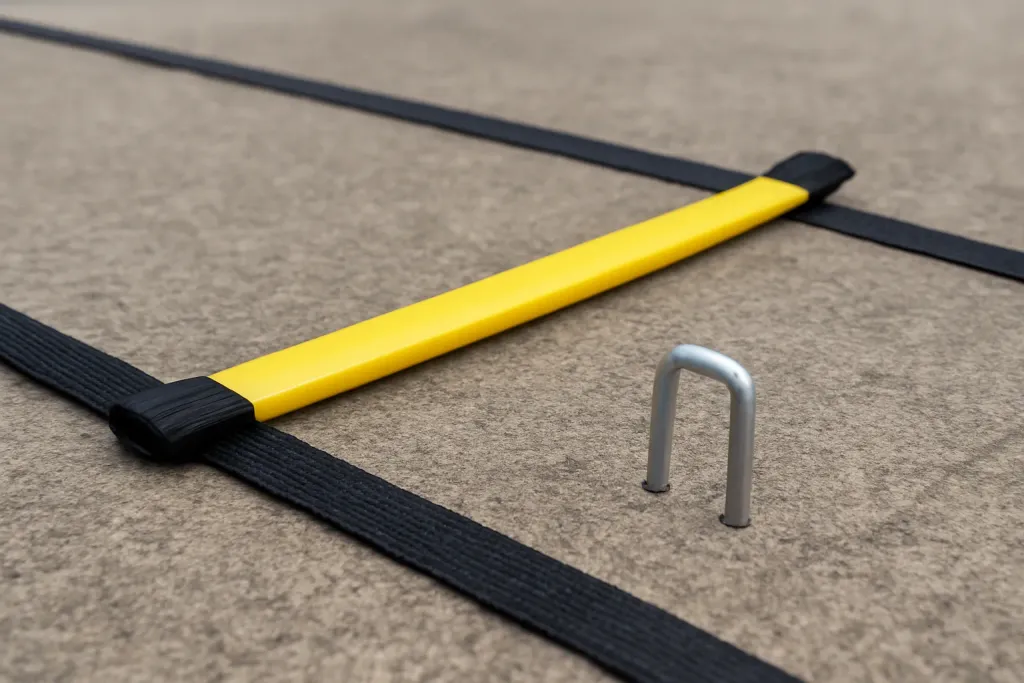
- Flat webbing rungs — soft, nylon-strap rungs that lie flush with the ground and roll up small for storage; a common, low-cost choice for backyard use.
- Rigid plastic rungs — flat plastic bars that hold their shape a bit better on uneven ground but take up slightly more room when rolled or folded.
Rung spacing (the length of each square) matters more for younger kids than adults. A ladder marketed for youth use typically has shorter spacing between rungs than an adult training ladder, since a young child's stride is naturally shorter — a ladder built for adult stride length can feel awkward or force an unnatural stretch for a small child.
Total ladder length also varies between products, generally ranging from around 10 to 15 feet with anywhere from 8 to 12 rungs. A shorter ladder is easier to store and fits smaller yards or driveways, while a longer one gives a child more room to build rhythm before running out of squares. For most backyard setups, a mid-length ladder in the 10 to 12 foot range is a practical, easy-to-store default.
Ground Stakes vs Loose-Lay Ladders
Some ladders include small ground stakes or pegs at each end to keep the ladder from sliding on grass during quick footwork; others are simply laid flat with no anchoring. On grass or soft dirt, stakes are genuinely useful — a sliding ladder is both frustrating and a minor trip hazard if a rung bunches up underfoot. On a driveway or patio, stakes usually aren't an option, so a ladder with a bit of grip on its underside, or simply weighting the corners lightly, works better. Either way, checking that the ladder lies flat before each use — no folded or twisted sections — is a quick habit worth building with kids before they start running through it.
A ladder that's been rolled up tightly for storage sometimes needs a minute to lie flat once unrolled, especially in cooler weather when the webbing or plastic is stiffer. Weighting the ends briefly, or simply walking the length of it once before kids start, helps it settle flat and reduces the chance of a curled edge catching a foot mid-drill. A quick visual check for any twisted rungs before each session takes just a moment and keeps things running smoothly.
Cone Set Sizing and Count
Cones for backyard youth drills don't need to match anything used in organized training. A few practical guidelines:
- Size — small, low-profile cones (roughly 2 to 6 inches tall) are easiest for young kids to step around without tripping, and they're less likely to roll away in the wind than taller marker cones.
- Count — a set of 8 to 12 cones is plenty for most basic backyard patterns like zigzag runs, simple relay markers, or a mini obstacle course; larger sets are mostly useful if multiple kids are drilling at once.
- Color variety — sets with a few different colors make it easy to call out simple color-based games ("touch the red cone"), which adds a fun element for younger kids beyond straight running.
- Stackability — many small cones nest together for storage, which matters if you're keeping the set in a bin with other backyard gear rather than a dedicated bag.
Cones also double as markers for entirely different backyard games beyond agility work — marking bases for a yard game, setting boundaries for a catch session, or laying out a simple obstacle course — so a set tends to get more use than just ladder-paired drills alone.
Browse our recommended gear
Our featured picks refresh periodically. While we update them, our editorial guides can help you find the right gear.
See our guidesAge-Appropriate Expectations
It's worth being clear about what a backyard agility ladder and cone set actually deliver: they're a coordination and fun-focused activity, not a performance training program, and they don't make a young athlete faster, stronger, or less prone to injury on their own. Keep sessions short and playful, especially for younger kids, and have an adult supervise setup and early sessions so the ladder lies flat and the surrounding area is clear of hazards like toys, hoses, or uneven ground. Spacing kids out if more than one is drilling at a time avoids collisions during quick footwork. Treat these tools the same way you'd treat any backyard game — as a way to build movement confidence and have fun, not as a shortcut to athletic performance.
It's also fine, and normal, for younger kids to struggle with more complex ladder patterns or to lose interest after a few minutes. Following their lead on pacing and letting them repeat easier patterns rather than pushing toward harder ones keeps the activity enjoyable, which matters more at a recreational level than getting every step technically correct.
Storage and Care Between Sessions
Flat agility ladders are usually made from a durable but foldable material, and storing one loosely coiled or folded (rather than tightly rolled) helps it lie flat again the next time it's used instead of curling at the edges. Ground stakes, if included, are easy to lose in grass -- keeping them in a small pouch attached to the ladder avoids the common problem of arriving at the next session with a stakeless ladder.
Cones generally nest for compact storage, and a simple mesh bag keeps a full set together rather than scattered across a garage shelf between practices.
Combining a Ladder With Simple Cone Drills
An agility ladder and a small set of cones work well together for casual, low-pressure footwork games -- stepping through the ladder rungs, then weaving between a few cones -- that emphasize coordination and fun over any structured training outcome. This kind of activity is appropriate for a wide age range with simple adjustments to pace.
As with any active drill involving kids, keep the practice area clear of hazards and supervise younger children around stakes or uneven ground, without treating the activity as a formal athletic training program.
Final Thoughts
A youth agility ladder and a small cone set are inexpensive, low-commitment additions to a backyard practice setup — pick youth-scaled rung spacing, decide whether stakes make sense for your surface, and keep the cone count modest and colorful enough to support simple games. Framed as coordination and fun rather than formal training, this is a great way for kids to get extra movement time outdoors.
Combined with a rebounder net or a simple ball, a ladder-and-cone setup can anchor an easy weekend routine that mixes footwork, catching, and kicking games without needing a coach, a team, or a big backyard. Visit our training accessories hub for related gear, including our guide to portable soccer rebounders for kids.