Overview
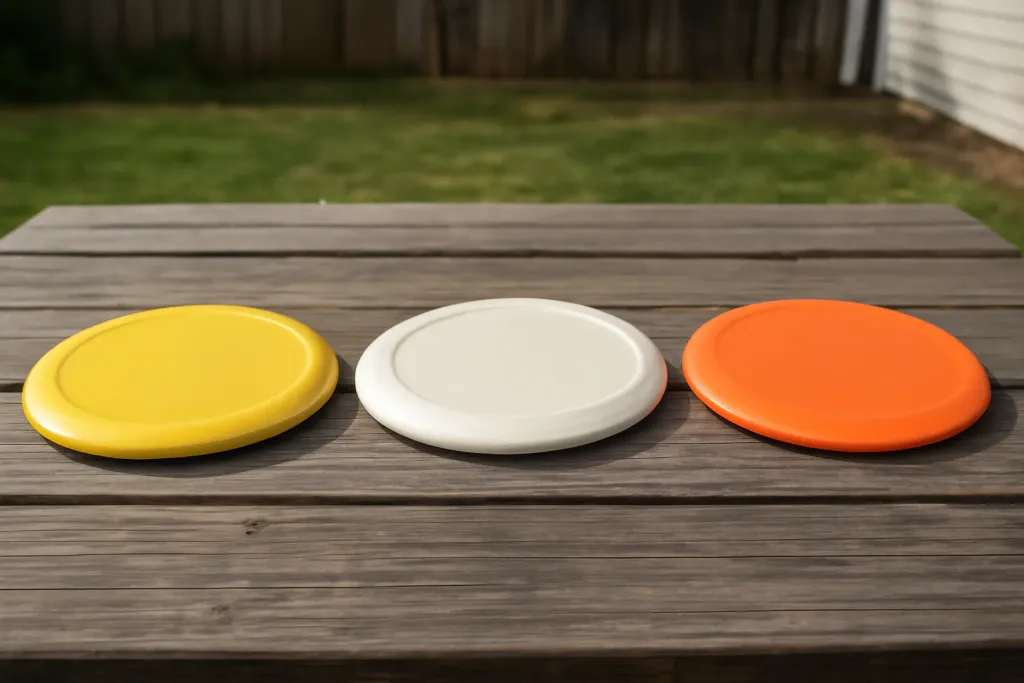
Most beginners need just three discs to start playing disc golf comfortably: one driver, one mid-range, and one putter. That small set covers the three basic phases of a hole — the tee shot, the approach, and the putt — and gives a new player enough range to complete a round without carrying discs they don't yet know how to use. It's a question that trips up a lot of new players browsing big multi-disc bundles, so this guide focuses specifically on quantity: how many discs actually get used, when it makes sense to add more, and how bag size and budget factor into the decision.
For guidance on which specific discs to choose — weights, plastics, and speed ratings — see our companion guide on disc golf starter sets for beginners. This article assumes you already know roughly what a driver, mid-range, and putter do, and focuses purely on how many of each you actually need.
New players often assume the number of discs in their bag correlates directly with how well they'll play, borrowing the logic from sports like golf where a fuller bag genuinely offers more options. Disc golf works differently for beginners specifically because most of the early learning curve is about developing a repeatable throwing motion, not selecting the perfect disc for every situation. A smaller set that gets thrown consistently generally serves that goal better than a large one that doesn't.
The Minimum Functional Set
Three discs is the practical floor for playing a full round without constantly being under-equipped:
- One driver for tee shots on longer holes.
- One mid-range for approach shots and shorter, more controlled tee shots.
- One putter for short approaches and putts into the basket.
With just these three, a beginner can play an entire course. It won't be optimal for every hole — a wooded, technical hole might call for a different disc than an open fairway — but three well-chosen discs let a new player focus on developing a repeatable throwing motion instead of constantly switching gear and second-guessing disc choice mid-round.
Some beginners choose to carry a spare of one or two discs from the start, mainly as backup in case a disc gets lost in tall grass, water, or heavy brush during a round — a common early experience since new throwers are still developing accuracy. A spare putter or mid-range is a reasonable low-cost addition for this reason alone, even while the core three-disc rotation remains the primary set in use.
Why More Discs Isn't Automatically Better
It's common to see 15- or 20-disc "value" bundles marketed to new players, but volume creates its own problems for beginners:
- Decision fatigue. Standing on a tee pad with a dozen unfamiliar discs makes it harder, not easier, to commit to a shot.
- Inconsistent practice. Skill in disc golf comes largely from repetition with the same disc. Rotating through many discs slows down the process of learning how any single one flies.
- Unused discs. Many large bundles include discs with speed or stability ratings that are simply too advanced for a beginner's arm speed, meaning several discs in the box may go unused for a full season or more.
A smaller, well-understood set generally produces faster improvement than a large, unfamiliar one.
There's also a practical cognitive cost to too many choices that's easy to underestimate. When a beginner has just three discs, the decision of what to throw is largely made for them by the shot at hand — long shot, driver; medium shot, mid-range; short shot, putter. With a dozen or more discs of varying speed and stability, that decision becomes genuinely harder, and the extra time spent deliberating can affect play pace as well as confidence in the shot actually taken.
When to Add More Discs
There are a few reasonable signals that it's time to expand beyond your starting three:
- You've played enough rounds to notice gaps. For example, you might find yourself wanting a straighter-flying driver for tight, tree-lined holes versus a more distance-oriented driver for open ones.
- Your throwing form has stabilized. Once your release is consistent, faster discs become more usable and worth adding.
- You're playing courses with varied terrain. A second putter with different stability, or a second mid-range, can help on courses that differ a lot from where you learned.
A common next step after the initial three is to add one or two more mid-ranges or putters, since those tend to be the discs thrown most often. Expanding driver selection is often better delayed until arm speed and form have developed further.
Another useful signal is course variety. A player who only plays one familiar course may need fewer discs than someone who regularly plays several different courses with varying terrain, tree density, and hole length. If you find yourself playing new or more challenging courses, that's often a better trigger for expanding your disc selection than an arbitrary timeline or a fixed number of rounds played.
Browse our recommended gear
Our featured picks refresh periodically. While we update them, our editorial guides can help you find the right gear.
See our guidesBag Capacity Considerations
Disc quantity and bag choice are linked. A starter set of three discs doesn't need a dedicated disc golf bag at all — a jacket pocket, a small tote, or even a reusable shopping bag works fine for a first few rounds. Once you're carrying six to ten discs, a small shoulder bag becomes more practical, mainly for keeping discs from rattling around and getting scuffed against each other. Full-size disc golf backpacks, built to carry 20-plus discs along with water bottles and accessories, are generally unnecessary until you're playing regularly and have built out a more specialized rotation. Buying bag capacity ahead of your actual disc count just adds cost and bulk for no real benefit early on.
It's worth resisting the temptation to buy a large bag "for the future" before you actually need the capacity. A bag that's mostly empty doesn't organize discs any better than a small tote, and the extra straps, pockets, and structure of a full-size bag mainly add value once you're actually filling that space with discs you use regularly.
Cost vs. Usefulness
Large bundles can look like better value per disc, but the comparison is misleading if a third or more of the discs go unused. A tightly chosen three-disc set, even at a similar total price to a bulk bundle, often delivers more practical value because every disc gets regular use and contributes to skill development. If budget is the main constraint, it's usually more efficient to buy fewer discs in beginner-friendly weights and plastics than to stretch the same budget across a large assortment that includes advanced-level discs you're not ready to throw well yet.
It's also worth factoring in replacement cost when thinking about total value. Discs occasionally get lost — in water hazards, thick brush, or simply left behind on a course — and a smaller, well-known set is both cheaper to replace piece by piece and easier to notice when something's missing. A large assorted bundle makes it harder to track which discs are actually in rotation, which can mean a lost disc goes unnoticed for weeks.
Final Thoughts
For nearly all new players, three discs — a driver, a mid-range, and a putter — are enough to start playing and improving. Resist the pull of large bundles until you've logged enough rounds to know specifically what gaps you want to fill. From there, expand gradually based on your own play, not a pre-packaged number. For more on choosing the right individual discs for that starting set, see our disc golf starter set guide, or browse the full sport-specific buying guides hub for other recreational sports.