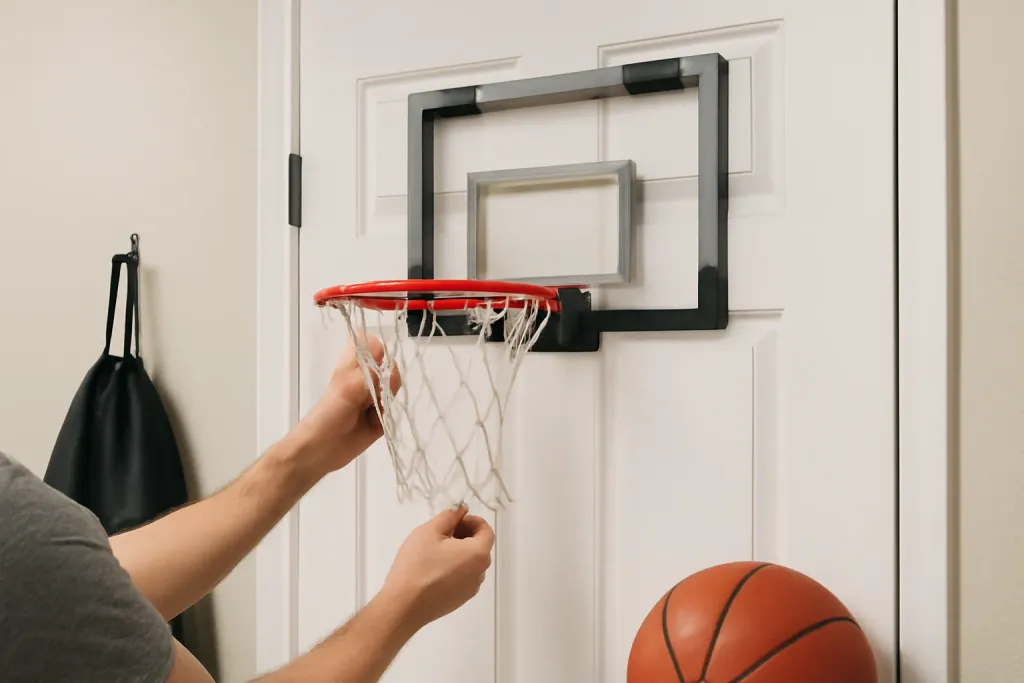
Why Door Safety Matters for Mini Hoops
For many families, a mini basketball hoop is a simple way to add indoor play without taking up much space. The most common setup is a door-mounted model, which can be convenient for bedrooms, playrooms, dorm-style spaces, and rec rooms. But when people search for mini basketball hoop door mounting, the real goal is usually twofold: keep the game fun and avoid unnecessary damage to the door.
Not every door is built the same, and not every hoop uses the same mounting method. A setup that feels harmless on one door may leave marks, cause rattling, or scratch paint on another. That is why it helps to slow down before hanging the hoop. A few minutes spent checking the door, the hardware, and the fit can make a big difference.
Damage often comes from pressure, friction, or repeated movement. A hoop that swings too loosely can tap the door over and over. A frame that sits too tightly can press into the finish. Even simple things like dust trapped under a bracket or a poorly aligned hook can leave scuffs. The good news is that many of these issues can be reduced with careful setup and occasional adjustments.
If the hoop is for a child’s room, a shared family area, or a classroom-style recreation corner, it is worth treating the door like part of the equipment. The aim is not just to hang the hoop, but to hang it in a way that respects the door surface, the door edges, and the space around it.
Choose the Right Style of Mounted Hoop
Mini hoops that mount on doors usually rely on one of a few common designs. Some hang over the top edge of the door with padded hooks. Others use a bracket, clip, or hook-and-loop style attachment. A few models are meant for a wall or backboard support rather than a typical interior door, so it is important to read the mounting instructions before buying.
For damage-free use, look for features that help reduce direct contact with the door finish. Padding on the back of the hook or bracket can help limit scratches. Wider contact points may spread pressure more evenly than narrow metal parts. A stable frame that sits flush can also reduce wobble, which may lower the chance of repeated tapping against the door.
It also helps to think about the weight of the hoop and how far it extends from the door. A heavier or larger backboard may place more strain on the top edge, especially if the door is thin or moves often. Smaller hoops are usually easier to manage in tight spaces, while larger models may need more careful installation and more frequent checks.
When comparing products, focus on the mounting method first and the game features second. A hoop can look appealing, but if the mounting style does not suit the door, it may not be the right fit for your space. Families and teachers often do better with a simple design that is easy to install, easy to remove, and easy to reposition without leaving marks.
Check the Door Before Installing
Before mounting a hoop, inspect the door itself. Start with the material and condition of the finish. Painted wood, hollow-core interior doors, and laminated surfaces can react differently to pressure and movement. A door that already has chips, peeling paint, or a loose edge may be more likely to show additional wear.
Measure the top edge and notice how much clearance exists between the door and the frame. Some hoops need more space than others, and a tight fit can create rubbing whenever the door opens or closes. Also look at the area behind the door. A hoop should not hit a wall, furniture, or trim when the door swings.
It is smart to test how the door moves before hanging anything. Open and close it a few times. If it sticks, vibrates, or makes contact with the floor, the door may not be the best candidate for a mounted hoop. A stable door with smooth motion is usually the easiest place to start.
Families using a shared space should also consider traffic patterns. If the door is opened many times each day, the hoop may need to come down more often. In a high-use area, a setup that is easy to remove can be more practical than one that stays on the door constantly. That choice alone can help reduce wear over time.
How to Mount With Minimal Contact
The safest way to approach installation is to follow the manufacturer’s steps carefully and avoid forcing any part into place. If the hoop uses top hooks, slide them over the door gently and confirm that the padding or protective surface sits flat. The hoop should feel secure without requiring excess pressure.
Alignment matters. A crooked hoop can rub on one side of the door every time the ball hits the backboard or rim. Check that the backboard is centered and level. If the hoop includes a lower stabilizer or support piece, make sure it is positioned as intended so the system is not leaning forward or backward.
Do not add tape, screws, nails, or adhesive unless the product specifically calls for them and the door surface can handle that method. For most families looking for a temporary indoor setup, the appeal of a mini hoop is that it can be used without permanent installation. Keeping the original mounting style intact usually lowers the risk of damage.
Once the hoop is in place, gently tug it to confirm it is seated properly. Then close the door slowly and watch for contact with the frame, wall, or other objects. If anything touches, adjust before use. A few small changes in placement can make the setup much friendlier to the door surface.
Browse our recommended gear
Our featured picks refresh periodically. While we update them, our editorial guides can help you find the right gear.
See our guidesProtect the Door Surface
Even when a hoop is designed for doors, extra protection can still be helpful if it does not interfere with the mounting system. The most important rule is to avoid anything that changes how the hoop fits. A loose pad or improvised spacer can shift during play and create more rubbing than it solves.
Some hoops include built-in foam or soft backing on contact points. That can be useful because it places the protective material where it is needed most. If your hoop does not have padding, you may want to inspect the contact area regularly for scuffs or wear, especially in the first few days after installation.
Keep the door clean before mounting. Dust and grit can act like sandpaper if trapped between the hoop and the finish. A quick wipe of the top edge and the back of the door area can help reduce surface abrasion. The same goes for the hoop itself. A clean hook or bracket is less likely to leave marks than one with dirt stuck to it.
In spaces used by children, it can also help to set simple rules about how the hoop is played with. The hoop is designed for basketball play, not for swinging, hanging, or pulling. That keeps stress off the mounting point and helps the door last longer.
Avoid Common Installation Mistakes
One of the most common mistakes is choosing a hoop that is too bulky for the door. If the backboard or mounting hardware is oversized, it may press into the top edge or prevent the door from closing smoothly. This can create repeated stress on the same spot and increase the chance of marks.
Another mistake is mounting the hoop on a door that is not suitable for daily use. Very lightweight doors, doors with loose hardware, or doors that already bind in the frame may not be a good match. If the door flexes too much, the hoop may shift with it and create new wear points.
People also sometimes overlook the space behind the door. If the hoop sits too far forward, the backboard or rim may hit the wall when the door opens. That impact can damage the wall, the door, or the hoop. Always check the full swing path before putting the game into regular use.
A final mistake is leaving the hoop on the door when it is not being used. If the space is humid, crowded, or handled often, removing the hoop can help preserve both the door and the equipment. Storage on a shelf or in a closet is often a better option than constant contact with a finished surface.
Safe Removal and Storage
Removing a mini hoop carefully is just as important as installing it carefully. Start by taking the hoop down gently rather than yanking it free. Lift it straight off the top edge if that is how it is mounted, and avoid dragging the hardware across the door face.
After removal, inspect the door for new marks, dust lines, or small dents. Most minor scuffs can be spotted quickly if you look in good lighting. Catching them early makes it easier to clean the area before buildup sets in. If the hoop uses padded contact points, check those too. Worn padding may no longer offer the same level of surface protection.
Store the hoop in a dry place where the hooks or brackets will not bend. Tossing it loosely into a bin can create bent parts, and bent parts are more likely to scrape a door later. If the hoop includes soft foam or rubber pieces, keep them from being crushed by heavier items.
For families who rotate toys or sports gear, a simple storage routine helps. Keep the hoop with the ball and any small accessories so the set stays complete. That makes it easier to set up correctly the next time and reduces the urge to improvise with parts that were never meant to fit together.
When a Door-Mounted Hoop Is Not the Best Option
Door-mounted hoops are convenient, but they are not ideal for every room or every family. If the door is old, uneven, frequently used, or part of a space with limited clearance, another location may be easier to manage. Some households do better with a wall-mounted unit on a suitable surface, while others prefer a portable stand-alone setup.
If the goal is classroom or group play, a door-mounted hoop may not be the most practical choice for repeated use. In busy settings, a freestanding option may reduce the chance of wear on doors and walls. The best setup is the one that fits the room, the users, and the amount of everyday handling the equipment will receive.
For most families, the key is to think beyond the game itself. A hoop should be fun to use, easy to take down, and gentle on the space around it. If a door-mounted model meets those needs, it can be a smart choice. If not, choosing a different style may save time and help avoid frustration later.
Mini hoops are at their best when the setup matches the room. By paying attention to fit, contact points, and removal habits, you can enjoy the convenience of indoor play while keeping the door in good shape.