Overview
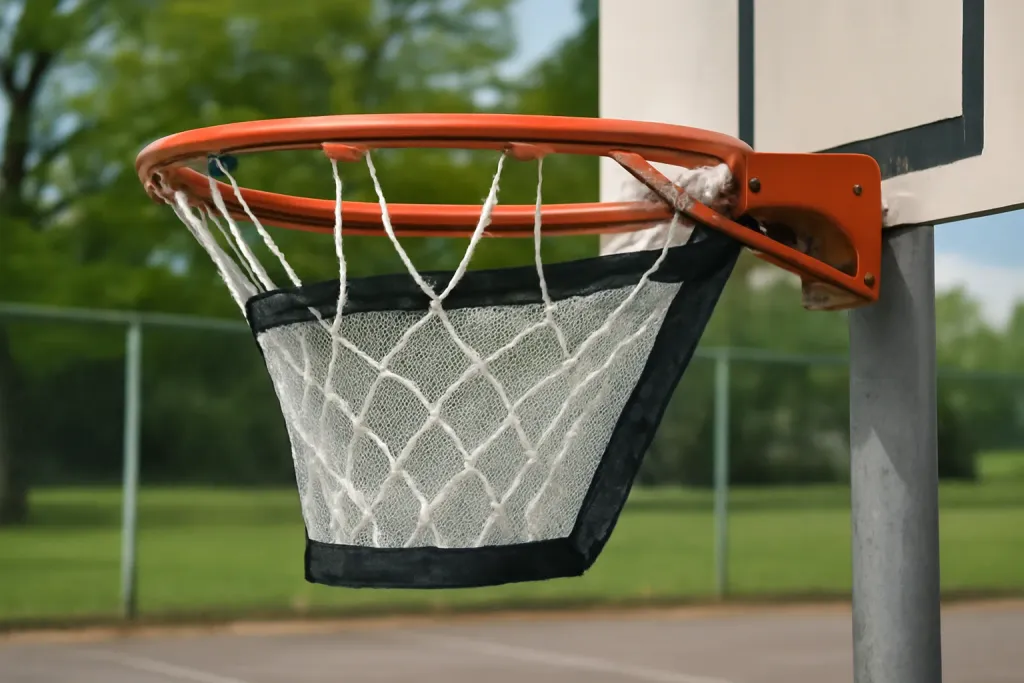
A basketball return net is an angled net attached around the rim that catches a made shot and redirects the ball back out toward the shooter, cutting down on how often you have to chase the ball after every attempt during solo driveway practice. For a family with a driveway hoop, a return net is one of the simplest upgrades for getting more shots up in less time, and most models are designed to clip onto a standard rim without permanent hardware or drilling. This guide covers how return nets work and what rim sizes they fit, basic installation, weatherproofing for year-round outdoor use, other driveway aids worth pairing with a hoop, and what a return net realistically does and doesn't do for your practice.
For kids practicing on their own after school or on weekends, a return net is one of the more noticeable quality-of-life upgrades to a driveway setup — fewer trips retrieving the ball from the yard or street means more actual shooting repetitions in the same amount of time, and less risk of a ball rolling into traffic on a street-facing driveway.
How Return Nets Work and Rim Fit
A return net attaches around the rim with a series of clips, hooks, or an elastic band, forming an angled funnel below the standard net. When a shot goes in, instead of dropping straight down, the ball is guided out and forward through the angled section, typically landing a few feet in front of the hoop within easy reach. Most return nets are designed for standard regulation rim diameters (around 18 inches), which fits the great majority of driveway and in-ground hoops. Adjustable hoops marketed for younger kids sometimes use a smaller rim, so it's worth checking your hoop's rim size against the return net's listed fit before buying, since a net sized for a standard rim generally won't seat correctly on a smaller youth rim.
The angle at which the ball exits depends partly on how the net itself is shaped and partly on how it's adjusted during installation. A steeper funnel tends to send the ball out faster and further from the hoop, while a shallower angle drops the ball closer to directly underneath the rim. Neither is inherently better — it mostly comes down to how much room you have in front of the hoop and personal preference for how far you want to move to collect the return.
Installation and Mounting Basics
Most return nets are designed for tool-free installation:
- Remove or loosen the existing net if the return net is meant to fully replace it, or leave it in place if the product is designed to mount alongside the standard net.
- Hook or clip the return net's top ring around the rim at evenly spaced points, checking that it's seated snugly rather than loosely draped.
- Adjust the angled section so the ball exits toward open space in front of the hoop, not toward a fence, window, or parked car.
- Test with a few shots before relying on it, since clip tension can loosen slightly after the first several uses and may need a quick re-tightening.
Browse our recommended gear
Our featured picks refresh periodically. While we update them, our editorial guides can help you find the right gear.
See our guidesWeatherproofing for Outdoor Use
Since most return nets stay mounted outdoors year-round, material matters for longevity. Nets made from UV-resistant woven polyester or nylon hold up better against sun exposure than untreated cord, which can weaken and fray faster with prolonged sun and rain exposure. A few habits extend the life of an outdoor return net regardless of material: taking it down or loosening it during severe wind or ice storms, rinsing off dirt or pollen buildup occasionally, and checking clips periodically for rust or wear if they're metal. Even a durable net will eventually need replacement after a few outdoor seasons, which is normal wear rather than a defect.
Climate plays a role too. Households in areas with intense summer sun should expect faster fading and slightly quicker material breakdown than households in milder or shadier settings, regardless of the net's stated durability. Mounting the hoop in a spot with partial shade during the hottest part of the day, where that's practical, can modestly extend the life of both the return net and the standard net alongside it.
Other Driveway Practice Aids
A return net pairs well with a few other simple driveway practice tools:
- Cone or marker drills — placing a couple of cones at set shooting spots gives structure to a solo session, encouraging shots from consistent locations rather than random spots.
- Shot-arc guides — some products attach to the rim or backboard as a visual target to encourage a higher, softer shot arc.
- Rebound or angle trainers — small attachable guides on the backboard that direct missed shots toward a predictable rebound spot, useful for practicing put-backs.
Combining a return net with even one or two of these keeps a driveway session moving without needing a second person to feed the ball back. A simple chalk or tape mark on the driveway surface at a few consistent shooting spots is another low-cost addition that costs almost nothing and adds useful structure to an otherwise freeform practice session.
Realistic Expectations
It's worth being clear about what a return net actually does: it reduces the time spent retrieving made shots, which means more repetitions in a given practice window. It doesn't correct shooting form, improve accuracy on its own, or replace coached instruction — those depend entirely on the player's own practice habits. A return net also generally only helps on makes; airballs and long misses still need to be chased down manually, since the net is mounted at and around the rim rather than covering the whole court area.
Some players also find that a return net changes the rhythm of a shooting session in a way that takes a little adjustment — catching a returning ball at a slightly different spot than where you shot from requires a bit of footwork that isn't part of chasing a ball that simply drops straight down. That adjustment period is normal and usually fades within the first few sessions.
Rim Compatibility and Removal
Most return nets use spring clips or hook-style attachments designed to fit a standard-diameter rim without tools, but it's worth confirming rim compatibility before buying, since some adjustable or oversized rims don't accept every clip design. A net that doesn't seat fully around the rim is more likely to shift or come loose during play.
Removal is generally just as quick as installation, which matters if the hoop is shared with players who don't want the net in place, or if the net needs to come down before a storm. Most households find it easiest to leave the net installed for the season and only remove it for cleaning or off-season storage rather than taking it on and off daily.
Browse our recommended gear
Our featured picks refresh periodically. While we update them, our editorial guides can help you find the right gear.
See our guidesBudget Considerations
Return nets are generally one of the lower-cost additions to a driveway setup, and the main cost differences come down to frame material and mounting hardware quality rather than dramatic feature differences between models. A basic net that fits the rim snugly accomplishes the core job -- returning makes and near-misses toward the shooter -- without needing to spend more for extras that don't add much for casual home use.
Where it can make sense to spend a bit more is on weatherproofing quality if the net will stay outside year-round, since UV-resistant materials hold up longer to sun exposure than basic nylon. Pairing a return net with a low-cost set of driveway cones (see our basketball practice equipment hub) is usually a more useful next purchase than upgrading to a premium return net.
Combining a Return Net With Other Practice Gear
A return net solves one specific problem -- not having to chase every shot -- but it pairs well with other low-cost driveway practice aids rather than needing to be the only investment. A small set of cones for simple dribbling drills, or a basic ball pump and gauge to keep the ball at a consistent bounce, both add more practice value than upgrading to a premium return net once the basic net is in place.
For households with more than one player using the hoop, a return net also reduces the downtime between turns, since the next shooter doesn't have to wait for someone to retrieve a missed shot from across the yard.
See our guide to ball pumps and pressure gauges for more on keeping a ball at a consistent bounce, and our basketball practice equipment hub for the broader category.
Final Thoughts
A basketball return net is a low-cost, easy-to-install upgrade for a driveway hoop that keeps solo practice sessions moving by cutting down on ball chasing after makes. Match it to your rim size, mount it snugly, choose a weather-resistant material for year-round outdoor use, and consider pairing it with cones or a shot-arc guide for a more complete practice setup. Visit our basketball practice equipment hub for more gear, including our guide to indoor dribbling trainers for quiet practice.