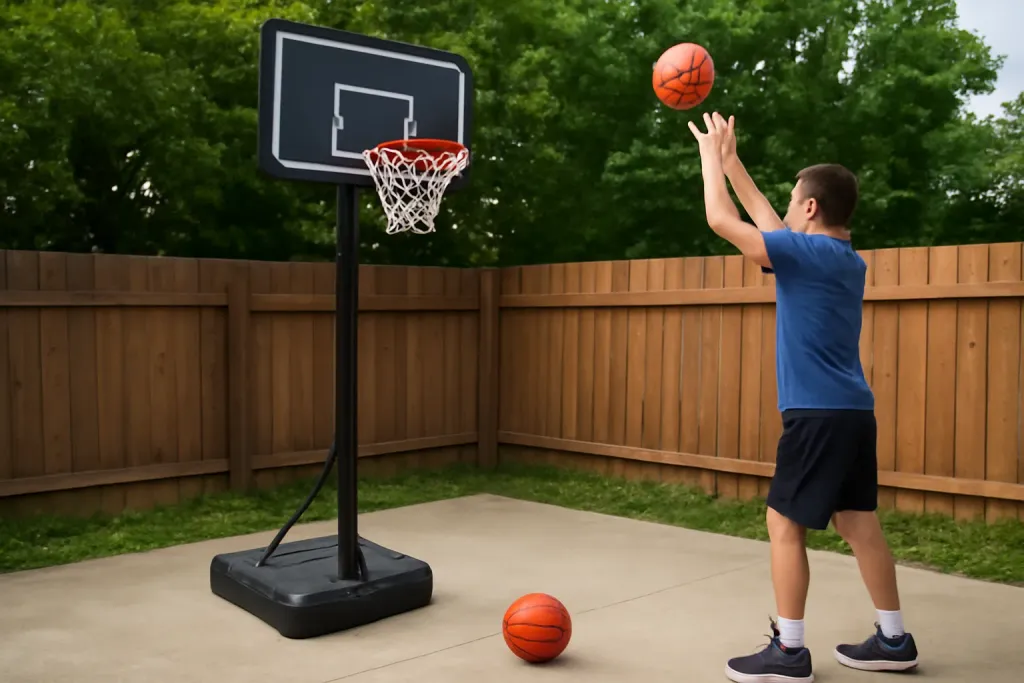
Why Base Weight Matters
When people shop for a portable hoop, the base often gets less attention than the backboard or pole height. That is a mistake. The portable basketball hoop base weight is one of the main factors that affects how steady the system feels during everyday use. A heavier base can help the hoop sit more firmly on a driveway or play area, while a lighter base may be easier to move but can feel less settled once the system is assembled.
For families, beginners, volunteer coaches, and PE teachers, the goal is usually not maximum performance. It is a stable setup that works for casual shooting, free throws, and neighborhood play without becoming a constant hassle. Base weight is only one part of that equation, but it matters because the base is the foundation that holds the entire structure in place.
It is also important to think about how the hoop will be used. A portable hoop that stays in one spot most of the time has different needs than one that is rolled out, adjusted, and moved often. The right choice balances steadiness, convenience, and the space available around the playing area.
What Base Weight Actually Does
The base is designed to be filled, weighted, or both, depending on the model. Its main job is to anchor the hoop so it resists tipping or shifting during normal play. In simple terms, more weight at the bottom usually means more resistance to movement. That can matter when the hoop is adjusted to a higher setting, when a ball hits the backboard, or when children and adults are shooting with different styles of play.
Base weight alone does not make a hoop stable in every situation. The total setup includes the pole design, backboard size, the shape of the base, and how evenly the hoop is assembled. If one part is poorly matched to the others, a heavy base may not fully solve the problem. That is why shoppers should look at the hoop as a system instead of focusing on a single number.
Another practical point is that a base may seem heavy in the box but still require filling with water or sand before it becomes usable. The empty unit is not the same as the in-use setup. For many families, the real question is not just how much the base weighs when it arrives, but how much stability it offers after it is filled and placed on a suitable surface.
How to Judge Stability Before You Buy
Since product listings do not always make stability easy to compare, it helps to know what to look for. Start with the base shape. A wider footprint generally spreads weight across more surface area, which can help the hoop feel steadier. Then look at the filling method. Some bases use water, some use sand, and some allow a combination. The fill choice can affect how heavy the hoop becomes in real use.
Also pay attention to the height adjustment range. A hoop that extends higher may place more leverage on the base, so shoppers often want a more secure setup if the hoop will be used at taller settings. If the hoop is likely to stay at a lower level for younger players, the stability demands may be different.
Think about the surface, too. A portable hoop on level concrete or asphalt typically behaves differently than one placed on uneven ground. Even a well-weighted base can feel less secure if the ground slopes or if the system is moved around frequently. For that reason, families should treat level placement as part of stability, not an afterthought.
- Look for a broad base footprint.
- Check whether the base is meant for water, sand, or both.
- Consider the highest setting the hoop will use.
- Place the hoop on a level, hard surface when possible.
Water, Sand, or Combination Fill
Many portable hoops rely on a fillable base, and the fill material matters. Water is convenient because it is easy to add and remove, which can be helpful for seasonal changes or for families that need to move the hoop occasionally. Sand, on the other hand, is often chosen because it tends to be denser and may provide a firmer feel in the base. Some models allow both, giving buyers more flexibility.
Each option has tradeoffs. Water is usually easier for quick setup, but it may be less convenient in colder weather or when a more substantial setup is desired. Sand can be more difficult to handle because it is heavier to transport and pour, but it may be preferred for a more planted feel once the hoop is in place. A combo-fill design can make sense if you want room to adjust the hoop's stability based on how and where it will be used.
The best option depends on your priorities. If the hoop will be moved often, convenience may matter more than maximum base weight. If the hoop will stay in one location for regular family use, a heavier fill may be worth the extra effort. It is also wise to follow the manufacturer’s fill instructions, since overfilling or using the wrong material can make assembly more difficult.
Browse our recommended gear
Our featured picks refresh periodically. While we update them, our editorial guides can help you find the right gear.
See our guidesMatch the Base Weight to the Use Case
There is no single ideal base weight for every portable hoop. Instead, the better approach is to match the setup to the way it will actually be used. A hoop for driveway shooting by younger children may need a different balance of portability and steadiness than one used for neighborhood pickup games or casual PE activities. More frequent play usually calls for a more secure base and a more careful setup.
For families with mixed ages, consider the highest level of use the hoop will see. If older kids or adults will occasionally use it, the system may face more movement than expected. In that case, a stronger base can be helpful. If the hoop is primarily for light recreational use, a moderate base weight may be enough, especially if the hoop stays on flat ground and is not moved often.
Volunteer coaches and teachers may also want to think differently about storage and setup. A hoop that needs to be rolled in and out of a gym or multipurpose area benefits from portability. A hoop that stays outdoors for extended periods may benefit from a more stable, heavier configuration. The right choice is often a compromise between mobility and confidence during use.
- Decide how often the hoop will be moved.
- Estimate the age range and frequency of use.
- Choose a fill and base size that fits the setting.
- Favor steadiness if the hoop will remain assembled long term.
Setup and Placement Tips That Help Stability
Even a well-chosen hoop can feel unstable if it is not set up carefully. Start by assembling the frame exactly as directed. Loose hardware, uneven pole sections, or a base that is not fully filled can all affect the finished result. If the hoop includes wheels, make sure they are positioned as intended and that the unit sits flat after moving.
Placement matters almost as much as the product itself. A level, hard surface usually gives the base the most consistent support. Avoid soft ground when possible, since it can create uneven pressure under the base. Also leave enough clearance around the hoop so players do not bump into the system during play or movement.
For households that shift the hoop occasionally, make it a habit to re-check the fill level and the position of the base before each use. Water can settle, sand can shift, and moving the hoop can change how it sits on the ground. A quick inspection takes little time and helps the system remain predictable.
- Assemble all parts tightly and in order.
- Use a level surface whenever possible.
- Keep the area around the hoop clear.
- Re-check the base after moving the unit.
Common Mistakes to Avoid
One of the most common mistakes is assuming that a bigger backboard automatically means a more stable hoop. While the backboard is important for play, the base still carries the job of keeping the system planted. Another mistake is choosing the lightest possible unit simply because it is easier to move. Portability is useful, but if the hoop feels wobbly during routine play, the tradeoff may not be worth it.
Buyers also sometimes overlook the fill requirements. A base that is not properly filled may never perform the way the buyer expects. In the same way, adding the wrong material or not following instructions can create a setup that is harder to manage. It is better to plan for the full in-use weight from the beginning than to assume the hoop will feel stable on its own.
Finally, do not ignore the site where the hoop will live. A portable hoop placed on an uneven driveway or a sloped edge may feel less secure than a similar hoop on a level slab. If the location is not ideal, no base weight can fully compensate. The environment and the product need to work together.
Quick Buying Checklist
If you want a straightforward way to compare options, use a short checklist before buying. Start with the base design, then move to the fill method, the hoop’s intended height range, and the place where it will be used. These four factors usually tell you more about real-world stability than marketing language alone.
A practical checklist can also help families stay focused on what matters most. You do not need the heaviest possible base in every situation, but you do want enough weight and footprint to match the level of play. Convenience matters too, especially if the hoop will be moved for storage, lawn care, or multi-use space.
- Does the base allow a fill method that fits your routine?
- Is the footprint wide enough for the planned use?
- Will the hoop stay mostly in one place or move often?
- Will players use it at lower or higher height settings?
- Is the setup location level and firm?
When those answers are clear, choosing a portable hoop becomes much easier. The best setup is usually not the heaviest one on the market. It is the one that gives your family or program a steady, manageable, and realistic fit for everyday use.