Overview
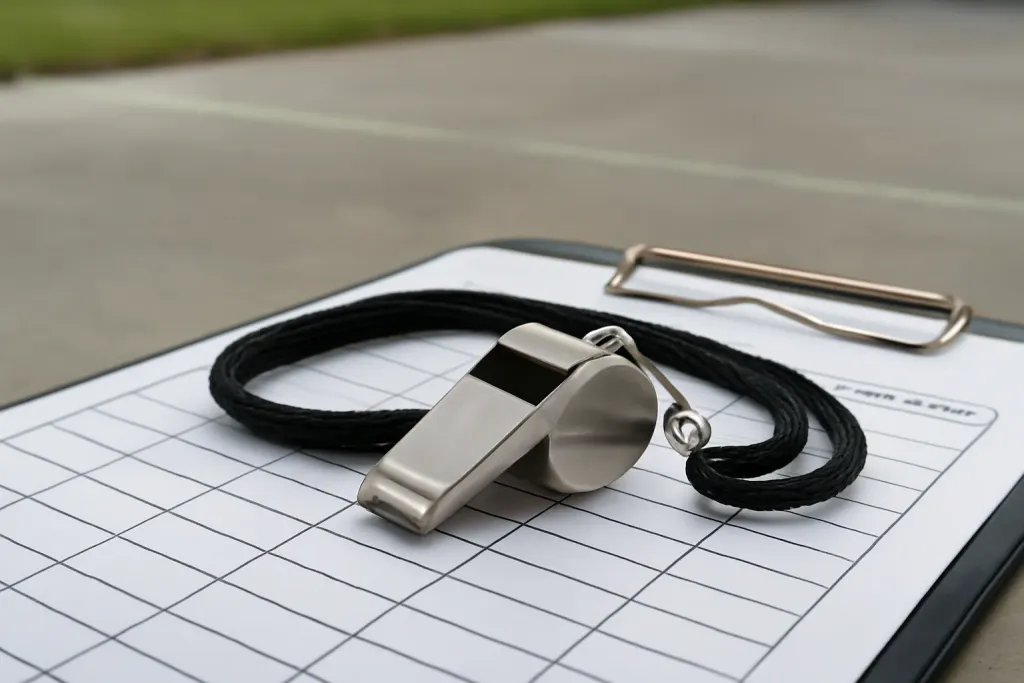
A basic referee or volunteer scorekeeping kit typically includes a whistle, a clipboard for scorecards or rosters, and a simple timer or stopwatch, and that combination covers most of what a first-time volunteer official needs for youth or recreational games. You don't need a full professional-level setup to get started; a modest kit built around these three items handles the great majority of games at the community and school level. This guide walks through whistle types suited to outdoor use, clipboard and scorecard basics, timer options, and how to put together a starting kit without overspending on gear you may not need right away.
Many people take on officiating or scorekeeping roles for their kids' youth leagues without much notice, so having a clear, low-cost starting point can make the difference between feeling prepared and scrambling before the first game. The goal here is practical guidance for exactly that situation.
Pea-Less vs Traditional Whistles
Traditional whistles use a small internal ball, or "pea," that vibrates against the chamber to produce sound. They're familiar and inexpensive, but the pea can stick or get affected by moisture, which occasionally causes the whistle to sound weak or fail to trill in wet or cold outdoor conditions. Pea-less whistles use a different internal chamber design without a moving ball, and many officials find them more consistent outdoors in rain, cold, or humid weather since there's no small part that can jam.
Volume and tone are also worth considering. A whistle loud enough to carry across a full field or a noisy gym is useful for outdoor sports and larger venues, while a slightly softer tone can be more comfortable for indoor courts or younger age groups where a piercing blast isn't necessary. Trying a whistle before committing to a season's worth of games, or asking other volunteers what's worked well at your field, is a reasonable way to narrow the choice.
Material also plays a role in comfort and durability. Plastic whistles are lightweight and inexpensive, making them a common starting choice, while metal whistles can feel more substantial but may get cold to the touch in winter conditions. A finger-grip design or a molded mouthpiece can make a whistle easier to hold firmly during a long game where you're blowing it repeatedly, and a comfortable, adjustable lanyard keeps it within easy reach without dangling too low or riding up uncomfortably around the neck.
Clipboards and Scorecards
A clipboard gives volunteer officials and scorekeepers a stable surface for lineups, scorecards, and rule reference sheets, which matters more than it might seem when you're standing on a sideline without a table nearby. Basic clipboards with a simple clamp are usually enough, though some officiating-specific versions add storage compartments for pens, cards, or a rulebook, which can be convenient if you're carrying multiple items to each game.
Weatherproofing is worth considering for outdoor sports, since a standard paper scorecard can get damp or blow away in wind. Options range from a clipboard with a clear plastic cover to laminated, reusable scorecards written on with a dry-erase marker, both of which hold up better across a season of outdoor games than loose paper.
Size and portability matter too. A compact clipboard that fits easily under an arm or into a bag side pocket is more practical for officials who are also moving around the field or court between plays, while a larger clipboard with more storage suits a stationary scorekeeper's table better. Attaching a pen on a short cord or keeping a spare in a side pocket avoids the common annoyance of misplacing your only pen mid-game.
Simple Timer and Stopwatch Options
Many recreational and youth games only need a simple stopwatch or countdown timer to track halves, periods, or substitution intervals. A basic handheld stopwatch with large, easy-to-read buttons is often enough, and some officials prefer a timer that clips onto a lanyard or waistband so it's always within reach without needing a free hand to dig through a bag.
For games with more complex timing rules, such as running clocks with stoppages, a scoreboard or a phone timer app can supplement a basic stopwatch, though it's worth confirming with your league whether phone use during games fits their guidelines. For most volunteer-level games, a simple, reliable stopwatch covers the need without added complexity.
Battery-powered digital timers with a large display are useful for scorekeepers managing substitution intervals or period breaks from a fixed table, since the readout stays visible to coaches and players from a distance. For officials on the move, a simpler analog or basic digital stopwatch that survives being clipped to a waistband or dropped occasionally tends to be more practical than a delicate electronic device. Keeping a spare battery or a backup timer in your bag avoids being caught without a working timer mid-game.
Browse our recommended gear
Our featured picks refresh periodically. While we update them, our editorial guides can help you find the right gear.
See our guidesBuilding a Basic Starter Kit
For a first-time volunteer referee or scorekeeper, a sensible starting point is one whistle with a lanyard, a basic clipboard, a stack of scorecards or a dry-erase card, and a simple stopwatch. This modest combination covers the core responsibilities of most recreational and youth games without requiring a significant upfront purchase, and it's easy to add to as you take on more games or move into a role that needs specialized gear.
A full officiating kit, by contrast, might include multiple whistles for backup, a card set for tracking fouls or penalties in sports that use them, a more detailed rulebook, and weatherproof storage for everything. Most volunteers don't need to start there. Building up gradually, based on what a given league or sport actually requires, is a more budget-friendly approach than buying a complete kit before you know what you'll use regularly.
It's also worth asking your league or school whether they provide any shared equipment, such as game balls, scoreboards, or field markers, since some volunteer roles only require you to bring personal items like a whistle and clipboard while the organization supplies the rest. Checking this before buying anything can save you from duplicating equipment the league already has on hand. For general practice and coaching gear beyond officiating, see our guide to portable practice gear for volunteer coaches and PE teachers.
General Etiquette for First-Time Volunteers
A whistle is a communication tool, not just a noise-maker -- using distinct, deliberate blasts for different situations (a quick tap to note something minor, a longer blast to stop play) helps players and other volunteers understand what's happening without needing extra shouted explanation. New volunteers often over-use the whistle at first; a calmer, more selective approach tends to work better once the basics feel familiar.
Clear, calm communication generally matters more than any specific piece of equipment for a first-time volunteer referee or scorekeeper -- the whistle, clipboard, and timer are simply tools that support that, not a substitute for it.
Budget Priorities for a First Kit
For someone volunteering for the first time, a basic whistle and a simple clipboard cover most of what's actually needed for casual recreational games -- there's little reason to invest in a full multi-piece officiating kit before knowing whether the role is a good long-term fit. A stopwatch can often wait until it's clear the role requires precise timing.
As responsibilities grow -- moving from a single team's games to covering a full recreational league, for example -- it becomes easier to identify what additional gear, if any, is actually worth adding. See our sports equipment hub for general-purpose options that work well as a starting point.
Final Thoughts
A whistle, clipboard, and stopwatch are the practical foundation of most volunteer officiating and scorekeeping roles, and they're enough to get through a first season of recreational or youth games. From there, it's easy to add weatherproof scorecards, a backup whistle, or specialized timing gear as your responsibilities grow.
Taking a little time before your first game to test your whistle, familiarize yourself with the scorecard format, and confirm your timer works reliably pays off once the game starts and things move quickly. A calm, well-prepared volunteer official tends to have a smoother experience than one scrambling to figure out gear mid-game. Visit our Sports Equipment hub to browse more gear for coaches, officials, and volunteers.