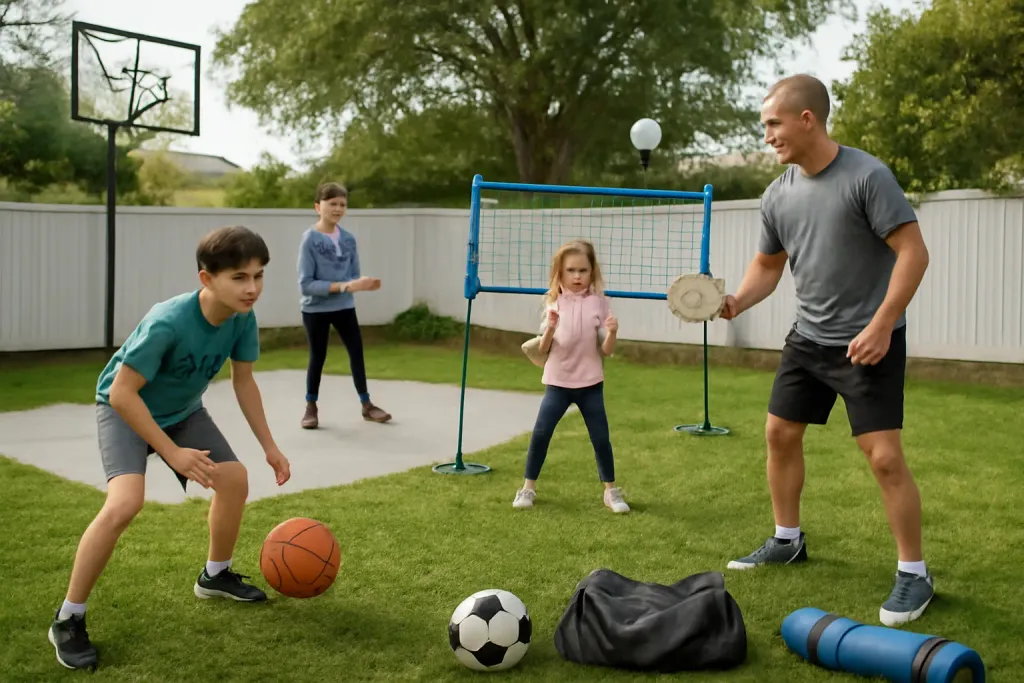
Plan the Space First
A successful backyard multi game station setup starts with a clear look at the space you actually have. Before buying equipment, walk the yard and decide where games can live without blocking walkways, grills, garden beds, or play areas. A good setup works best when it feels organized rather than crowded.
Think about how the space will be used on a normal day. Families often want one area for active play, one for storage, and a little open room for moving between games. If you are setting up for kids, adults, or mixed ages, it helps to leave enough room so each game can be played safely and without constant rearranging.
Measure the available area, then sketch a simple layout on paper. You do not need a formal plan, just a rough map of what could go where. Mark fence lines, tree roots, slopes, puddle-prone spots, and any low branches. That quick review can help you avoid choosing a location that looks big at first but becomes awkward once equipment is in place.
Also think about noise, sun exposure, and how the setup will fit into daily family life. A station near the house may be easier to supervise and restock. A spot with some shade may be more comfortable for longer play sessions. The best backyard multi game station setup is usually one that fits the way your household already uses the yard.
Choose a Mix of Games
The strongest backyard multi game station setup is not about buying every possible game. It is about choosing a few activities that fit your space, your group, and your goals. A balanced mix usually includes one throwing game, one target game, and one movement-based game so players can rotate without getting bored.
For many families, that might mean combining a portable net game, a toss game, and a simple target setup. Volunteer coaches and PE teachers may prefer equipment that can change easily between stations, especially if several age groups will share the area. Beginners often do best with games that have clear rules and simple setup steps.
When choosing games, focus on the kind of play you want to encourage. Some setups are better for quick one-on-one matches. Others work well for groups, relay-style play, or casual family gatherings. If the yard is small, choose games that fold, stack, or convert into different uses. If the yard is larger, you can spread out more and create separate zones.
It is also helpful to think about how often you want to reset the area. A station that needs constant rebuilding can become frustrating. Equipment that stays useful from one game to the next makes the space easier to enjoy regularly. Keeping the selection simple at first often leads to a better long-term result than trying to build a complicated setup all at once.
Pick Equipment That Stores Easily
Storage matters as much as the games themselves. A backyard multi game station setup works better when the equipment can be put away quickly after play. That makes it easier for parents, teachers, and coaches to keep the area neat and ready for the next session.
Look for items that can nest, fold, clip together, or fit into one tote or bin. Loose balls, cones, cords, and small accessories can disappear fast if they do not have a home. A labeled container or shelf near the play area can save time and reduce clutter. If your family shares the yard with gardening tools, bikes, or patio furniture, try to keep game equipment separated so it does not get mixed in with unrelated items.
Durable storage does not need to be fancy. A weather-resistant bin, a simple rack, or a covered corner of a garage can work well. The main goal is to make cleanup easy enough that it actually happens. If the space is simple to reset, people are more likely to use it often.
When comparing equipment, think beyond the first day of use. Pieces that are easy to carry, easy to identify, and easy to replace are often the most practical for family play. That is especially true in a household with children of different ages, where one game may be used for a quick afternoon match and another may be set out for a weekend gathering.
Build a Safe Play Surface
The ground under your games can make a big difference in how the station feels to use. Start by choosing the flattest area available. Grass, patio space, paved areas, and compacted outdoor surfaces all have different strengths, so the best choice depends on the games you want to run and how much setup you are willing to do.
If the yard is uneven, take time to level the play area as much as practical. Remove large rocks, sticks, and other debris before setting out equipment. For target games or tossing games, a stable surface helps keep the station more predictable. For movement games, a clear surface gives players more room to change direction without weaving around obstacles.
It is also smart to define the play zone visually. Simple markers such as cones, chalk lines, or portable boundaries can help players understand where the game begins and ends. That can make the space easier for beginners and younger children to follow. Clear boundaries also help the station feel more intentional, which is useful when the same backyard has to serve several purposes.
Keep the surface practical for the kind of play you expect. A backyard multi game station setup does not need a specialized court or permanent installation. It does need a surface that is easy to manage, easy to reset, and comfortable enough for repeated use by family members and guests.
Browse our recommended gear
Our featured picks refresh periodically. While we update them, our editorial guides can help you find the right gear.
See our guidesSet Up for Different Ages and Groups
One of the biggest strengths of a backyard multi game station setup is flexibility. The same area can work for young children, older kids, adults, and mixed-age family groups if it is arranged with simple adjustments in mind. That means choosing games that can scale up or down without turning the whole yard into a complicated course.
For younger players, keep rules short and equipment simple. For older kids or adult family members, add variations that make the game more challenging without changing the basic layout. A station that can shift between casual play and a more active group match tends to get more use over time.
If you host neighborhood gatherings, scout groups, or PE-style backyard activities, it helps to create stations that can be rotated. One group can be tossing while another uses a target game, then everyone can switch after a set time. This approach keeps things moving and lowers the chance that one activity dominates the entire space.
When several age groups will share the yard, keep sight lines open. Adults should be able to supervise easily, and younger players should be able to see where each game begins. Flexible layout choices often matter more than buying specialized gear. A smart arrangement can make basic equipment feel much more useful.
Keep the Setup Simple to Maintain
Maintenance is easier when the station is built around a few repeatable habits. After each play session, gather loose pieces, return equipment to its storage spot, and check that the play area is still clear. Small cleanup routines can keep the yard from becoming messy or difficult to use.
For families, the most practical setups are usually the ones that do not require a long reset. If a game takes too much time to assemble, it may only get used on special occasions. Simpler equipment encourages more spontaneous play after school, on weekends, or during family visits.
It helps to assign a home for every item. Balls in one bin, markers in another, and larger pieces stored where they can be reached without digging through the whole garage. When children know where things belong, cleanup becomes part of the routine instead of a chore that depends on one adult remembering everything.
Consider the weather, too. Outdoor gear lasts better when it is stored away from rain and strong sun whenever possible. If your station lives outdoors most of the time, choose items that are made for regular outdoor use and inspect them periodically for wear. A low-maintenance setup is not only easier to manage, it is also more likely to stay in rotation throughout the year.
Make It Family-Friendly
A backyard multi game station setup should feel welcoming, not intimidating. Families often get the most value from equipment that invites casual play and easy participation. That means clear instructions, simple transitions between games, and a layout that does not require special experience to enjoy.
Think about how the station will be used during real family time. Some days it may be for quick games before dinner. Other days it may be a full afternoon activity for cousins, neighbors, or classmates. Choosing equipment that works in both settings makes the space more versatile. It also helps to keep a few extra markers or spare accessories on hand so the station can adapt when more people join in.
Parents and volunteer coaches often appreciate setups that encourage turn-taking and group participation. A station with multiple game options can keep everyone engaged without needing a full court or a lot of extra gear. For PE teachers, a portable backyard-style station can also be useful for basic activity rotation, warm-up play, or low-key field day ideas.
The best family-friendly setups are easy to explain, easy to store, and easy to change from one game to another. When the station feels simple enough for everyone to use, it becomes part of the regular routine instead of something that sits unused in the corner.
Final Checklist for Getting Started
Before you call the backyard multi game station setup complete, do a final walk-through of the space. Check that the area is clear, the equipment is stored neatly, and each game has enough room to be played without crowding the others. This last review can help you catch small problems before they become ongoing hassles.
- Choose a level or workable play area.
- Select a few games that match your space and group size.
- Keep storage close and organized.
- Use simple boundaries or markers to define each game.
- Leave room for movement, supervision, and cleanup.
- Keep the setup easy enough that people will actually use it.
If you are unsure where to begin, start with one or two games and build from there. A modest setup can still be very useful, especially for families and beginners. Over time, you can add more pieces if the space, storage, and routine support it. That gradual approach often leads to a cleaner and more enjoyable backyard play area.
In the end, the goal is not to create a perfect sports complex. It is to build a simple, flexible place where people can play, switch activities, and enjoy time together. With a little planning, a backyard multi game station setup can become one of the most practical and enjoyable parts of the yard.