Overview
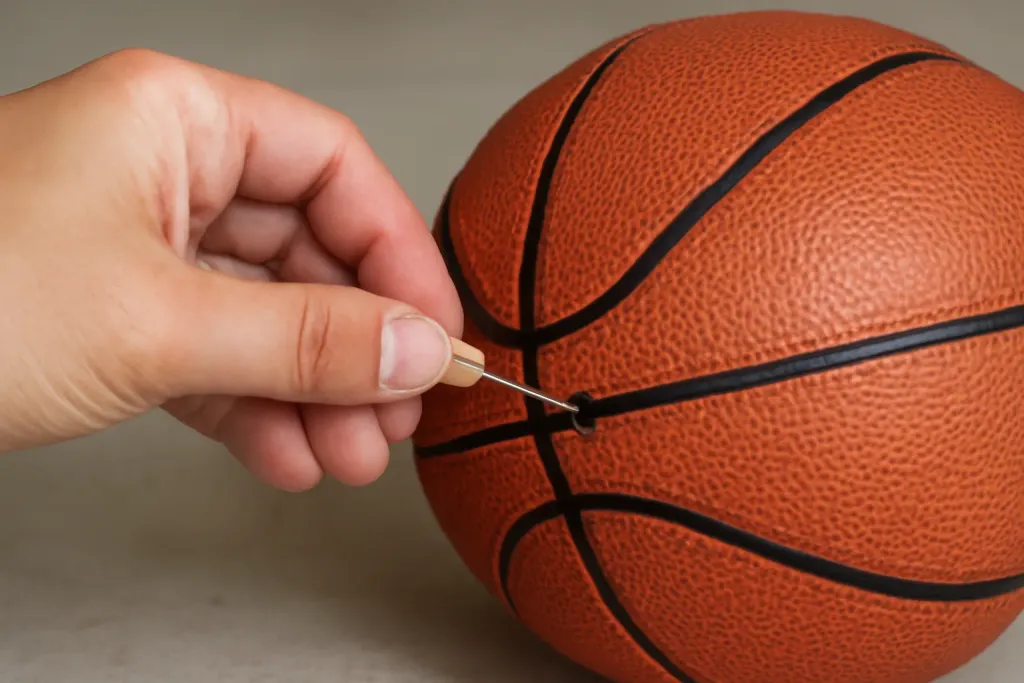
A sports ball pump with a built-in pressure gauge lets you inflate basketballs, soccer balls, footballs, and volleyballs to a consistent level using a single tool, rather than guessing by feel or squeeze. The gauge shows air pressure in PSI (pounds per square inch) or bar, the needle is the small metal tip that fits into the ball's valve, and the two work together to get a ball into its usable range without over- or under-filling it. For most households and rec-league families, one dual-action pump, a small gauge, and a set of two or three needle sizes covers every ball in the garage.
This guide covers why pressure affects how a ball plays, how to read a gauge accurately, which needle style fits which ball, how to keep needles from bending or drying out, and a simple rhythm for checking pressure before it becomes a problem mid-game. It's a small, inexpensive category of equipment, but it's also one of the most commonly overlooked corners of a garage sports closet — a good pump and a set of well-kept needles quietly prevent a lot of last-minute scrambling on game day.
Choosing a pump doesn't need to be complicated. A dual-action pump, which pushes air in on both the push and pull strokes, fills a ball noticeably faster than a single-action pump, which only pushes air on one stroke. For occasional household use either works fine, but if you're regularly filling multiple balls before practice or a game, the extra speed of a dual-action pump is worth the small difference in price.
Why Ball Pressure Matters
Every inflatable ball has a manufacturer-recommended pressure range, usually printed directly on the ball near the valve. A basketball that's underinflated feels dead and bounces low and unevenly; overinflated, it can feel too hard and bounce unpredictably off a rim. Soccer balls behave similarly — too soft and they lose responsiveness on passes and shots, too firm and they can feel harsh to head or trap. Footballs have a narrower comfort range tied mostly to grip and catchability rather than bounce.
Because pressure drops gradually over weeks from normal air permeation through the ball's bladder, and faster in cold weather or with heavy outdoor use, a ball that felt right last month may need air today. Keeping a ball within its printed range — rather than pumping it as hard as it will go — is the simplest way to keep it playing the way it was designed to.
Temperature swings are a common source of confusion. Air contracts in cold weather, so a ball that measured correctly indoors can read noticeably lower once it's been sitting in a cold car or an unheated garage overnight. This isn't a leak — it's simple physics — and the pressure typically comes back up once the ball warms to room temperature. If you're topping off a ball right before heading outside in cold weather, it's worth checking it again once it's acclimated rather than assuming the first reading is final.
Reading a Pressure Gauge
Most household ball pumps use one of two gauge styles:
- Dial gauges — a small analog dial with a needle that moves as you squeeze or pump; simple to read but can lose accuracy over time or after being dropped.
- Digital gauges — a numeric readout, often more precise, but they run on a battery and can be slower to respond.
To get an accurate reading, insert the needle fully, and check pressure before adding more air rather than while actively pumping, since air moving through the line can cause a temporary spike on the display. If your ball's printed range is in PSI but your gauge reads in bar, a rough conversion is 1 bar ≈ 14.5 PSI — many gauges show both units on the dial or display, which avoids the conversion step entirely. When in doubt, add air a little at a time and recheck rather than filling to a guessed number in one pass.
Standalone pressure gauges, sold separately from a pump, are also worth considering if you already own a pump without one. A dedicated gauge is generally more accurate than one built into a cheap pump body, and it lets you spot-check a ball's pressure at any time without hooking up the full pump, which is convenient for a quick check before heading out the door.
Needle Types and Sizing
Inflation needles look similar but aren't identical, and using the wrong one can strip a valve over time:
- Standard ball needles — the thin, straight metal needle included with most pumps, sized for basketballs, soccer balls, and volleyballs with a standard rubber-lined valve.
- Football-specific needles — sometimes slightly different in tip shape to seat cleanly in a football's recessed valve without slipping sideways.
- Plastic or dual-tip needles — a softer plastic tip reduces wear on the valve over repeated use, at the cost of being slightly less rigid to insert.
If a needle feels like it's binding or requires real force to insert, stop — that usually means it's the wrong diameter for that valve, or the valve itself needs a drop of water or silicone lubricant before the needle goes in.
It's worth keeping at least two of each common needle type on hand, since needles are small enough to misplace and a family with several kids playing different sports often needs more than one size in rotation at the same time. A basic assorted needle pack is inexpensive relative to the frustration of showing up to practice with a flat ball and no way to fill it.
Browse our recommended gear
Our featured picks refresh periodically. While we update them, our editorial guides can help you find the right gear.
See our guidesNeedle Care and Storage
Needles are inexpensive, but a bent or dry needle is a common source of frustration on game day. A few habits keep them working:
- Never insert a needle dry. A drop of water, or a dab of silicone lubricant if you have it, lets the needle slide in with far less resistance and reduces wear on both the needle and the ball's valve.
- Insert straight, not at an angle. Angled insertion is the most common way needles get bent, since the thin metal shaft has very little lateral strength.
- Store needles in a case or the pump's built-in holder rather than loose in a bag, where they can bend against other gear or get lost.
- Retire a needle once it's visibly bent. A bent needle is harder to insert straight and more likely to damage a valve on the next use.
How Often to Check Pressure
A simple routine works better than an exact schedule. Squeeze-test a ball before each use, and if it feels noticeably softer than usual, check it with the gauge before playing rather than after. Balls stored in a cold garage or car trunk over winter lose pressure faster and often need a top-off in early spring even if they were fine in the fall. For balls used weekly, a monthly gauge check is a reasonable baseline; for balls used daily by a family with kids in basketball practice or rec soccer, checking every week or two keeps performance consistent without becoming a chore.
It also helps to build the habit around a fixed point rather than trying to remember on your own — checking pressure the same day you charge phones for the week, or right before packing a bag for practice, turns it into a small routine instead of an afterthought. Keeping the pump, gauge, and needles together in one labeled pouch or bin also saves time, since a scattered pump in one drawer and a needle in another is a common reason ball maintenance gets skipped entirely.
Final Thoughts
A pump with a reliable gauge and a couple of well-cared-for needles is one of the cheapest ways to keep every ball in the house playing the way it's supposed to. Match the needle to the valve, add air gradually while checking the gauge rather than guessing, and store needles so they stay straight between uses. It's a small, unglamorous piece of equipment, but it's also one of the few tools that directly affects how every other ball-based purchase performs, from a driveway basketball hoop to a backyard soccer rebounder.
Browse our training accessories hub for other small tools that round out a home practice setup, including our guide to youth agility ladders and cone sets.