Overview
A table-tennis paddle for recreational players is made up of a wooden blade and a rubber covering on one or both sides, and for most casual home or garage players, a pre-assembled paddle sold as part of a set is the simplest and most sensible starting point rather than building a custom combination from separate parts. Recreational paddles are built to be forgiving and durable for irregular play, not optimized for competitive spin or speed, which is exactly what most households and casual groups actually need.
This guide covers the basic parts of a paddle, why pre-assembled sets make sense for most players, the two common grip styles at a beginner level, how to care for a paddle so the rubber doesn't degrade quickly, and how to match a paddle set to casual play versus more serious club-level use.
Table tennis is one of the more accessible backyard and basement sports precisely because the equipment barrier is low — a modest paddle set and a folding table cover most family and casual social play without needing to understand the finer technical distinctions that matter at a competitive level.
Paddle Construction Basics
Every table-tennis paddle has two main components:
- The blade — a layered wood (sometimes with a thin composite layer) base that determines the paddle's overall stiffness and feel. Thicker, more layered blades tend to feel more solid and forgiving, which suits casual play well.
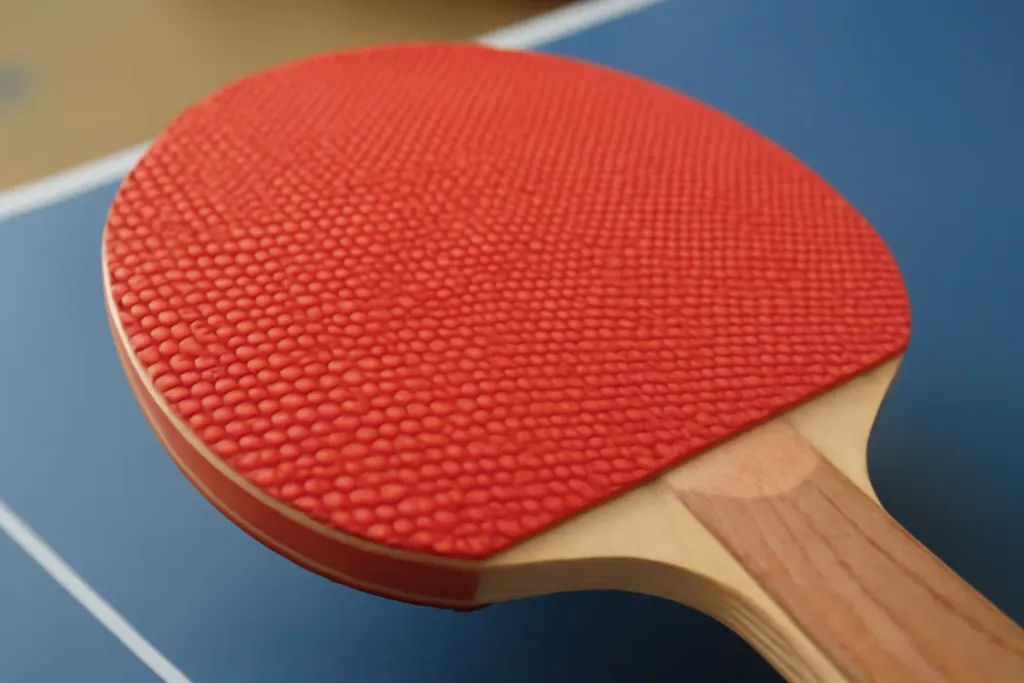
- The rubber — a sheet of rubber, usually with a sponge layer underneath, glued to each face of the blade. Rubber surface texture (smooth "pips-in" versus textured "pips-out") and sponge thickness affect spin, speed, and control.
Recreational paddles typically come with the rubber already bonded to the blade at the factory, using a moderate sponge thickness that balances control and pace — a sensible default for players who aren't chasing competitive-level spin.
The paddle's handle shape also varies slightly between products — flared, straight, or anatomically contoured — though for recreational play this is mostly a matter of personal comfort rather than a decision that meaningfully changes performance. Trying a paddle in hand, when possible, is a reasonable way to judge whether the handle feels comfortable for your grip.
Pre-Assembled vs Building Your Own
Serious and club-level players sometimes buy a blade and rubber sheets separately, choosing specific combinations to fine-tune spin, speed, and control, then gluing the rubber on themselves. For nearly all recreational and family play, this level of customization isn't necessary and adds cost and complexity without a meaningful benefit. A pre-assembled paddle set — often sold with two or four paddles, balls, and sometimes a net for the table — covers casual backyard, basement, or garage play well, and replacing a whole paddle when the rubber wears out is simpler than re-gluing new rubber onto an existing blade.
Browse our recommended gear
Our featured picks refresh periodically. While we update them, our editorial guides can help you find the right gear.
See our guidesGrip Styles for Beginners
There are two common grip styles used in table tennis, and beginners generally gravitate toward one naturally:
- Shakehand grip — holding the paddle handle similar to shaking someone's hand, using both faces of the paddle. This is the more common grip among casual and Western recreational players and works well with most pre-assembled paddles, which are shaped for this grip by default.
- Penhold grip — holding the paddle more like a pen, typically using only one face. This grip is more common in some international competitive traditions and can take more specific technique to use effectively.
For most recreational players starting out, the shakehand grip is the more intuitive choice and matches the handle shape of the vast majority of recreational paddle sets sold for home use.
Paddle Care
Rubber is the part of a paddle that wears out fastest, and a few habits extend its usable life:
- Wipe the rubber down after use with a slightly damp cloth to remove dust and skin oils, which build up over repeated play and reduce grip.
- Avoid direct sun and heat when storing paddles, since UV exposure and heat can dry out and crack rubber faster than normal wear alone.
- Use a paddle case or cover if you have one, which protects the rubber surface from dust and accidental scuffs between sessions.
- Watch for a smooth, slick feel on the rubber surface over time — that's a sign the rubber has degraded and is losing grip, which is normal after enough play and eventually calls for a replacement paddle or rubber.
Matching a Set to Your Play
How often and how competitively you play should guide which paddle set makes sense. For occasional family games in the garage or basement, an inexpensive multi-paddle set with a moderate sponge thickness is durable and forgiving, and it's easy to add extra paddles if more people want to play. For someone playing more regularly or considering club play, a single higher-quality paddle with a specific blade and rubber combination becomes more worth the investment, since finer differences in spin and control start to matter more as skill increases. There's no need to buy club-level equipment for casual weekend play — a basic set will hold up fine and is easier to replace as a whole unit if it wears out.
Pairing a Paddle With the Right Balls
Recreational players don't need to research ball grading the way competitive players do, but ball quality still affects how consistent a casual game feels. Cheaper balls can be slightly less round or more prone to denting, which shows up as unpredictable bounce during play. A mid-range multi-pack is usually enough for casual home or garage use without needing to dig into the finer points of ball construction.
Because balls are easy to lose — rolling under furniture or outside if playing near an open garage door — buying more than a paddle set includes is a practical habit rather than a sign the paddles or table are inadequate. A dozen or so spares kept in a small container near the table means a lost ball doesn't interrupt a game for long.
Browse our recommended gear
Our featured picks refresh periodically. While we update them, our editorial guides can help you find the right gear.
See our guidesSpace Considerations for Home Play
Beyond the table itself, comfortable table-tennis play needs a few feet of clearance behind each end for a full swing and normal footwork. A garage or basement with furniture crowding one end of the table will feel cramped even with good paddles and a properly installed net.
If dedicated table-tennis space is limited, a clamp-style net on a dining table (see our portable net and post set guide) is a reasonable way to get occasional casual play without committing floor space to a full-size table.
Equipping Players at Different Skill Levels
Households with a mix of casual and more serious players don't necessarily need to buy identical paddles for everyone. A more textured, higher-grip rubber suits a player working on spin and control, while a flatter, more forgiving rubber is often easier for a beginner or an occasional player to use consistently. Buying two different paddle types rather than matching pairs can actually make games more balanced and enjoyable for a mixed-skill household.
If budget favors a single matched set instead, choosing a mid-range, all-around paddle rather than either a beginner or advanced-specific model tends to work reasonably well across a wider range of players, even if it's not ideally suited to any one of them.
Whatever the mix, keeping paddles labeled or otherwise easy to tell apart avoids the common annoyance of players unknowingly swapping to a rubber type they're not used to mid-game.
Final Thoughts
For most recreational players, a pre-assembled table-tennis paddle set with a shakehand-friendly handle and moderate rubber sponge thickness covers casual home and garage play well, without the added complexity of building a custom blade-and-rubber combination. Wipe rubber down after use, store paddles out of direct heat, and replace a paddle once its rubber feels slick rather than grippy.
Table tennis rewards frequent, casual play more than expensive equipment, so a modest paddle set that gets used regularly will usually do more for your enjoyment of the game than a premium set that sits in a closet. Browse our sport-specific buying guides for more equipment breakdowns, including our guide to portable table-tennis nets and post sets.