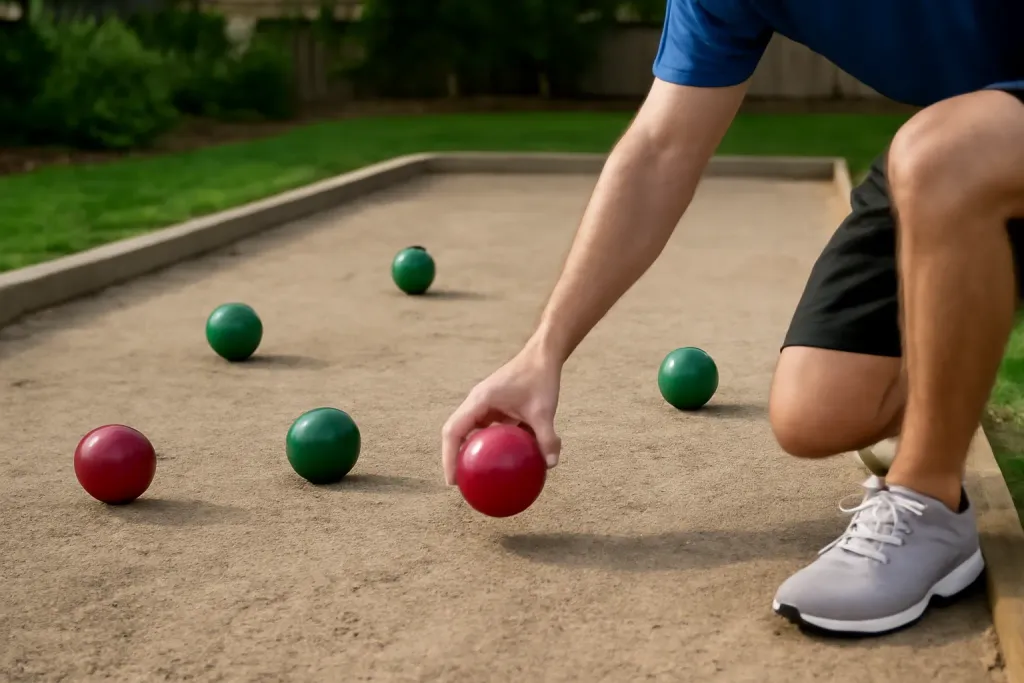
What a Backyard Bocce Court Surface Needs to Do
A good backyard bocce court surface does not need to be fancy, but it does need to be consistent. Bocce is a simple game, and the playing area should support that simplicity by letting balls roll smoothly, stop predictably, and stay playable through regular family use. For most households, the goal is not to build a tournament court. The goal is to create a flat, dependable space that works for casual games, neighborhood gatherings, and beginner play.
The surface should do a few basic things well. It should be level enough that balls do not drift too much on their own. It should have enough firmness to support rolling, but not be so hard that every bounce feels erratic. It should also manage weather, since many backyards deal with rain, heat, shade, and leaf buildup. A surface that drains poorly or breaks down quickly can become frustrating, even if the court looks nice at first.
When families talk about the best backyard bocce court surface, the answer usually depends on how the space will be used. A permanent court for regular play may justify more careful grading and layered materials. A casual setup for weekend use may be fine with a simpler surface and a clear boundary. Either way, the main idea is the same: the court should make the game easy to understand and enjoyable to play.
Common Surface Options for Home Courts
Several materials can work for a home bocce court, and each one comes with tradeoffs. The right choice depends on budget, upkeep, and how closely you want the court to resemble a traditional playing surface.
Decomposed granite: This is a popular option for backyard bocce because it can create a firm, natural-looking court with good roll when installed and maintained properly.
Crushed stone or fine gravel: Some families use compacted stone-based surfaces because they are relatively simple to install and can drain well if built correctly.
Compacted soil with a smooth top layer: This can work for very casual play, but it often needs more maintenance and may not stay even after rain or heavy use.
Synthetic turf: Turf can create a neat appearance and reduce loose debris, though the play experience will differ from a traditional loose-fill court.
Natural grass: Grass is the easiest to start with if you already have a flat lawn area, but it usually offers the least consistent roll and can wear down quickly in high-use areas.
For many households, decomposed granite or another compacted mineral surface is the closest match to the classic backyard bocce court surface idea. Turf can be a practical choice when the family wants lower mess and a cleaner look. Grass may be enough for occasional games, especially with children, but it tends to change more from week to week.
How Surface Structure Affects Ball Roll
Bocce is a rolling game, so the texture and structure of the court surface matter more than many first-time builders expect. A surface that is too soft can slow the ball quickly and create uneven paths. A surface that is too hard may allow faster movement, but it can also make the game less forgiving and more dependent on tiny dips or bumps.
Fine, compacted materials usually give a smoother roll than loose, chunky stone. That is one reason many backyard courts use a layered build with a stable base and a finer top layer. The base helps the court stay level, while the top layer is what players actually see and roll across. If the top layer is too coarse, balls may bounce or veer. If it is too powdery, the court can shift underfoot or develop ruts.
Families should also think about consistency across the entire playing area. A court does not need to be perfect, but it should avoid obvious soft spots, low areas, or sudden transitions from one material to another. The more even the surface, the easier it is for beginners to understand how their throw or roll will travel. That makes the game more accessible for kids, parents, and guests who are learning as they go.
Drainage and Weather Considerations
Weather is one of the biggest factors in a backyard bocce court surface. Even a well-built court can become hard to use if water has nowhere to go. Poor drainage can lead to puddles, soft patches, mud at the edges, or a surface that stays damp long after a storm. Those conditions make play less enjoyable and can also create more maintenance work.
A court should generally be built with drainage in mind. Slight grading, a stable base, and the right top material can help water move away instead of collecting in the middle. This matters in many parts of the United States, where a backyard may see heavy rain in spring, dry heat in summer, or freeze-thaw changes in colder regions. Surfaces that hold moisture too long may shift or compact unevenly over time.
Drainage is not only about storms. Morning dew, irrigation overspray, and nearby shade can also affect how a surface feels during play. Families who want a low-maintenance setup should think about where water naturally flows in the yard before choosing the court location. A surface that works well on paper may still struggle if the site itself stays damp.
Browse our recommended gear
Our featured picks refresh periodically. While we update them, our editorial guides can help you find the right gear.
See our guidesInstallation Basics for Families and Volunteers
Building a backyard bocce court does not have to be complicated, but the basics matter. Start by choosing a location that is as flat as possible and large enough for the size of court you want. Clear away grass, rocks, roots, and debris. Then think about the layers from bottom to top. In many home projects, the base is what gives the court stability, while the top layer creates the rolling surface.
For a casual family court, the important part is not professional-level construction. It is making sure the space is even, compacted, and edged so the material stays in place. Simple borders can help define the playing area and keep loose material from spilling into the lawn. Edging also gives the court a finished look and makes it easier to rake or level the surface later.
Volunteers, parents, and PE teachers often appreciate a setup that is straightforward to explain and easy to reset. A court that can be maintained with a rake, broom, or light top-off of material will usually be more practical than one that needs constant repair. If the goal is school events or community play, consider a surface that can handle repeated use without becoming too uneven after a few games.
One useful rule is to keep the build simple enough that it can be maintained by the same people who use it. If a court requires special tools or frequent major adjustments, it may be less likely to stay in good shape over time.
Maintenance That Keeps the Court Playable
Most backyard bocce court surfaces need at least some routine care. The exact work depends on the material, but the overall goal is the same: keep the surface level, clean, and consistent. For loose-fill surfaces, that often means raking out footprints, smoothing high spots, and checking for low areas after rain or heavy use. For turf, maintenance may focus more on sweeping debris and keeping the area clear of leaves or twigs.
Families should also plan for seasonal changes. In spring, runoff and new growth around the court can affect edges. In summer, dry weather may make some materials shift more easily. In fall, leaves can hide uneven spots or make the surface slippery to walk on. In winter, depending on the climate, it may be best to avoid using the court entirely until conditions improve.
A practical maintenance routine does not need to take long. A quick visual check before play can catch obvious issues. A light rake or broom can restore a cleaner roll. If a court starts to lose its shape, adding a little material in problem spots may help bring it back to a playable condition. The more regular the upkeep, the more familiar and enjoyable the court will feel for everyone using it.
Choosing the Right Surface for Your Setup
There is no single best backyard bocce court surface for every home. The right choice depends on how often the court will be used, who will use it, and how much effort the family wants to put into maintenance. If the court is mainly for weekend fun, a simpler, lower-cost setup may be enough. If it will be used often for gatherings, clubs, or school activities, a more stable and durable surface may be worth the extra planning.
When comparing options, ask a few basic questions. Do you want a court that feels close to traditional bocce? Do you need the surface to drain quickly? Will children be playing on it regularly? Do you want a material that blends into the landscape or one that stays neat with less visible debris? These questions can narrow the choice without making the project feel overwhelming.
It also helps to think about the rest of the yard. A court near a patio or fence may need different edging than one in the middle of open lawn. A shaded area may stay cooler but could also hold moisture longer. A sunny area may dry faster, but some materials may need more frequent smoothing. The best choice is often the one that fits the yard naturally and is easy for the family to use.
For many beginner-friendly setups, the most important factor is not perfect performance. It is whether the court invites people to play again. A backyard bocce court surface that stays reasonably even, drains well, and is simple to maintain will usually deliver the kind of low-pressure fun most families want.
Simple Takeaway for First-Time Builders
If you are starting from scratch, keep the project focused on the essentials. A backyard bocce court surface should be level, consistent, and appropriate for the amount of use you expect. For many homes, that means choosing a compacted mineral surface or another material that can support a predictable roll without becoming difficult to maintain.
You do not need a perfect court to enjoy bocce. You need a space that is clear, stable, and easy to understand. Once the basics are right, the game itself does the rest. That is part of the appeal for families, teachers, and casual players: a well-chosen surface makes it easier for everyone to join in, learn the rules, and enjoy the outdoors together.