Overview
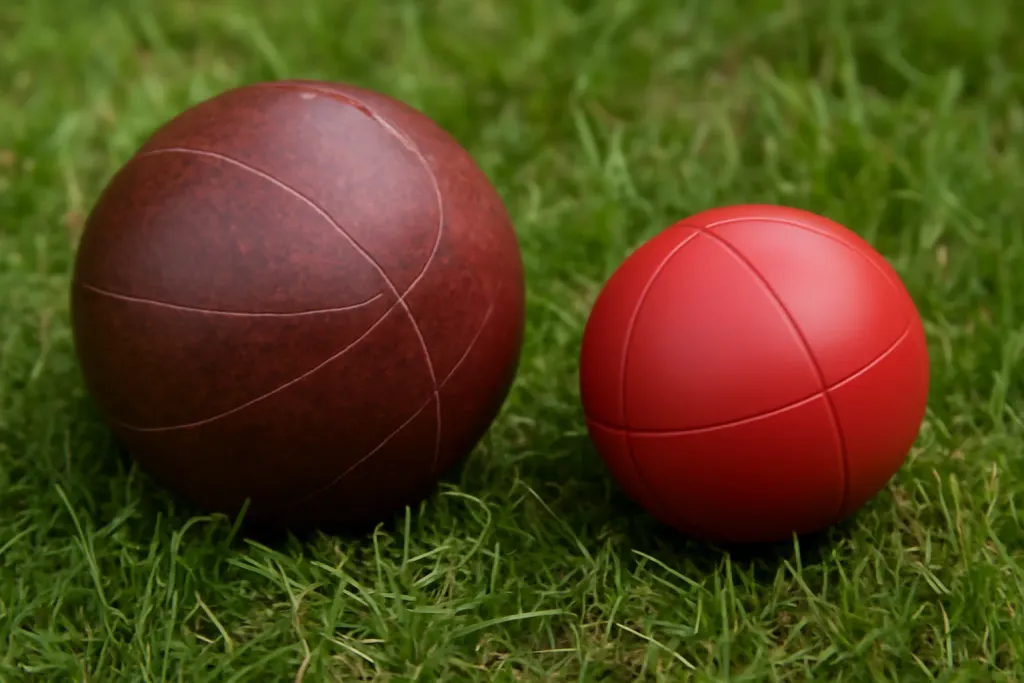
Resin bocce balls are heavier, denser, and roll more predictably than plastic ones, which makes them the better choice for most players once they move past a first casual game. Plastic sets are lighter, less expensive, and easier for young kids to throw, but they tend to bounce and skid more unpredictably and wear out faster on rough ground. Choosing between the two mostly comes down to how often you play, what surface your court sits on, and who in the household will be tossing the balls.
Both materials are used across the range of sets sold for home and recreational play, from basic starter sets to larger competition-style sets aimed at players who host regular matches. Neither material is inherently "correct" for casual bocce, but understanding the tradeoffs helps you avoid buying a set that feels wrong for your court or your group.
Bocce itself is a simple, low-barrier game — roll the pallino, then try to land your balls closest to it — which is part of why it works so well for mixed-age groups, from grandparents to young kids. The material of the balls affects how forgiving or precise that rolling motion feels, which is why it's worth thinking through before buying rather than grabbing whichever set is cheapest or most visible on a shelf.
Weight and roll behavior
Resin balls are typically dense and solid-feeling in the hand, which gives them momentum that carries through grass, dirt, or gravel without stopping short. That weight also makes them easier to aim with a smooth, rolling toss rather than a bouncy one. Regulation bocce balls used in organized club play are resin (or resin composite) for this reason — the material behaves consistently across a range of surfaces.
Plastic balls are noticeably lighter and often hollow or thin-walled. They can skitter, bounce, or veer off course more easily, especially on uneven ground, because there's less mass to keep them tracking straight. For very young children or first-time players, that lighter weight can actually be an advantage since the balls are easier to throw and less likely to cause a stubbed toe or sore wrist during a long backyard afternoon.
The practical effect during a game is noticeable within the first few rounds. A resin ball tends to stop close to where you aimed it, holding its line even after clipping another ball, which rewards players who are learning to judge distance and angle. A plastic ball, especially a lighter or hollow one, can deflect at a sharper angle after contact, which adds an element of unpredictability that some casual players enjoy and others find frustrating when they're trying to improve their aim over a season of play.
Ball diameter also factors into how the game feels, separate from material. Standard bocce balls run around four inches across, though some sets aimed at smaller hands or younger players use a slightly reduced diameter. Checking the listed size alongside the material helps ensure the set matches the players who will use it most, since a ball that's too large for a child's grip can be awkward regardless of whether it's resin or plastic.
Durability on different court surfaces
Court surface matters as much as material choice. On a groomed grass lawn, both resin and plastic balls hold up reasonably well over a season of casual play. On gravel, crushed oyster shell, or packed dirt — the surfaces closer to traditional bocce courts — resin balls resist scuffing, cracking, and chipping far better than plastic. Plastic balls can develop flat spots, hairline cracks, or surface pitting more quickly when they repeatedly strike small stones or hard-packed dirt.
If your court setup is a semi-permanent gravel or sand-based lane, resin is generally the more durable long-term investment. If you're playing occasionally on a mowed lawn or at the park, plastic can hold up fine for lighter, infrequent use.
Sun and weather exposure play a role too. Balls left outdoors between games, whether stacked near a patio or stored in an open bin, face UV exposure and temperature swings that can affect surface finish over time. Resin generally tolerates this better than plastic, which is one more reason resin sets tend to be marketed toward players setting up a semi-permanent court rather than packing everything away after each use.
Cost differences
Plastic bocce sets are usually the less expensive entry point, which makes them appealing for a one-off cookout, a classroom set, or a first attempt at the game before committing to something sturdier. Resin sets sit at a higher price point reflecting the denser material and closer-to-regulation feel, but they're still accessible for most household budgets and tend to last many seasons longer, which can make them the better value over time for a family that plays regularly.
When comparing listings, check the stated ball diameter and weight rather than relying on price alone, since sets marketed similarly can vary in both dimensions.
It's also worth factoring in how many sets you might need. A single set typically includes eight balls split between two colors or patterns plus a pallino, which is enough for two teams of up to four. Larger households or those who regularly host game nights sometimes buy a second set to allow more players at once, and cost differences between resin and plastic become more noticeable when multiplied across two purchases rather than one.
Browse our recommended gear
Our featured picks refresh periodically. While we update them, our editorial guides can help you find the right gear.
See our guidesWhich is best for your play style
For casual, occasional family play — a picnic, a backyard get-together, or teaching young kids the basic idea of the game — a plastic set is often perfectly adequate and easier for smaller hands to manage. For households that plan to play regularly, host guests, or want a set that behaves consistently on a dedicated court area, resin is the more satisfying choice because the roll and weight feel closer to how the game is meant to play.
Mixed-age groups can also use a plastic set for younger children while adults use a separate resin set, though most families simply pick one set that matches their most frequent players. For more on choosing gear that works across a range of ages and skill levels in one household, see our guide on backyard sports equipment for families with mixed ages.
Anyone considering joining a local bocce league or club eventually should lean toward resin from the start, since practicing with plastic balls builds muscle memory around a roll behavior that won't match what's used in more organized settings. That said, this is a minor consideration for most backyard players — the gap between casual and competitive bocce is small enough that switching materials later isn't a significant relearning curve.
Storage and care
Both materials benefit from basic care: rinsing off dirt or grass clippings after play and drying balls before storing them in their carrying case prevents grit from building up in seams or surface texture over time. Resin balls are more resistant to sun exposure and temperature swings, so leaving a set in a garage or shed through a hot summer is generally fine. Plastic balls can become more brittle with prolonged UV exposure, so storing them indoors or in shade between uses helps extend their lifespan.
Most sets ship with a mesh or zippered carrying case, which is worth using consistently — it keeps balls from rolling loose in a garage and makes it easy to grab the set for a spontaneous game. If you're setting up dedicated storage for lawn game gear alongside other equipment, our Storage Solutions hub covers racks, bins, and carts for keeping everything organized.
A quick end-of-season check is also worth doing regardless of material: inspect balls for cracks, deep scuffs, or flattened spots before the next round of warm-weather play, and replace individual balls or the whole set if damage looks likely to affect roll consistency. This is a bigger concern for plastic sets given their faster wear rate, but even resin balls benefit from an occasional look-over after a summer of heavy use.
Final thoughts
Neither resin nor plastic is a wrong answer for backyard bocce, but the two materials serve slightly different needs. Resin rewards regular players and rougher courts with better roll consistency and long-term durability, while plastic offers a lighter, lower-cost way to introduce the game to kids or try it out before upgrading. Matching the set to your court surface and how often you expect to play is the simplest way to land on the right choice.
If you're still deciding, a reasonable default is to start with a plastic set if this is your household's first time trying bocce, then upgrade to resin once you know the game will get regular use on a semi-permanent court. That approach avoids overspending on a game that might not stick while leaving room to invest in a better-performing set once you know it's a keeper.