Overview
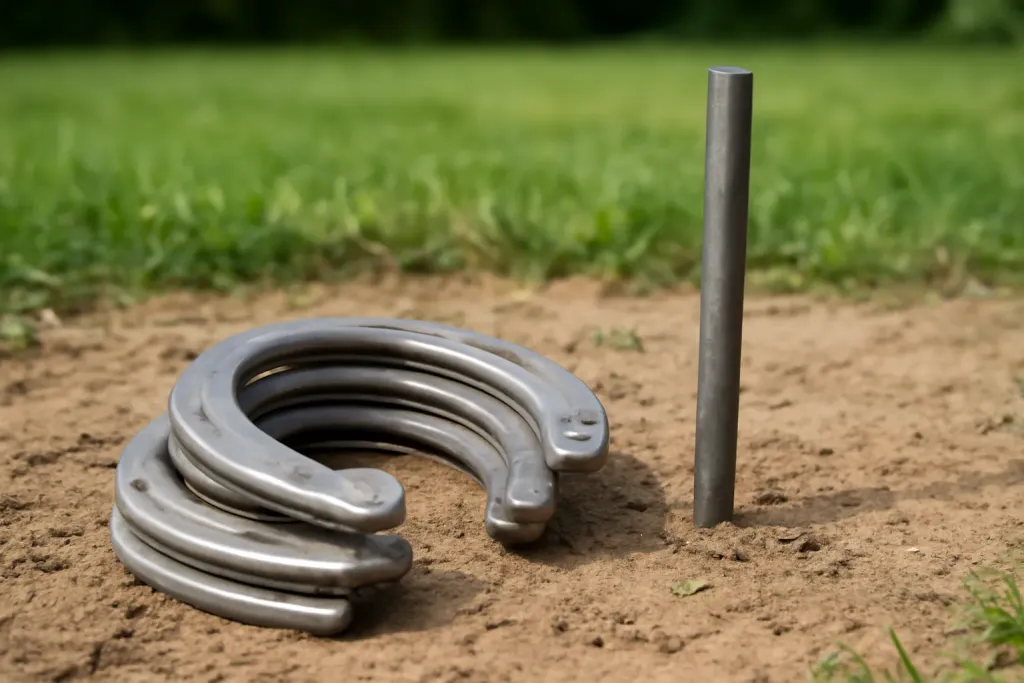
A beginner-friendly backyard horseshoe set typically includes two stakes, four horseshoes, and enough basic instructions to set up a shortened pitching distance rather than the full official layout — which makes the game approachable in a normal-sized yard. The key choices when buying are stake anchoring, horseshoe weight suited to your players, and what material you'll use to fill the landing pits. None of these need to be complicated, but getting them right up front makes the game safer and more enjoyable, especially with kids involved.
Horseshoes has a long tradition as a backyard and family game, and most sets sold for home use are designed with casual play in mind rather than strict tournament specifications, so beginners don't need to worry about matching official rules exactly.
Part of what makes horseshoes appealing as a backyard activity is how little it demands to get started: two stakes, a set of shoes, and a bit of open ground. That simplicity is also why it's easy to overlook the handful of details, covered below, that make the difference between a pit that plays well for years and one that feels awkward or unsafe from the first game.
Official vs casual pit distance
Official horseshoe pitching, as used in organized competition, sets stakes a specific standard distance apart with defined pit dimensions around each stake. That distance is longer than what fits comfortably in many backyards, and it also assumes a level, prepared playing surface. For casual backyard play, shortening the distance between stakes is completely normal and often recommended, particularly for beginners, kids, or anyone playing for the first time.
A shorter distance makes it easier to land shoes near the stake, which keeps the game fun rather than frustrating while players are still learning their throwing motion. As players get more comfortable, the stakes can be moved farther apart to increase the challenge.
A practical approach for a new backyard setup is to start at a modest distance, play a few rounds, and adjust from there based on how the group scores. If most throws are landing well short or well past the stake, that's a sign to shorten or lengthen the distance rather than sticking rigidly to any particular number. Since this is casual play, there's no requirement to match a specific measurement, and adjusting for the actual players using the pit tends to produce a more enjoyable game than following a fixed standard.
Stake material and anchoring safety
Horseshoe stakes are usually steel or a similar solid metal, driven into the ground so only a portion — commonly around a foot — remains above the surface, angled slightly toward the opposing stake as is traditional in the game. A stake that isn't anchored deeply enough can wobble or lean under repeated impact, which affects both play consistency and safety.
Because stakes are metal and partially exposed above ground, keeping the surrounding area clear of bystanders during play matters, and adult supervision is a good idea when kids are pitching near the stake area. Many backyard sets include rubber or foam-tipped stake caps as an optional safety add-on worth considering for younger players.
How deep and how firmly a stake is set depends somewhat on the ground itself. Soft, sandy soil may require a slightly deeper stake or additional packed fill around the base to keep it steady, while denser clay or compacted dirt tends to hold a stake more securely with less effort. If a stake starts to lean noticeably after a season of play, it's worth resetting it rather than leaving it off-angle, since a loose stake changes how shoes land and can become more of a tripping hazard over time.
Horseshoe weight for different players
Standard horseshoes used in adult competitive play have a set regulation weight, but backyard sets marketed for families and beginners often include lighter horseshoes, sometimes made from rubber or lightweight composite instead of solid steel. These lighter versions are easier and safer for kids to throw and reduce the impact if a shoe misses its mark and lands on a hard surface or near another player.
If your household includes both adults and younger kids, consider a set with lighter shoes for casual family games, and treat heavier steel sets as suited to teens and adults who want a more traditional feel. This mirrors the general approach covered in our guide to backyard sports equipment for families with mixed ages.
Grip and shape also vary between sets aimed at beginners and those built for more experienced pitchers. Beginner-friendly horseshoes often have a slightly more open shape and a textured or coated grip surface that's easier to control for someone still learning their release. More traditional steel shoes tend to have a tighter, more precise shape that experienced players prefer once they've developed consistent throwing form, but that same shape can feel less forgiving to someone just starting out.
Pit fill material options
The landing area around each stake is usually filled with sand, dirt, or clay to cushion horseshoe landings and reduce bounce or skid. Sand is a common choice for backyard pits because it's easy to source, drains well after rain, and is gentle on horseshoes and the ground alike. Packed dirt or clay can also work and may already exist naturally in parts of a yard, though it can get slick when wet. Whichever fill you choose, keeping the pit area distinct from surrounding grass, with a simple border of wood or edging, helps contain the fill material and keeps the pitching area consistent over time.
Depth of fill matters too. A shallow layer of sand over hard ground doesn't cushion landings much better than bare dirt, since shoes can still strike the harder base underneath. A few inches of loose fill gives horseshoes somewhere to settle without excessive bounce, and topping off the pit occasionally as fill compacts or scatters keeps it playing consistently from one season to the next.
Browse our recommended gear
Our featured picks refresh periodically. While we update them, our editorial guides can help you find the right gear.
See our guidesPitching-lane safety spacing
Beyond the distance between stakes, it's worth keeping a reasonable buffer of open space around the entire pitching lane — clear of chairs, coolers, pets, and spectators — since horseshoes can occasionally bounce or roll outside the immediate pit area. A simple guideline is to treat the space to either side of the lane, not just the area between stakes, as part of the game zone that stays clear while someone is actively pitching.
It also helps to establish a clear turn order and a waiting area a short distance behind the pitching line, so players aren't standing close to whoever is actively throwing. This is a simple habit rather than a formal rule, but it reduces the chance of a stray shoe catching someone who's standing too close, particularly in a yard shared by kids of different ages and throwing strength.
Basic Scoring for Casual Games
Casual backyard horseshoes typically uses a simplified version of official scoring: a "ringer" (horseshoe landing around the stake) scores more points than a "leaner" or a shoe simply landing close to the stake, and players usually agree on point values before starting rather than following formal tournament scoring rules exactly. Most families find that a simple point system -- ringer worth more, closest shoe worth less -- is enough to make the game competitive without needing to memorize official scoring in detail.
Agreeing on scoring rules before the first pitch, including what counts as "close enough" to the stake when there's no ringer, avoids most disputes mid-game. For mixed-skill groups, a modified scoring system that rewards getting shoes closer to the stake (rather than only rewarding ringers) tends to keep less experienced players engaged.
Seasonal Care of Stakes and Fill Material
Stakes left in the ground year-round can loosen as soil freezes and thaws, so a quick check of stake stability at the start of each new season is a reasonable habit before the first game. A stake that wobbles noticeably when nudged by hand should be reset before play resumes.
Pit fill material -- sand, dirt, or clay -- compacts and erodes over time, especially with regular play and exposure to rain. Topping off or refreshing the fill periodically keeps the landing area soft enough to be reasonably forgiving for horseshoes landing in the pit, and reduces the chance of a shoe bouncing unpredictably off compacted ground.
Final thoughts
Backyard horseshoes doesn't require matching official tournament specs to be a great group activity. Shortening the pitching distance, choosing horseshoe weight appropriate for your players, anchoring stakes securely, and keeping the lane area clear of onlookers covers the essentials for safe, casual play. From there, the game scales naturally as players get more comfortable and want to stretch the distance or move to heavier shoes.
Because the setup is inexpensive and flexible, it's easy to start small and adjust as you learn what your household actually wants from the game, whether that's a quick casual activity for cookouts or a more consistent pit that gets regular use throughout the season.