Youth Catcher's Gear: What's in a Set and How to Size It
Quick answer
Quick answer
Little League requires catchers to wear a catcher's helmet with face mask and throat guard, a chest protector and shin guards, and male catchers a protective supporter and cup. Size by body measurement: torso from the collar bone to the waist, lower leg from the middle of the kneecap to the ankle bone. All-Star lists youth chest guards from 10 to 14.5 inches by age.
Catcher's gear is the one baseball purchase where fit really matters, because it is worn for every pitch and it covers the head, chest and legs. It is also the set most often shared and passed down, so the sizing and the rule questions come up often. This guide gives you the measuring steps, a youth size chart, and the questions to ask your league.
The rule is from Little League's safety appendix; the measuring method is from Nike; the sizes are from All-Star's chart, hosted by Scheels. We name each one where we use it.
What the rules require
Little League's appendix on safety says: "Catchers must wear catcher's helmet (with face mask and throat guard), chest protector, and shin guards." It adds that male catchers must wear a protective supporter and cup at all times, and that catchers must wear the helmet, face mask and throat guard when warming up pitchers, between innings and in bullpen practice. Skull caps are not permitted.
Catcher's equipment under Little League rules
Piece
Rule
Catcher's helmet
With face mask and throat guard; also worn warming up pitchers; skull caps not permitted
That page also says batting and catcher's helmets should not be painted unless approved by the manufacturer. Rules in other leagues, travel ball and school teams can differ, so ask your coach what applies. We have not read other leagues' rules, so we do not state them.
Most youth sets sell the same three pieces together or separately. Knowing what each does helps when you compare packs.
Parts of a catcher's set
Piece
What to look at
Measure
Helmet with mask and throat guard
The label, the fit, the mask opening
Head circumference; the model's hat size
Chest protector
Length, coverage, strap adjustment
Torso: collar bone to top of waist
Leg guards
Length, knee fit, strap comfort
Lower leg: middle of the kneecap to ankle bone
Look for the label on the helmet and ask your league what mark it requires. Our batting helmet fit checklist explains how to read the NOCSAE mark that Little League requires for batters; do the same label check on a catcher's helmet and ask the league about its own rules.
How to measure
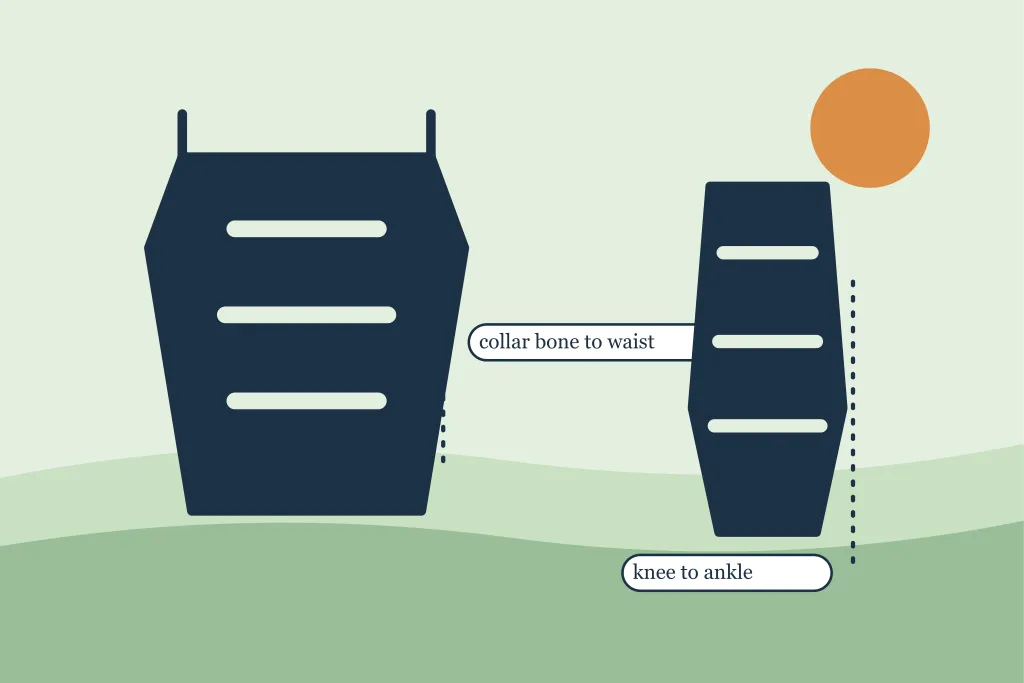
Catcher's gear is sized by body measurement, not just age. Nike says to measure the lower leg from the middle of the kneecap to the ankle bone and the torso from the collar bone to the top of the waist. The head is measured with a soft tape above the eyebrows, the same way as for any helmet.
1
Measure the torso
Stand the child straight. Measure from the collar bone to the top of the waist.
2
Measure the lower leg
From the middle of the kneecap to the ankle bone.
3
Measure the head
A soft tape level around the head, above the eyebrows. Note it in inches.
4
Write the three numbers down
Compare them with the maker's chart for the exact model.
Nike's own chart starts at sizes for ages 13 to 16, so for younger players use a youth chart. Because age ranges overlap, use the measurement first and the age as a second check.
All-Star's baseball catcher gear chart lists youth and junior sizes by age for its product lines. The number is the length of the chest guard or leg guard in inches. Different lines of the same maker run slightly differently, so read the model's own page.
The same page lists All-Star youth helmets at hat sizes 6 1/4 to 7 and adult helmets at 7 to 7 1/2. That is one maker's line and does not cover every brand. Because Nike's chart starts at 13 to 16 and All-Star's starts at 5 to 7, neither is a full cross-check across all youth ages.
Fit checks before you buy
Charts get you in the right range; the fit decides. When your child tries a set on, check these:
Fit checks for catcher's gear
Piece
Check
Helmet
Sits level, the mask clears the eyes and nose, the straps hold it still when the head moves
Chest protector
Covers from the collar bone toward the waist without digging into the neck or hips
Leg guards
Cover the shin and knee, stay in place when squatting, and do not press on the ankle
Together
Your child can squat, rise and throw while wearing everything
Have your child squat in the set before you buy, because that is the position it is worn in. As with any helmet, the fit should be right now, not a size to grow into. Check the straps and padding at the start of each season and after any hard impact.
Sets, leagues and who supplies
Many leagues keep a shared set of catcher's gear for the team. If yours does, ask when it was last inspected, and use your own measurements to check that the borrowed pieces fit your child. A shared set may suit one catcher and not another. If your child will catch regularly, a personal set is easier to size and keep in good order.
When you buy a set, most listings give an age range. Treat that as the maker's starting point and measure before you order. A set can be matched or assembled piece by piece; a set is convenient, but a mismatched chest protector and leg guard bought separately can fit better if your child's torso and lower leg fall in different sizes.
Our baseball and softball hub has the rest of a first-season kit, and the protective equipment hub covers protective gear across sports. Softball catchers use their own gear: we have not read a fastpitch catcher's size chart, so we do not give one.
Sizes and ranges here are makers' and leagues' published guidance, not a measurement of your child. Kids grow at different rates: check fit in person and follow your league's equipment rules.
Under Little League rules: a catcher's helmet with face mask and throat guard, a chest protector and shin guards, plus a supporter and cup for male catchers. Other leagues vary, so ask yours which pieces it requires and which it supplies.
How do you know what size catcher's gear to buy?
Measure the torso from the collar bone to the top of the waist and the lower leg from the middle of the kneecap to the ankle bone, then compare the maker's chart. Check the helmet's hat size from a head measurement.
What size catcher's gear for a 10 year old?
All-Star's chart lists chest guards of 14 to 14.5 inches and leg guards of 13.5 inches for ages 9 to 12. Measure first, since age ranges overlap and models differ, and check the fit with your child squatting.
How should a baseball helmet fit?
Level on the head, snug enough that it does not shift, with the straps adjusted. Measure the head first and compare the maker's chart. For catchers, the mask must clear the eyes. See our helmet fit checklist.
Do youth catchers need a throat guard?
Little League's rule says the catcher's helmet must have a face mask and throat guard, and catchers wear them when warming up pitchers. Other leagues may differ, so check yours.
Can a catcher's helmet be painted or decorated?
Little League says batting and catcher's helmets should not be painted unless approved by the manufacturer. Check the maker's guidance before adding paint or decals.
This article reflects independent editorial research and disclosed buying criteria. This is not medical, coaching, or professional safety advice.
Some links on this page are Amazon Associates affiliate links; see our
affiliate disclosure for details.