Youth Football · Updated November 3, 2026 ·
By Editorial Team
Youth Football Gloves: Size Chart and How to Choose
Quick answer
Quick answer
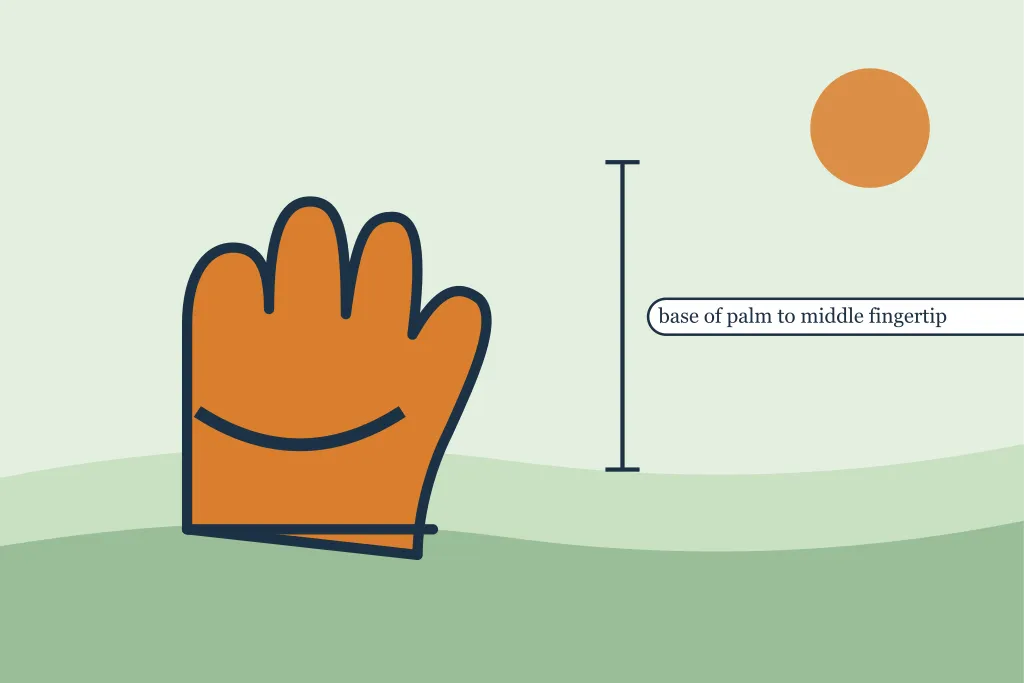
Gloves are not worn at every position, so ask the coach first. Choose a thin, flexible receiver glove or a padded lineman glove to suit the role. Measure hand length from the base of the palm to the tip of the middle finger and compare a youth size chart; Battle Sports lists Youth S under 6 1/4 inches up to Youth XL at 6 3/4 to 7 1/4.
Football gloves are one of the easier pieces of youth gear to get right, because you can measure the hand at home and see the answer on a chart. The things that go wrong are buying the wrong type for the position, trusting an age label instead of a measurement, and buying big for growth. This guide covers each of those.
The sizing and fit advice here comes from Battle Sports' own guide and chart, which we read in full. It is one maker; sizes vary by brand, so use the chart on the product page for the pair you buy, and treat ours as a starting point.
Receiver or lineman gloves
Battle describes receiver gloves as thin and flexible, with a tacky surface on the palm and fingers meant to help with grip. It cautions that grip changes with dirt, wear and weather, so do not assume any glove guarantees performance in wet or snowy conditions. Lineman gloves tend to have additional padding to cushion the hands during contact.
Battle advises asking your coach which construction suits your child's role and checking the league's requirements. That is the right first step: if the position does not use gloves or the league has a rule, the rest does not matter.
Hold the fingers straight and the palm flat on a table.
2
Measure the length
From the base of the palm to the tip of the middle finger, per Battle's chart.
3
Write it down in inches
Compare the number with the youth and adult ranges on the chart.
4
Check the product page
Some models ask for extra measurements or have their own chart.
If a model's size guide also asks for hand circumference, Battle says to measure around the hand below the knuckles, excluding the thumb, and to follow that guide. It also says not to use circumference to pick a size from the length-only chart. If you are between two sizes, compare the fit of both, when possible.
Battle's chart lists youth and adult sizes by hand length. It says to choose youth or adult sizes by hand measurements and fit, not by school level or age alone, and that youth and adult letter sizes are different sizes. Youth S is not the same as Adult S.
Youth football glove sizes by hand length (Battle Sports)
Youth size
Hand length
Youth S
Under 6 1/4 in
Youth M
6 1/4 to 6 1/2 in
Youth L
6 1/2 to 6 3/4 in
Youth XL
6 3/4 to 7 1/4 in
The chart's note for between sizes is to choose the smaller size for a tighter fit or the larger for a looser fit. For a child we suggest the closer fit, since loose gloves interfere with handling. The smallest adult size on the same chart starts at 7 1/4 inches.
This is a single maker's chart. We did not find a second maker that published a youth hand-length chart in a form we could read, so if you buy another brand, use its own chart. Our youth football hub lists the other parts of a kit.
Battle says football gloves should fit snugly and securely, with enough flexibility for the position. Pinching, numbness or difficulty making a fist means the fit needs another look. It lists four checks:
Four fit checks
Check
What to look for
Fingertips
No excess empty material at the ends
Palm
The material stays in contact with the hand, without bunching or sliding
The grip-a-football test matters most. Bring a football of your child's size to the fitting if you can; our football size by age tool shows what size that is.
Buying for a growing hand
Battle's advice for youth players is to buy for the hands they have today. Loose gloves bought for a future growth spurt can shift and interfere with ball handling, and it says to remeasure when the current pair starts feeling tight. That is the same rule we give for cleats and for helmets: fit now, recheck at the next growth spurt.
Gloves are cheap enough that replacing a pair when it no longer fits is reasonable. Check the glove when you take it out of the bag too: if the palm surface has worn smooth or a seam has opened, it is time for a new pair. Let wet gloves air out rather than leaving them in a closed bag; a vented bag helps (see building a multi-sport equipment bag).
Sizes and ranges here are makers' and leagues' published guidance, not a measurement of your child. Kids grow at different rates: check fit in person and follow your league's equipment rules.
Before you shop: a short checklist
Gloves are an easy purchase to rush, so run through this list first. Each item takes a minute and avoids the usual returns.
1
Ask about the position
Does your child's position use gloves, and which build does the coach prefer?
2
Ask about league rules
Some leagues have equipment rules; we have not found one rule page that covers them all.
3
Measure the hand
Use the steps above and write the number on your phone so you have it in the store.
4
Read the maker's chart
Compare your number with the chart for the exact pair; if two brands differ, trust the one on the box.
5
Plan for care
Check the care label on the pair you buy, and let gloves air out after practice.
If your child also needs cleats and a helmet fitting, do those in the same trip where you can: cleats need game socks and helmets need a trained fitter, so they are better done with the coach than with an online order.
The best glove is the one that fits and suits the position. Measure hand length, choose receiver or lineman construction after asking the coach, and check the fit. We do not rank gloves. See our youth size chart above.
What size football glove should a 10 year old use?
Size follows the hand, not the age. Measure from the base of the palm to the middle fingertip and compare the chart. On Battle's chart, 6 1/4 to 6 1/2 inches is Youth M and 6 1/2 to 6 3/4 is Youth L.
What size football glove should a child wear?
Measure the hand length and use the maker's chart for the pair you are buying. Youth sizes and adult sizes are different, so a youth small is not the same as an adult small. Choose a snug fit for the hands they have now.
Do youth football players need gloves?
Not every position uses them. Ask your coach and check your league's rules. Receivers often use thin, tacky gloves and linemen use padded ones, but the coach decides what suits the role.
How should football gloves fit?
Snugly and securely, with enough flexibility to move the fingers and make a fist. Check the fingertips for empty material, the palm for bunching and the closure for pressure. Pinching or numbness means the fit needs another look.
Should I buy football gloves a size up for my child to grow into?
No. Battle advises buying for the hands they have today, since loose gloves can shift and interfere with ball handling. Remeasure when the pair starts to feel tight.
This article reflects independent editorial research and disclosed buying criteria. This is not medical, coaching, or professional safety advice.
Some links on this page are Amazon Associates affiliate links; see our
affiliate disclosure for details.