Youth Football · Updated November 3, 2026 ·
By Editorial Team
Youth Football Helmets: Fit and Certification Guide
Quick answer
Quick answer
A youth football helmet should fit now, be sized from a head measurement, be fitted by a coach or trained fitter, and carry a current NOCSAE certification label or recertification label as your league requires. We do not rank helmets or call any helmet safest. It is a fit and label checklist, not a doctor's guidance.
Helmet shopping is different from buying cleats or gloves. The right helmet is not a matter of taste or price, and the claims on a box are easy to misread. So this guide is a fit and certification checklist, not a list of picks. It tells you what to measure, what the label means, and who should do the fitting.
The sources are NOCSAE (the body whose standards helmets are tested to), a USA Football article that quotes Riddell on fitting, and Little League's rule on batting helmets for comparison. We name each one where we use it.
What this guide does and does not do
We do not make injury or concussion claims about any helmet, and we do not name a "best" or "safest" helmet. No helmet can promise what a parent hopes for, and we are not in a position to measure it. What we can tell you is how to buy and check the fit and the paperwork, because those are things a parent can control.
What a parent can check
Check
Who does it
Why it matters
Head circumference
Parent or coach with a soft tape
Helmet size follows the head, not the age
Fit on the head
Coach or trained fitter
A helmet that is too big or too small does not sit as designed
NOCSAE label and date
Parent, on every helmet
Shows what standard the helmet was tested to and when it expires or was recertified
Daily check
Coach or parent before practice
Straps, padding and shell should be in order
If your league supplies helmets, most of this is the league's job and the useful thing for a parent is to ask the questions in the last section. If you are buying a helmet yourself, the league should still check the fit.
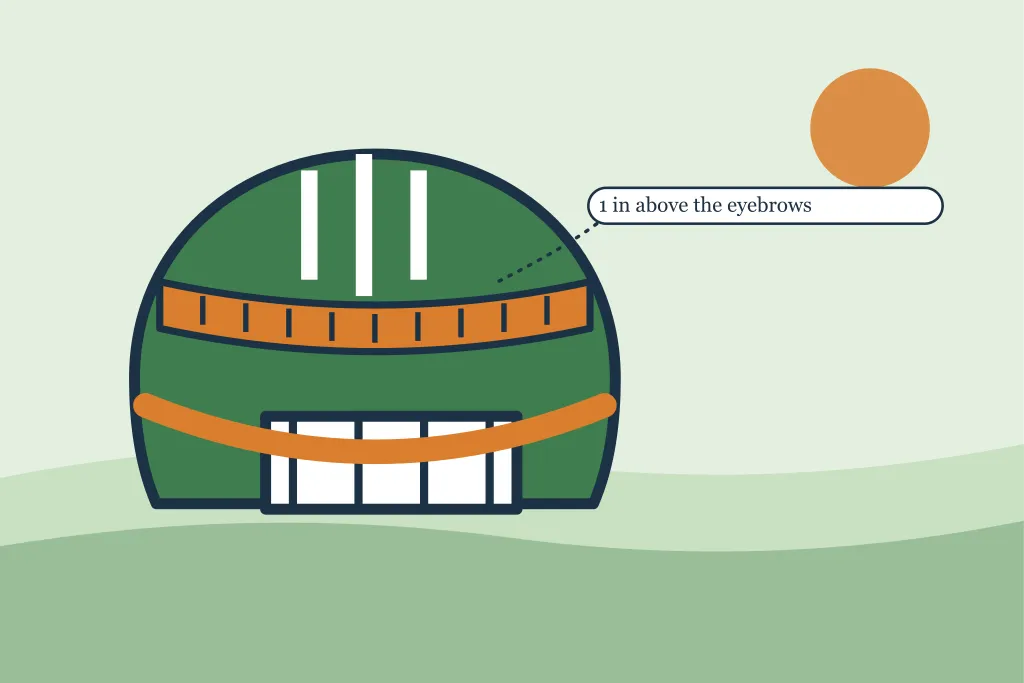
The USA Football article quotes Riddell's Kyle Borland saying parents should ask the organization to measure the circumference of the head with a tape measure. The article also says the tape goes about an inch above the eyebrows. Do it the same way at home so you know the number before you shop:
1
Use a soft tape
A tailor's tape or a piece of string laid against a ruler. Do not use a metal tape.
2
Place it above the eyebrows
About an inch above the eyebrows, level all the way around.
3
Write the number down
Note the measurement in inches and centimeters, where the tape meets after one full turn.
4
Compare the maker's chart
Each maker prints its own size chart. If your child falls between two sizes, ask the fitter; do not guess.
Some retailers say that when a measurement falls between two sizes to choose the smaller; we could not confirm that with a maker, so we leave it to the fitter. Measure in front of the helmet, not from a size name: "youth medium" is not a standard across brands.
The same USA Football article, quoting Riddell, gives two plain fit rules. The helmet should sit about an inch above the eyebrows, and if it drops directly onto the eyebrows it is too big. And it says: never make a purchase thinking "he'll grow into it." The article adds that modern helmets can be adjusted for fit, which is a job for the fitter, not a reason to buy big.
A helmet should fit now
Buying a helmet to grow into is the main thing to avoid. It will fit worse today, and the maker's size range is for a head that matches. If your child grows, get a new fitting, not a bigger helmet by guesswork.
Riddell, via the article, also recommends a quick daily check before practice. That does not replace a fitter. It is a habit: put the helmet on, check that it sits level, that the chin strap is snug, and that nothing is cracked or loose.
The fitter's job is more than the number on the chart. It includes how the padding contacts the head, how the face mask and chin strap sit, and whether the helmet stays put when the head moves. If your coach has been trained in this, ask them to fit your child. If nobody has, ask the league who can.
NOCSAE sets the standards helmets are tested to. Its recertification page says that recertification is not a requirement under NOCSAE standards, although it is strongly recommended, and that intervals follow each maker's requirements. Recertified helmets carry a dated label naming the recertifying facility and year, and an external label saying the helmet has been recertified according to procedures established to meet the NOCSAE standard.
What the labels tell you
Label
What NOCSAE says
Recertification label
Dated, names the recertifying facility and year; an external label says the helmet was recertified to NOCSAE procedures
Permanent expiry label
Where a maker bars recertification, the label shows when the original certification expires; NOCSAE says that life cannot be more than five years
Helmets made before January 2017
NOCSAE recommends annual recertification before use
No label or date you can find
NOCSAE suggests contacting the maker about its warranty and recertification information
Timing depends on years since the last recertification, not on how much the helmet was used. NAERA, the association of equipment reconditioners, says it will not recondition or recertify helmets ten years old or older; NOCSAE says that is NAERA's rule, not a NOCSAE requirement. A parent does not need to decide this alone: the question to put to the league is "what is the recertification or expiry date on this helmet?"
For comparison, Little League's rule for batters is simpler: batters must wear protective NOCSAE helmets in practice and games, and batting and catcher's helmets should not be painted unless the maker approves. We have not read a similar football rule that applies to every league.
Buying, borrowing or reconditioned
Many leagues supply helmets, often reconditioned ones. The USA Football article warns that when a helmet returns from reconditioning, the chin strap may not be attached the way it should be, so check the strap and the fit yourself when you receive it. A used helmet is not a reason to skip any of the checks above; it is a reason to do them carefully, including the date label.
If you buy a helmet, do it where someone can measure the head and check the fit, and keep the receipt and the maker's care instructions. Do not paint it or add stickers without checking the maker's guidance: Little League gives that rule for baseball helmets, and a maker may say the same for football ones.
The gear strips on this page link to Amazon search results for youth football helmets. They are a way to browse sizes and read the maker's own size chart, not a recommendation: buying a helmet online without a fitting is exactly what this guide asks you not to do.
Questions to ask your league
Questions to ask before the first practice
Ask
What a good answer includes
Who fits helmets?
A named coach or fitter, and when
Where do the helmets come from?
Supplied by the league, reconditioned, or bought by families
What is the recertification or expiry date?
A date on a label you can read
Who checks them during the season?
A routine check before practice
What if my child grows or the fit changes?
A way to get refitted
Sizes and ranges here are makers' and leagues' published guidance, not a measurement of your child. Kids grow at different rates: check fit in person and follow your league's equipment rules.
Helmet size follows the head, not the age. Measure the circumference about an inch above the eyebrows with a soft tape, compare the maker's chart, and have a coach or trained fitter check the fit. Never buy a helmet to grow into.
What size helmet does a 12 year old need?
There is no single age answer. Two 12 year olds can need different sizes. Measure the head, check the maker's chart and ask your league's fitter. If the measurement falls between sizes, let the fitter decide.
What is the safest helmet for youth football?
We do not name one or make injury claims. A parent can check a correct fit, a current NOCSAE label and a recertification or expiry date. Ask your league how its helmets are fitted and how often they are recertified.
How should a youth football helmet fit?
It should sit about an inch above the eyebrows. If it drops directly onto the eyebrows it is too big, according to Riddell's comments in a USA Football article. A trained fitter should check the padding, the face mask and the chin strap.
What does NOCSAE recertification mean?
NOCSAE says recertification is not required by its standards but is strongly recommended. A recertified helmet carries a dated label naming the facility and year. Intervals follow each maker's requirements, and a helmet whose maker bars recertification has a permanent expiry label.
Should I buy a used or reconditioned youth football helmet?
Only if you can check the label and the date and have it fitted. When a helmet comes back from reconditioning, check the chin strap and the fit yourself. If no date is on the label, contact the maker.
This article reflects independent editorial research and disclosed buying criteria. This is not medical, coaching, or professional safety advice.
Some links on this page are Amazon Associates affiliate links; see our
affiliate disclosure for details.