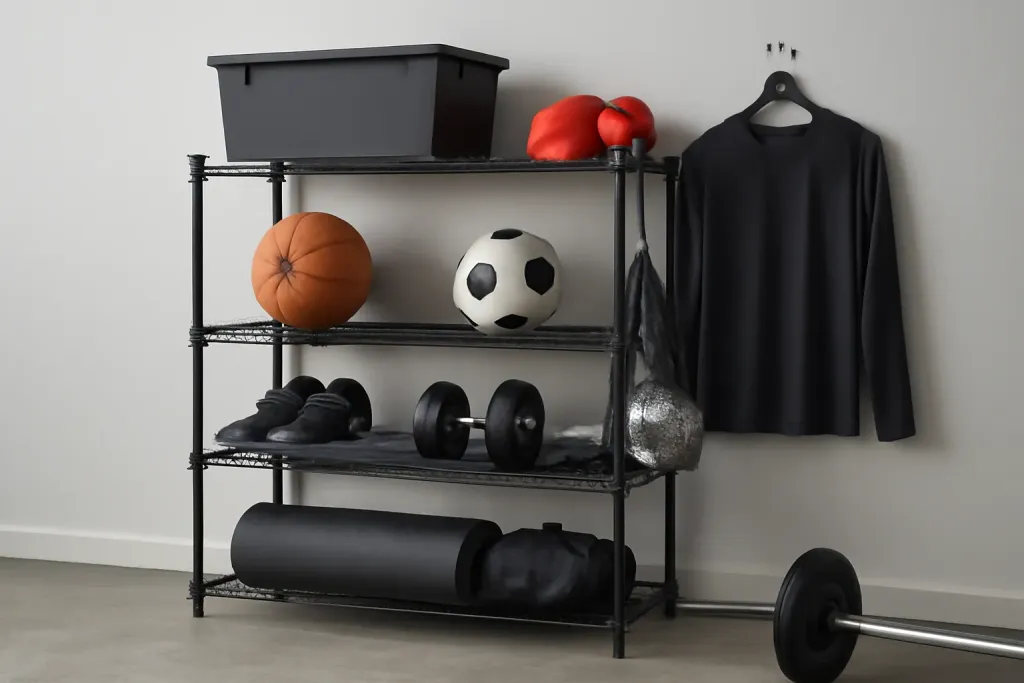
Why this choice matters
When families, coaches, and teachers organize sports spaces, the question often comes down to bins vs open shelving sports gear. Both can help create order, but they solve different problems. Bins hide clutter and group small items together. Open shelving makes gear visible and easy to grab. The right choice depends on how much space you have, who uses it, and how quickly items need to be reached.
For a garage full of baseball gloves, soccer balls, shin guards, jump ropes, and backpacks, the wrong storage system can turn cleanup into a daily battle. A useful setup should make it easier to put things away, not harder. It should also help kids, volunteers, and busy adults find what they need without dumping everything on the floor. Thinking through the way your household or program actually uses gear is the best first step.
This is especially important for shared spaces. A PE closet, rec room, or volunteer coach storage area may need one system for larger balls and another for smaller items like cones, whistles, or practice pinnies. Instead of looking for one perfect answer, it helps to match the storage style to the type of gear and the people using it.
Bins vs open shelving: the basic difference
Bins and open shelving both organize gear, but they do it in different ways. Bins create a contained zone. You place items inside, then move or stack the bin on a shelf, in a closet, or along a wall. Open shelving leaves items visible on the shelf itself, usually in plain sight and ready for quick access.
Bins are often a strong fit for mixed items that can otherwise spread out. A single bin might hold pump accessories, mouthguards in a sealed pouch, small training aids, or a tangle of jump ropes. Open shelving works well for larger pieces that are easier to stack or line up, such as basketballs, helmets, or folded nets. If you can see and identify the item at a glance, open shelving can save time.
The key question is not which one is better in general, but which one better supports your routine. If a child can return gear to the right bin after practice, that system may be simpler than expecting them to keep an open shelf neat. If adults need fast access before a game, open shelving may be the easier solution.
When bins work best
Bins are useful when you want to keep similar items together and stop small gear from getting lost. They are especially helpful for items that are light, awkward, or likely to scatter. In a family garage, that might include tape, socks, hand towels, markers for drills, cones, or accessories that do not stand up well on a shelf.
Bins also help create boundaries. If one bin is for soccer gear and another is for basketball gear, family members can return items to the right spot without sorting through a pile. Clear labels can make the system easier for younger kids and volunteer helpers. For schools and youth programs, bins can also support quick cleanup after class or practice.
Another advantage is flexibility. Bins can move with the season. When one sport ends and another begins, you can swap the contents without rebuilding the whole storage area. Stackable bins can be a smart use of vertical space, especially in small closets or narrow rooms. That said, bins work best when you avoid overfilling them. If every bin becomes a mystery box, the system loses its benefit.
When open shelving works best
Open shelving is often the better choice when you want speed and visibility. It makes it easier to spot what is available, what needs to be washed, and what should be returned after use. For sports spaces where many people share equipment, that visibility can be a big advantage.
Open shelves are especially useful for larger or frequently used items. Balls, folded towels, helmets, cleats in a tray, or stacked bins of similar equipment can all work well on shelves. If the gear is heavy enough to stay put and simple enough to identify, open shelving can keep the area from feeling closed in. It may also reduce the number of steps needed to get ready for practice or gym class.
Another benefit is that open shelves make inventory easier. Coaches and teachers can quickly see when supplies are running low or when a piece of gear has not been returned. For households, that can mean fewer last-minute searches before leaving for practice. The tradeoff is that open shelves tend to look messy if people do not return items carefully. They work best when the users are consistent and the gear is mostly uniform.
Browse our recommended gear
Our featured picks refresh periodically. While we update them, our editorial guides can help you find the right gear.
See our guidesSpace, access, and user age
Choosing between bins and open shelving also depends on who is using the storage area. Younger children often do best with simple systems. Large labeled bins can make cleanup easier because they reduce the need to sort items into many small categories. If a child can toss all the soccer gear into one bin, that may be far more realistic than expecting a neat shelf arrangement.
Older kids, parents, and coaches may prefer open shelving when they need faster access and better visibility. A shelf can make it easy to see which balls are ready to go, which uniforms are clean, and which practice items still need attention. In a busy garage or equipment room, that kind of visibility can save time and reduce duplicate purchases.
Space matters too. Tight closets often benefit from bins because containers can be stacked or tucked into corners. Wider rooms may support open shelving without feeling crowded. If the room has a mix of uses, a combined system can work well: shelves for large items, bins for smaller accessories, and hooks or baskets where they make sense. The goal is to fit the storage to the room instead of forcing the room to fit the storage.
Build a system that holds up
The best sports storage systems are easy to maintain during a busy week. That means the setup should match real habits, not ideal ones. If family members or program volunteers are likely to rush, the system should still work when people are tired. In that sense, the best choice is often the one that requires the fewest steps to put away correctly.
Labels help either system. With bins, labels tell everyone what belongs inside. With open shelving, labels can mark shelf zones so items return to the same place. If more than one child or team uses the space, clear labels may matter more than the storage type itself. Simple written labels or picture labels can be useful for younger users.
It also helps to keep similar items together. Even in an open shelving setup, small items can be sorted into smaller containers to prevent clutter. Likewise, bins can be grouped by sport, season, or user. The more the system reflects how the gear is actually used, the more likely it is to stay organized over time.
Common mistakes to avoid
One common mistake is choosing bins or open shelving based only on appearance. A neat-looking system that is hard to use will not stay neat for long. Another mistake is buying too many storage pieces before sorting the gear. It is easier to design a good setup after you know what you own and what actually needs a home.
Overcomplicating the layout can also create problems. Too many bins, too many shelves, or too many categories can make cleanup confusing for kids and helpers. A simple arrangement often works better than a highly detailed one. For example, a family may not need separate containers for every single sport accessory if one or two broader categories would do the job.
Finally, do not assume that one storage style has to handle everything. Bins vs open shelving sports gear is not an either-or decision in many homes and schools. The strongest setups often combine both: bins for loose items, shelves for larger equipment, and a clear plan for where each category belongs. That flexibility can make the entire space easier to use day after day.
Making the final choice
If you are deciding between bins and open shelving, start with the gear itself. Ask which items are small and easy to lose, which are large and easy to stack, and which need to be reached quickly. Then think about the people using the space. A system for a busy family may need more simplicity than a system for one organized adult. A school closet may need faster visual access than a home storage shelf.
In many cases, bins are best for loose, mixed, or seasonal gear, while open shelving is best for larger, frequently used items. If you have room, a combination can offer the best of both approaches. Bins reduce clutter. Open shelves improve visibility. Together, they can make sports storage more practical for families, coaches, and teachers who need things to stay ready without a lot of extra effort.
The most useful setup is the one that people will actually use. Keep the categories simple, match the system to your space, and choose the storage style that makes cleanup and retrieval feel natural. That is usually the safest path to a more organized sports area.