Overview
The most effective garage sports-equipment storage combines a few simple ideas: sort what you own before buying anything, use wall and overhead space instead of only floor space, and keep the gear used most often within easy reach while pushing seasonal items higher or further back. Garages tend to accumulate sports equipment gradually — a bike here, a set of bats there — until finding anything means digging through a pile. A basic system fixes that without requiring a full garage renovation.
None of these ideas require specialized equipment. A handful of wall hooks, some labeled bins, and a bit of planning around what goes where covers most households' needs, whether you're storing gear for one active kid or equipment for an entire family across multiple sports.
The goal isn't a showroom-perfect garage, but a setup where gear is easy to find, easy to put away, and reasonably protected from the elements. The ideas below build on each other, starting with figuring out what you actually have before spending money on any particular storage product.
Audit what you actually own
Before buying any storage products, it helps to lay out everything currently scattered around the garage and group it by type — balls, rackets and bats, protective gear, shoes, and bulky items like nets or poles. This quick audit does two things: it reveals duplicate or unused gear worth donating or discarding, and it clarifies what kind of storage will actually be useful. A household with a dozen loose balls has different needs than one with mostly bulky items like bags and folding equipment.
Skipping this step is the most common reason garage storage systems fail — people buy bins or racks that don't match what they actually own, and the clutter returns within a season.
It also helps to sort by frequency of use during this same pass, not just by category. Setting items into rough piles of "used weekly," "used occasionally," and "rarely or seasonally used" gives you a second layer of information that directly informs where each item should eventually live, which matters more for day-to-day convenience than sorting by sport alone.
Racks, bins, and rolling carts
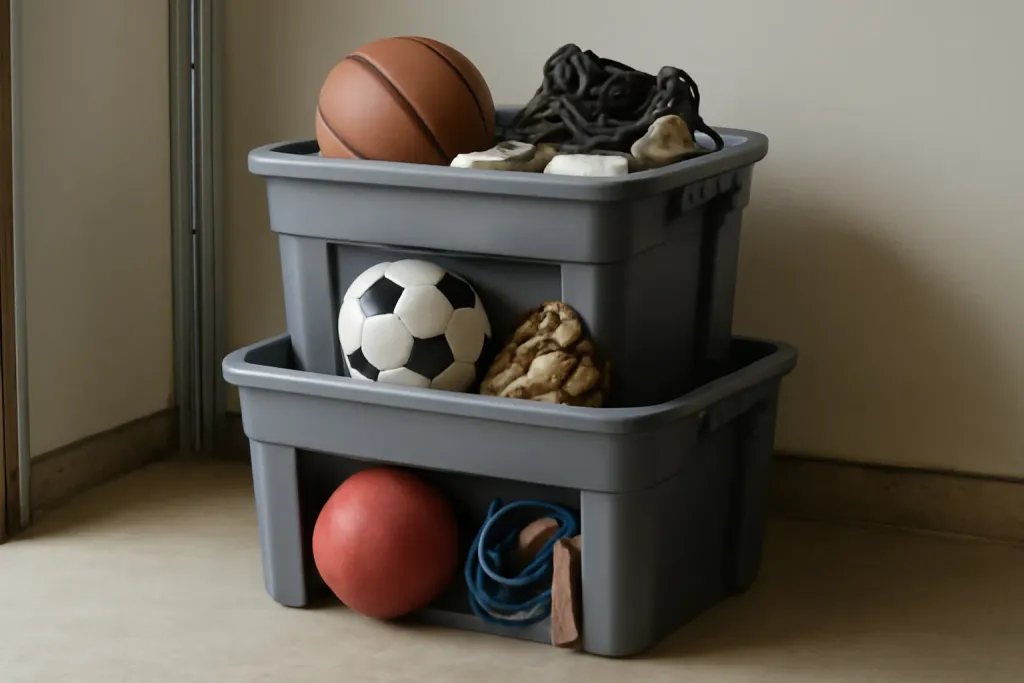
Wall-mounted racks are ideal for items with awkward shapes — bats, rackets, helmets, and balls that would otherwise roll around loose. They keep gear visible and off the floor, which also makes it easier to spot when something's missing before heading out. Bins work best for smaller, similarly shaped items that don't need individual mounting, like extra balls, cones, or loose accessories; labeling bins by sport or by user (one bin per kid, for example) speeds up finding things later.
Rolling carts add mobility, which is useful for households that shuttle gear to practices or games frequently, since the whole cart can be wheeled to the car rather than carrying loose items back and forth. For a closer comparison of these options, see our guide to ball racks, hooks, bins, and carts compared.
Shelving units round out the basic toolkit for most garages, offering flexible storage for bins, boxes, and larger items that don't fit neatly on a rack or in a small bin. Freestanding metal or plastic shelving is inexpensive and easy to reconfigure, which makes it a good starting point before committing to more permanent wall-mounted systems.
Using vertical and overhead space
Garages are often storage-poor at floor level and storage-rich overhead, since most garages have significant unused wall and ceiling space above where cars park. Wall-mounted track systems, pegboards, and overhead shelving let you store bulky or seasonal items — like a kayak, folding goals, or off-season winter gear — without eating into floor space needed for parking or walking around.
A simple rule of thumb: keep floor space clear for anything you need to walk around regularly, and push storage upward and outward toward walls wherever possible.
Ceiling-mounted platforms and hoists are worth considering for genuinely bulky, infrequently used items — things like kayaks, large coolers, or off-season equipment that would otherwise take up a disproportionate amount of floor or shelf space. These systems typically need to be anchored into ceiling joists rather than just drywall, so it's worth checking your garage's ceiling structure before investing in one.
Frequently used vs seasonal items
Not all sports gear needs the same level of accessibility. Equipment used weekly — a soccer ball, a favorite glove, practice cones — should live at an easy-to-reach height near the garage entrance or door to the yard. Seasonal or occasional gear, like snow gear in summer or a croquet set used twice a year, can go higher on shelving or further back in the garage, since it doesn't need to be grabbed in a hurry.
This kind of tiered accessibility is a simple concept that makes a noticeable difference day to day — it's the difference between grabbing a ball and heading out the door versus digging through boxes first.
A useful way to think about height zones in a garage: the bottom few feet for daily-use items and things kids can reach themselves, the middle zone for adult-height frequent access, and the top zone — above head height — for genuinely seasonal or rarely touched gear. This kind of simple zoning takes the guesswork out of where new items should go as the collection grows over time.
Browse our recommended gear
Our featured picks refresh periodically. While we update them, our editorial guides can help you find the right gear.
See our guidesHumidity and temperature considerations
Garages can run hotter, colder, and more humid than the rest of the house depending on climate and insulation, which matters for certain types of gear. Leather items, wooden bats, and some composite equipment can be sensitive to extreme heat or moisture over time, so it's worth keeping particularly sensitive gear in bins with lids rather than fully open shelving if your garage isn't climate controlled. Balls and plastic equipment are generally more tolerant of typical garage conditions and don't need special protection beyond basic dust coverage.
Ventilation is worth a mention too, since a closed-up garage with little airflow can trap humidity, especially after gear comes in wet from rain or a sweaty practice session. Leaving a little space between stored items and letting things air out briefly before sealing them into a bin helps reduce the chance of lingering odor or mildew building up inside a closed container over time.
Labeling for a Shared Household System
A storage system that makes sense to one person often breaks down once multiple family members are putting things away. Simple labels -- by sport, by person, or by season -- on bins and rack sections give everyone the same reference point, which matters more in a shared garage than a strictly personal space. Even basic masking tape and a marker is enough; the label doesn't need to be permanent or elaborate to be effective.
For households with kids old enough to put their own gear away, a labeled system also removes the guesswork that leads to items getting dumped wherever there's space. Reviewing the labels once a season and adjusting for what's actually accumulating -- rather than what the system assumed at setup -- keeps it useful longer than a one-time labeling effort.
Budget Priorities: What to Buy First
For a household just starting to organize garage sports storage, a single wall-mounted rack or a couple of stackable bins usually solves the most visible clutter for the lowest cost, rather than buying a full system of racks, carts, and overhead storage all at once. Starting small also makes it easier to see what's actually needed before committing to a larger setup.
Overhead storage and rolling carts are reasonable second-round purchases once the basic sorting problem is solved and it's clear what's left over -- typically seasonal items that don't need daily access. See our storage solutions hub for a comparison of the main options once you're ready to expand beyond a single starting rack or bin.
Final thoughts
A well-organized garage sports storage setup doesn't need to be elaborate — auditing what you own, mixing wall racks with labeled bins, using vertical space for bulky or seasonal items, and keeping frequently used gear within easy reach covers most of what a busy household needs. Our Storage Solutions hub has more specific options for racks, bins, and carts if you're ready to start building out a system.
Revisit the system every season or two as the mix of gear changes — kids grow into new sports, some equipment gets retired, and new items get added. A storage setup that was perfect a year ago can start to feel cluttered again simply because the household's needs shifted, and a quick seasonal check-in keeps the whole system working rather than slowly reverting to a pile.