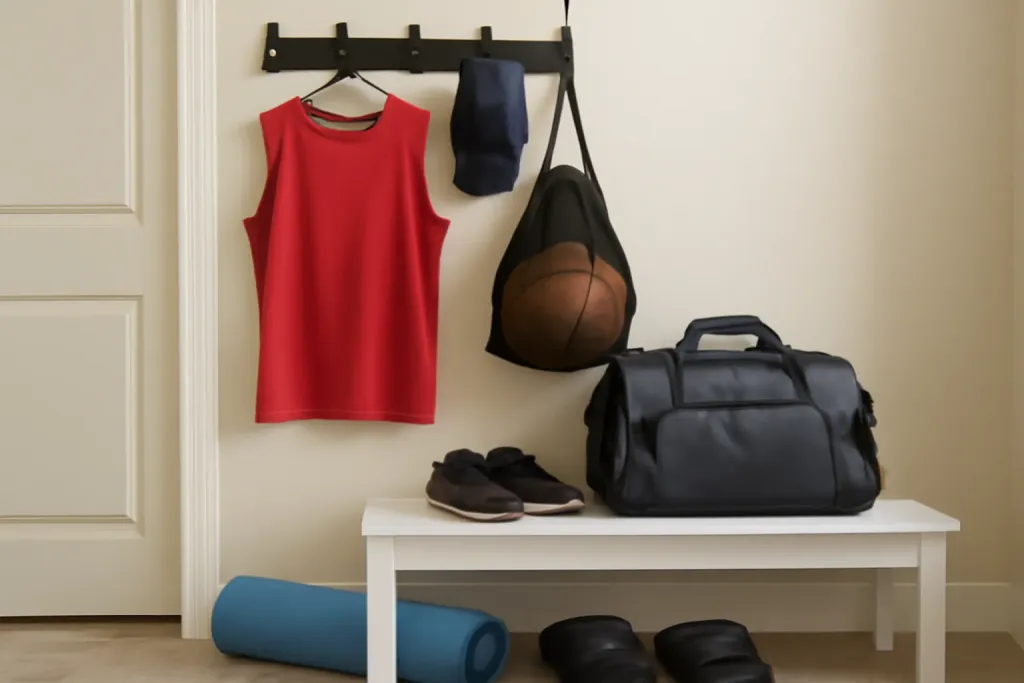
Small Entryway, Big Organization Goals
When a home entryway has to handle backpacks, coats, sneakers, cleats, helmets, and gym bags, clutter can build fast. That is where mudroom sports storage small entryway planning matters most. The goal is not to create a magazine-perfect room. It is to make a tight space work smoothly for everyday family life.
For families with active schedules, the entry area often becomes a landing zone for everything that comes in and goes back out. A smart setup helps everyone know where to put gear, where to find it, and how to reset the space before the next practice, class, or weekend game. Even a narrow hall, a side door, or a small corner near the garage can become useful storage if the layout is thoughtful.
The best small-entryway systems usually focus on a few basics: vertical storage, clear zones, easy-to-reach hooks, and containers that match the kinds of gear your household actually uses. Instead of trying to store every item in one place, the idea is to give each category a home. That simple step can reduce morning scrambling and make cleanup easier for kids and adults alike.
Start With a Zone Plan
Before buying bins or racks, map out how the entryway needs to function. A small space works better when it has zones, even if those zones are only a few feet wide. For example, one area can hold shoes, another can handle hanging items, and a third can store larger sports equipment that is used less often.
Think in terms of traffic flow. The items used most often should be easiest to reach. Daily shoes, school bags, and grab-and-go sports gear belong near the door. Less frequent items, such as seasonal equipment or backup uniforms, can go higher up or farther inside a closet. This helps keep the floor clearer and the routine simpler.
Families with multiple children often benefit from assigning each person a small section. Labels can help, but you do not need anything elaborate. A name tag, color code, or even a marked shelf can reduce mix-ups. If the household includes a volunteer coach or PE teacher who brings home extra equipment, consider giving team gear its own bin or shelf so it does not blend into family items.
The best zone plan is realistic. If the entryway only has room for two wall hooks and one shoe tray, do not force more into it. Use the space you have well, and let the rest of the storage live in nearby areas such as a hall closet, garage shelf, or laundry room cabinet.
Use Vertical Space First
In a small entryway, the wall is often the most valuable surface. Vertical storage keeps the floor more open and makes the space feel less crowded. Hooks, wall-mounted cubbies, narrow shelves, and over-the-door organizers can all help without taking up much room.
Simple wall hooks are one of the most flexible solutions for sports families. They can hold lightweight bags, jackets, helmets, lunch totes, and drawstring sacks. In a busy household, a row of hooks at different heights may be especially useful. Lower hooks are easier for kids to use, while higher hooks can hold adult coats or less-commonly used items.
Wall shelves can also help, especially when paired with baskets or bins. A shallow shelf above the hook line can hold hats, gloves, headbands, or spare ball caps. If the entryway opens into a closet, a hanging organizer can add storage without requiring floor space. The key is to avoid bulky pieces that project too far into a narrow walkway.
For families organizing mudroom sports storage small entryway setups, vertical solutions work best when they are simple to maintain. If a system is too complicated, it tends to get ignored. Choose pieces that make it obvious where each item belongs, and keep the number of steps between arrival and storage as low as possible.
Choose Shoe Storage That Stays Manageable
Shoes are usually the first thing to create clutter in a small entryway. Sneakers, cleats, sandals, rain boots, and slide-on shoes can pile up quickly if there is no clear landing spot. A shoe storage plan should be easy enough that family members will actually use it every day.
Low-profile shoe trays, open cubbies, and slim shoe racks tend to work well in tight spaces. Open storage is often better than closed cabinets when the goal is quick drop-off and fast retrieval. Families can see what is available, and shoes can dry more easily after outdoor use. If the entryway serves both indoor and outdoor traffic, a washable mat under the shoe zone can help keep dirt contained.
For sports households, it can help to separate everyday shoes from activity shoes. Cleats, court shoes, and field shoes may need their own bin or cubby so they do not mix with school footwear. This also makes packing for practice simpler because gear stays grouped by use. If a child is juggling multiple activities, a dedicated shoe spot can reduce the odds of a last-minute search.
Avoid making the shoe system too rigid. A small entryway does not need a huge rack or a complicated sorting chart. It just needs a place where shoes can go immediately and be found again without effort.
Browse our recommended gear
Our featured picks refresh periodically. While we update them, our editorial guides can help you find the right gear.
See our guidesUse Bins, Baskets, and Soft-Sided Containers
Containers are helpful in small spaces because they keep loose gear from spreading across every available surface. Bins and baskets can group items by activity, by person, or by category. A ball basket, glove bin, or bag for gym accessories can make the whole area easier to scan at a glance.
When choosing containers, think about how the items will be used. Open baskets are convenient for gear that moves in and out often. They are easier for kids to reach and less likely to become catch-alls for random clutter. Lidded bins may be better for items used less often, such as off-season gear or spare accessories that only come out a few times a year.
Soft-sided totes can be especially useful for families because they are lightweight and easy to move. A parent can grab one tote for a practice day, while another stays in the entryway holding backup items. If there are several children in the house, one bin per child can simplify the routine. The container becomes a visual reminder of what belongs where.
It is usually best to avoid oversized bins in a tiny entryway. Large containers can swallow space and become hard to manage. Smaller, stackable, or nestable containers often work better because they adapt as the household changes. The storage should support the routine, not create more work.
Combine Hooks, Rails, and a Slim Bench
A compact bench can be a useful addition when there is room for one. It gives people a place to sit while changing shoes and can create a natural spot for storage beneath or beside it. In a small entryway, a slim bench is usually better than a deep one, especially when paired with wall hooks above it.
This kind of combination works well because it handles several needs at once. Hooks manage outerwear and bags, the bench supports quick shoe changes, and the space under the bench can hold bins, baskets, or a shoe tray. That layered approach often makes the most of a narrow footprint.
For active families, the bench area can become the reset point at the end of the day. Kids can put down bags, remove shoes, and place items into the correct basket before moving farther into the house. That small routine can help keep sports gear from drifting into bedrooms, dining spaces, or kitchen counters.
If a bench feels too large, a wall-mounted shelf with hooks below it can accomplish a similar goal in less space. The best choice depends on the shape of the entryway and how much room is available for movement. The simpler the layout, the easier it is to keep tidy.
Make Seasonal and Sport-Specific Storage Easy
One challenge in sports storage is that gear changes with the season. Spring and fall may require different shoes, hats, bags, and accessories than winter or summer. A small entryway works best when the storage can adapt without a full rearrange every time schedules shift.
Seasonal rotation is easier when only current items stay in the main zone. Off-season gear can be moved to a closet shelf, under-bed bin, garage cabinet, or labeled tote elsewhere in the home. That keeps the entryway from becoming overloaded. It also helps families stay focused on what is actually in use.
Sport-specific storage can also save time. For example, one basket might hold ball-related items, another might hold aquatic gear, and a third might hold outdoor field accessories. The labels do not have to be fancy. A simple system that makes sense to the family is enough. If children help put things away, make the categories easy to remember.
Volunteer coaches and PE teachers often bring home mixed equipment from practices, classes, or cleanup duties. A designated return bin can keep those items from blending with family belongings. When the return bin is full, it can be sorted in one pass rather than item by item throughout the week.
Keep the System Simple and Maintainable
The best mudroom sports storage small entryway plan is the one that can be maintained on a busy weekday. A good system should be easy to understand, quick to reset, and forgiving when routines get hectic. If it takes too long to put away a backpack or find a pair of shoes, the system will lose value over time.
Start with the essentials and build gradually. Many families do well with a few hooks, one shoe zone, a bin or basket for loose equipment, and a small surface for everyday carry items. If those basics work, then additional organizers can be added later. There is no need to fill every wall immediately.
Cleaning and upkeep also matter. Choose storage that can be wiped down or shaken out easily, especially in homes where dirt, grass, sand, or rain is carried inside. A small mat near the door can make a big difference in keeping the area manageable. Regular mini-resets, even if they only take a minute or two, help the entryway stay functional.
Above all, the system should serve the family’s habits. The most useful setup is not necessarily the most decorative. It is the one that makes it easier to leave on time, come home with less clutter, and find gear when the next activity starts.